Sơn Tây, Hà Nội · Attraction
Đường Lâm Ancient Village
Picture a stretch of countryside known as the "land of two kings". It is traditionally said to be the homeland of Phùng Hưng and Ngô Quyền, two figures you may have come across if you have read any Vietnamese history. And there, behind walls of laterite stone, people are still living.
Picture a stretch of countryside known as the "land of two kings". It is traditionally said to be the homeland of Phùng Hưng and Ngô Quyền, two figures you may have come across if you have read any Vietnamese history. Đường Lâm Ancient Village is not actually one village. It is a cluster of five neighbouring villages, Mông Phụ, Đông Sàng, Cam Thịnh, Đoài Giáp and Cam Lâm, in the Sơn Tây ward area of Hà Nội (a phường, or ward, is an administrative unit within the city). People call it the "ancient Vietnamese village of laterite", and sometimes a "living museum". The second name is the one to notice: the cluster was ranked a national monument in 2005, yet most of its old houses are still family homes. Visitors pay an entrance fee, and the site is run by the Management Board of Đường Lâm Ancient Village Relics.
Đường Lâm: laterite heritage that people still live in
Time here comes in layers. Early archaeological surveys suggest people may have lived here as far back as the Phùng Nguyên culture, a prehistoric period in northern Vietnam. The area's old name was Cam Giá, meaning sugarcane, which is why the pagoda in Đông Sàng hamlet is still known by its folk name, chùa Mía, the Sugarcane Pagoda. In the early 19th century the seat of Sơn Tây province was based here. Mông Phụ was also home to Giang Văn Minh, a thám hoa (third-ranked laureate of the imperial examinations), who was sent as an envoy to the Ming court and was killed for his defiant replies. The commune has only been called Đường Lâm since 1964, when Phùng Hưng commune was renamed.
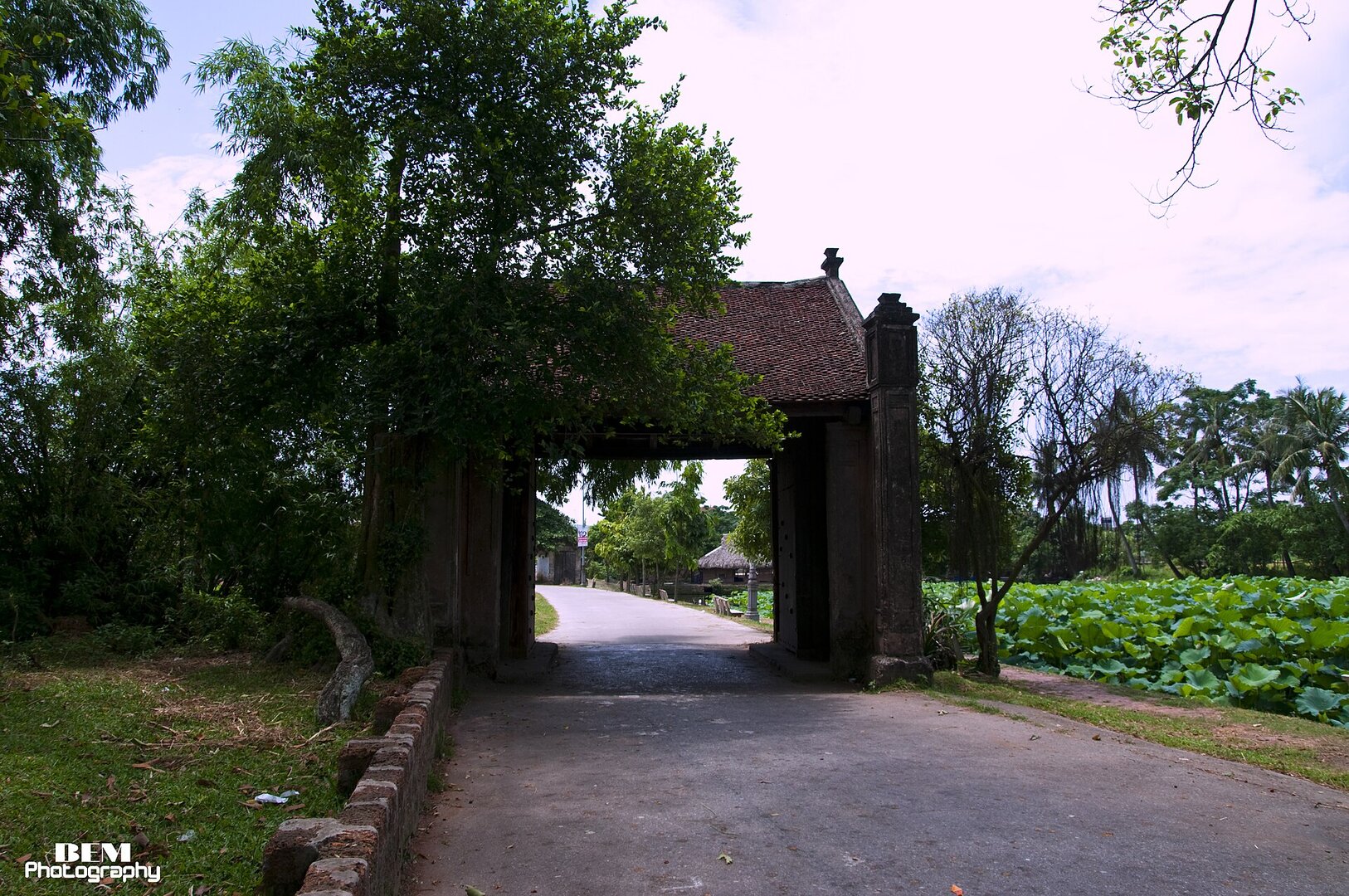
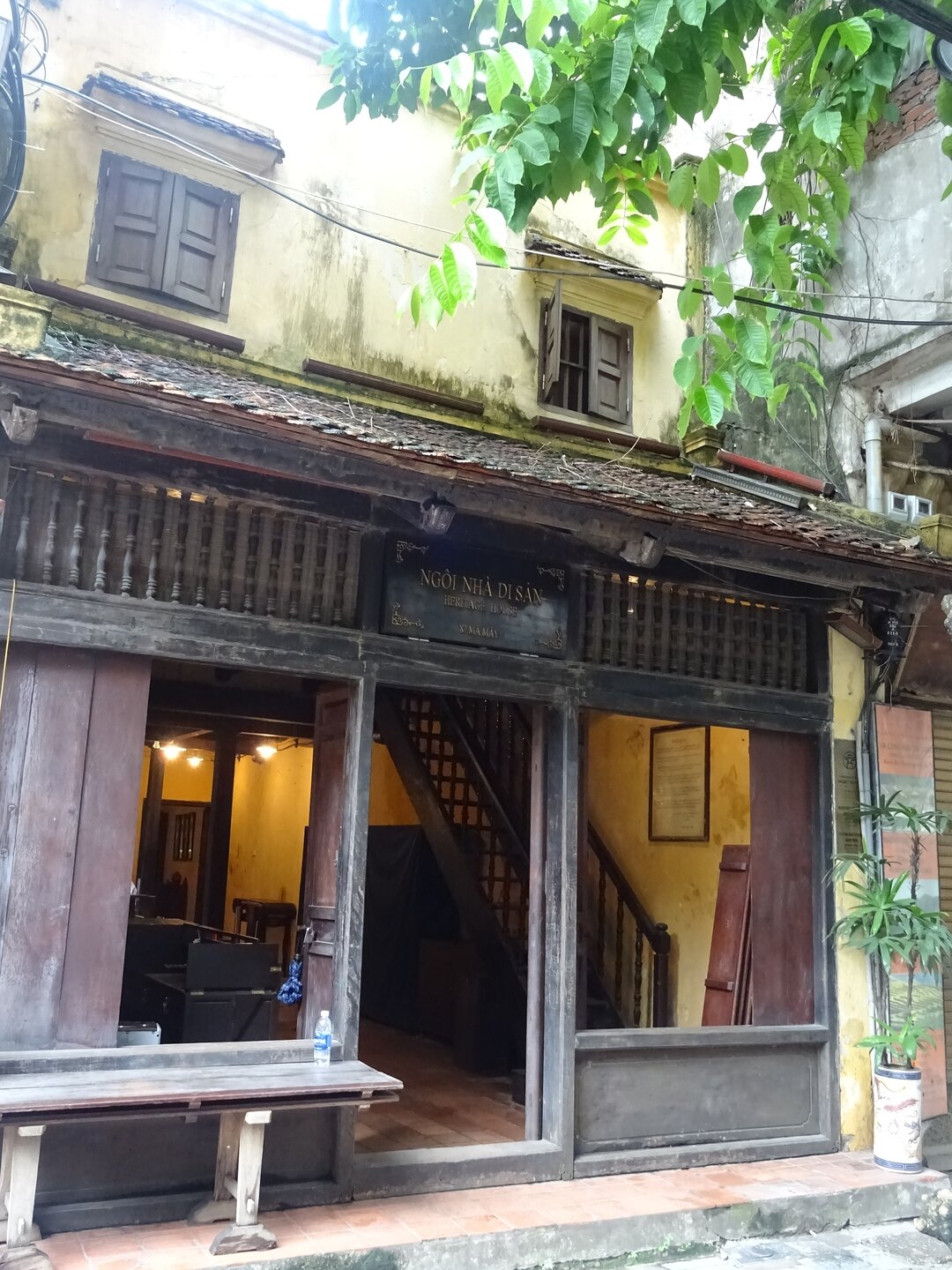
In Mông Phụ, the village gate is a small house with a two-sided roof of traditional clay tiles, a house above and a gateway below. It dates from the Lê dynasty, stands beside a banyan tree and a row of duối shrubs, and faces fields and a lotus pond. It was restored around 2007–2012 under the guidance of Japanese architect Ejima Akiyoshi. From the đình (the village communal house), lanes branch out like the bones of a fish, narrow paths of red brick running between laterite walls. The main hall of the Mông Phụ communal house stands on a raised wooden floor with no walls, enclosed only by a turned-wood balustrade, a trace of the stilt houses of the Việt and Mường peoples. According to the village elders, the đình sits on the head of a dragon, and the two old wells on either side are its eyes. Inside are a carving called "Lão long huấn tử" (an old dragon teaching its young) and 17 royal decrees of recognition. Over in Đông Sàng, the Sugarcane Pagoda holds 287 statues, six of them bronze. The doorway to the worship hall is built low, so everyone who enters has to bow.
So what does a heritage like this mean today? Look at the laterite: soft while it is still in the ground, it grows harder the longer it stands in sun and rain. Most houses here have five bays, with frames of jackfruit and chinaberry wood, and their courtyards often hold jars of home-made soybean paste. The Mông Phụ communal house is still where the village holds its rites. Keeping this heritage alive involves the people who live with it: a project to restore several of the village's buildings, bringing together carpenters, Vietnamese researchers and Japanese experts, received a Merit award in the UNESCO Asia-Pacific Awards for Cultural Heritage Conservation in 2013. Not everything survived, though. The Temple of Literature of Sơn Tây province, moved onto Mông Phụ land in 1847, was destroyed during the war against the French, and the building you see today is a reconstruction from 2012. Are you curious what it is like to live inside a national monument?
Timeline
- 1847moved onto Mông Phụ land in 1847
- 1964The commune has only been called Đường Lâm since 1964
- 2005National monument since 2005
- 2012and the building you see today is a reconstruction from 2012
Photographs
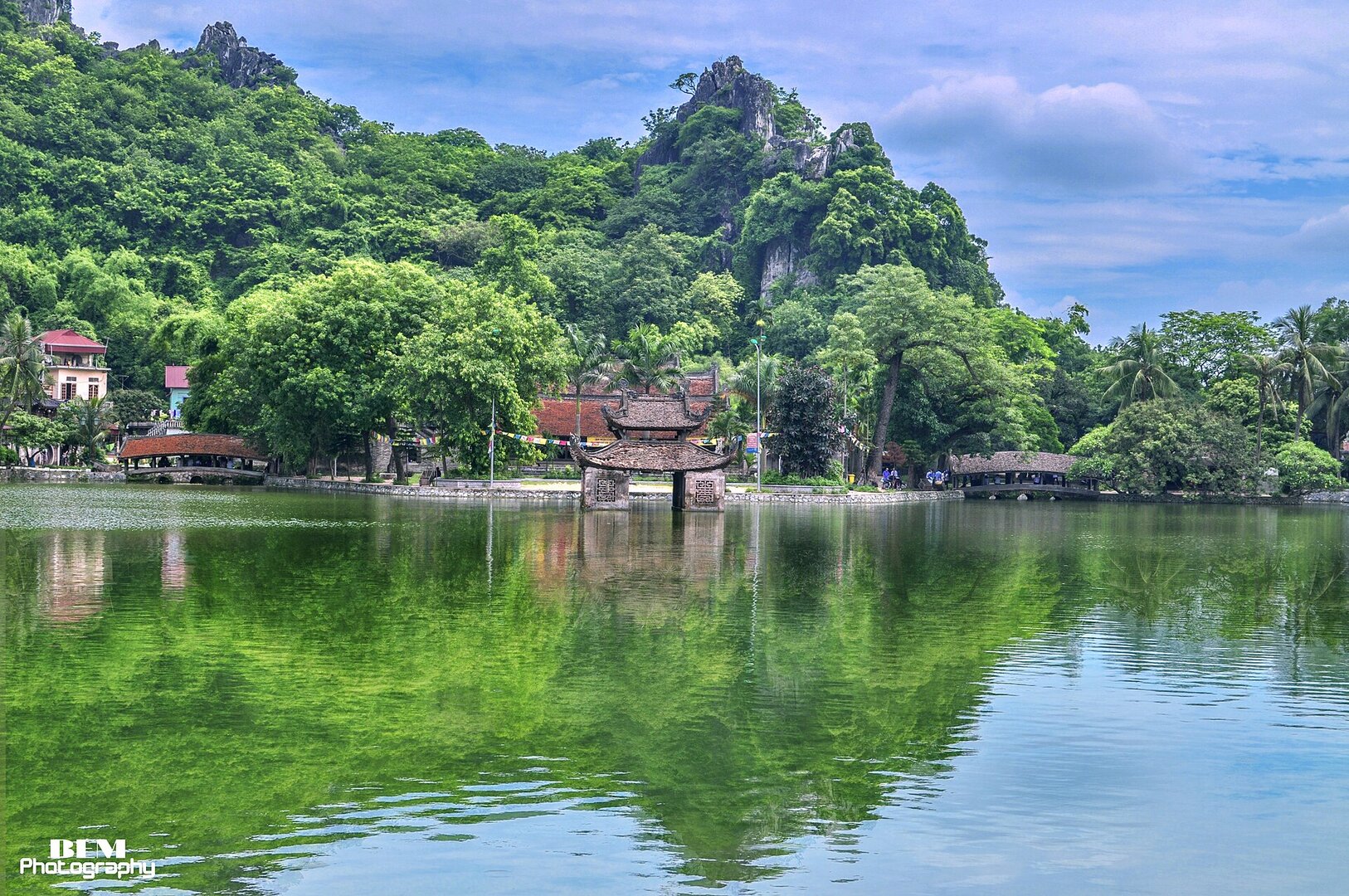
9 of 9 on fileBem photography· CC BY 2.0 · source
Bùi Thụy Đào Nguyên· CC BY-SA 3.0 · source
SiriusBlack· CC BY 3.0 · source
Bùi Thụy Đào Nguyên· CC BY-SA 3.0 · source
Doãn Hiệu· CC BY 3.0 · source
Bùi Thụy Đào Nguyên· CC BY-SA 3.0 · source
Bùi Thụy Đào Nguyên· CC BY-SA 3.0 · source
Bùi Thụy Đào Nguyên· CC BY-SA 3.0 · source
Bùi Thụy Đào Nguyên· CC BY-SA 3.0 · source
Enough to decide whether to go
- What it is
- A cluster of five neighbouring old villages: Mông Phụ, Đông Sàng, Cam Thịnh, Đoài Giáp, Cam Lâm
- Where
- Sơn Tây ward area, Hà Nội
- Status
- National monument since 2005
- Worth seeing
- Mông Phụ village gate, Mông Phụ communal house, Sugarcane Pagoda (chùa Mía), laterite lanes
- Visiting
- Entrance fee charged; run by the Management Board of Đường Lâm Ancient Village Relics
- Festival season
- First lunar month (Tết season)
From someone who has been
To see the village in festival mode, come in the first month of the lunar year, when both the Mông Phụ communal house and the Phùng Hưng temple in Cam Lâm hold festivals. On ordinary days, remember that most of the old houses are lived in: you are walking past someone's family courtyard, not through a gallery. Lovers of timber architecture, anyone curious about how heritage is kept alive, and people who like to wander slowly down narrow lanes will find it worth the trip.
Vibe
Tags
Source
The introduction to the village — five ancient villages, the old name Cam Giá and the renaming of Phùng Hưng commune to Đường Lâm in 1964 — comes from Thanh Niên newspaper (2020) and Vietnamese Wikipedia. The national monument ranking in 2005 comes from Báo An Giang (15th-anniversary article, 2020) and the Hà Nội Department of Culture and Sports. We checked the Government's 19th list of special national monuments (Decision 266/QĐ-TTg, Feb 2026): the village is not yet at this level. Laterite (đá ong) architecture, five-bay houses, ancient wells and the Lồ Biêu eatery custom follow reports by Nhân Dân newspaper and VietnamPlus. Mông Phụ communal house (đình) follows Tạp chí Người Hà Nội (citing the book 'Hà Nội Danh thắng và Di tích'), the Hà Nội Department of Culture and Sports and the page of the Management Board of the Đường Lâm Ancient Village Monuments (updated 2021). The Mông Phụ village gate follows Đại Đoàn Kết newspaper (2020). Mía Pagoda, Phùng Hưng, Ngô Quyền and Giang Văn Minh follow Vietnamese Wikipedia. The 2013 heritage conservation award follows UNESCO Bangkok's official list, given to the project restoring five structures in the village. The existence of an admission fee follows the Ministry of Culture, Sports and Tourism (Dec 2023). All were cross-checked in Sep 2026. What was not included: the founding year of Mông Phụ communal house (sources give 1533, 1553 and 1684, of which two year–reign pairings have wrong dating); the deity worshipped at the communal house (documents do not agree between Tản Viên and Phùng Hưng); the ratio of wooden to clay statues at Mía Pagoda (three sources give three figures); Phùng Hưng's year of birth (found only in folk-historical accounts); the area and population of the former commune, because the figures predate the 2025 administrative reorganisation; and English Wikipedia's description of the village as a special national monument, because that is wrong. Photos are from Wikimedia Commons, with the author and licence given separately on each one.
Place data is compiled from many sources across the internet by a team of automated AI agents that collect, enrich, check, challenge, score, edit, review and verify it.


Ratings & comments
Anyone can read. Sign in to rate, comment and like.