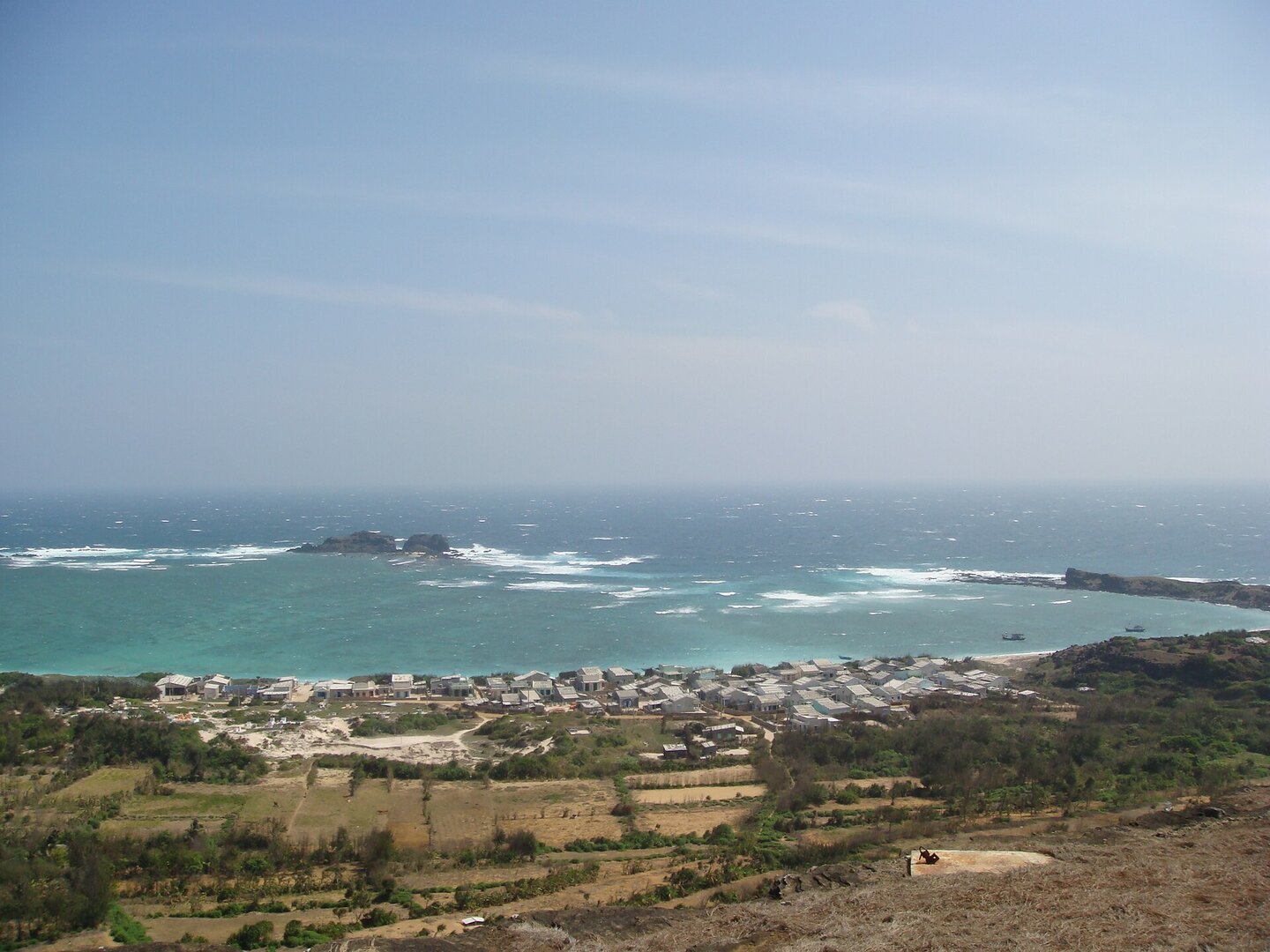
Photo: Thái Nhi (vi.wikipedia) · Public domain (PD-user)
Đặc khu Phú Quý, Lâm Đồng · Nature
Cao Cat Peak
Picture stacks of black, honeycombed rock on a hilltop out at sea, worn by the wind into hollows and rippled walls that visitors liken to the Grand Canyon. That is what an ancient volcano left behind on the north of Phú Quý Island.
What people come for
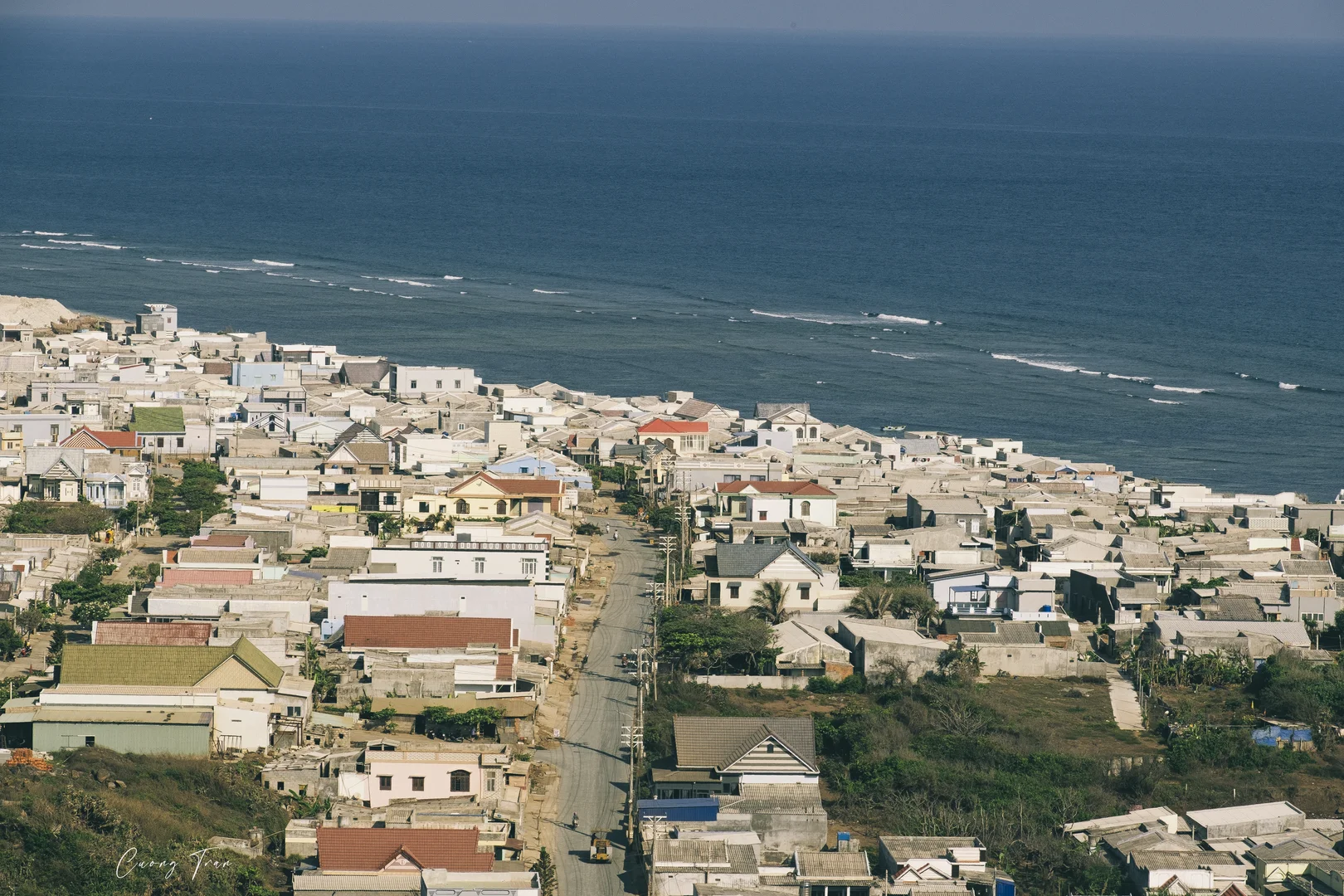
From the summit you can see almost the whole island: the Ngũ Phụng coast, Dinh Thầy Nại, Triều Dương bay, and right at the foot, the houses and gardens of Long Hải village with a white sand spit along the shore. According to a resident quoted by Dân Việt, the spot where the Quan Âm statue stands on the summit is the best place to watch the sunrise and sunset.
Getting there and around
The way to the summit passes Chùa Linh Sơn: climb 148 steps in the shade of trees to the pagoda courtyard, then follow the path behind the pagoda out to the rock face on the summit, with some steep sections. The mountain is a few kilometres from Phú Quý port.
Before you go
The wind on the island is very strong: stand away from the edge of the cliff and hold on firmly when it is windy. In 2021 the path to the cliff had a barrier; its present condition has not been rechecked. The way up passes the pagoda, so dress modestly and respectfully. In spring and summer the sea is calm and the island is easiest to reach; around October–November, the northerly wind and low-pressure systems can stop boats to the island for several days.
What this place is
Cao Cát mountain is in the north of Phú Quý island and is what remains of an ancient volcanic plug. On the summit are stacked honeycomb-like blocks of black basalt, carved into caves by the wind, with walls showing wavy ripples and horizontal grooves from weathering, which is why visitors often compare it to the Grand Canyon.
Busy and quiet times
Islanders regard Cao Cát as a sacred mountain. Behind Chùa Linh Sơn on the mountainside, the summit has a statue of Quán Thế Âm Bồ Tát (Avalokiteshvara) set on a large rock, and at dusk many visitors come up to the pagoda to light incense and watch the sunset.
The story
Núi Cao Cát: an ancient volcano's rock, and the islanders' pagoda
Picture stacks of black, honeycombed rock piled on a hilltop in the middle of the sea. The wind has hollowed them into small caves and carved their faces into ripples, swirling layers and mushroom-shaped boulders. Weathering has cut horizontal grooves into the walls, which is why visitors often liken the place to the Grand Canyon. This is Núi Cao Cát (núi means mountain), on the north of Phú Quý Island — one of the highest hills on the island. It is the remnant of an ancient volcanic cone, still fairly well preserved, with its eastern flank dropping away as a sheer cliff. What the past left here is not a building but the rock itself.
Vibe
Tags
Source
The mountain's location comes from the pin 'Đỉnh Cao Cát' on Google Maps (read on 1 Oct 2026). OpenStreetMap has no object for this mountain, so the coordinates have not been checked independently. The geology (an ancient volcanic cone) and the island's wind seasons come from Vietnamese Wikipedia, the Phú Quý section. The description of honeycomb basalt, weathered grooved cliffs, Long Hải village at the foot of the mountain and the 148 steps up to the pagoda comes from Báo Bình Thuận (18 Jan 2024) and VnExpress (31 May 2021). The view from the summit, the Quan Âm statue and the places to watch sunrise and sunset come from Dân Việt (22 Aug 2022). The advice on wind and the season to go comes from the VnExpress guide (29 May 2022) and Znews (18 Feb 2025). The walking route past the pagoda to the summit was cross-checked with VinWonders (no date given). The summit's height is not stated: the sources disagree among themselves (106 m, 'over 105 m', 'about 80 m', 200 m) and there is no official measurement. The 1923 eruption milestone is not stated, because that account concerns the undersea volcanoes around the island, not Cao Cát. 'Long Hải commune' is not stated, because since 1 Jul 2025 this place belongs to Phú Quý special zone, Lâm Đồng province. Motorbike rental prices, climbing hours and entry tickets to the mountain are not stated, because no official source currently in force exists.
Place data is compiled from many sources across the internet by a team of automated AI agents that collect, enrich, check, challenge, score, edit, review and verify it.




Ratings & comments
Anyone can read. Sign in to rate, comment and like.