Đặc khu Phú Quý, Lâm Đồng · Island · Nature
Hon Den - Phu Quy
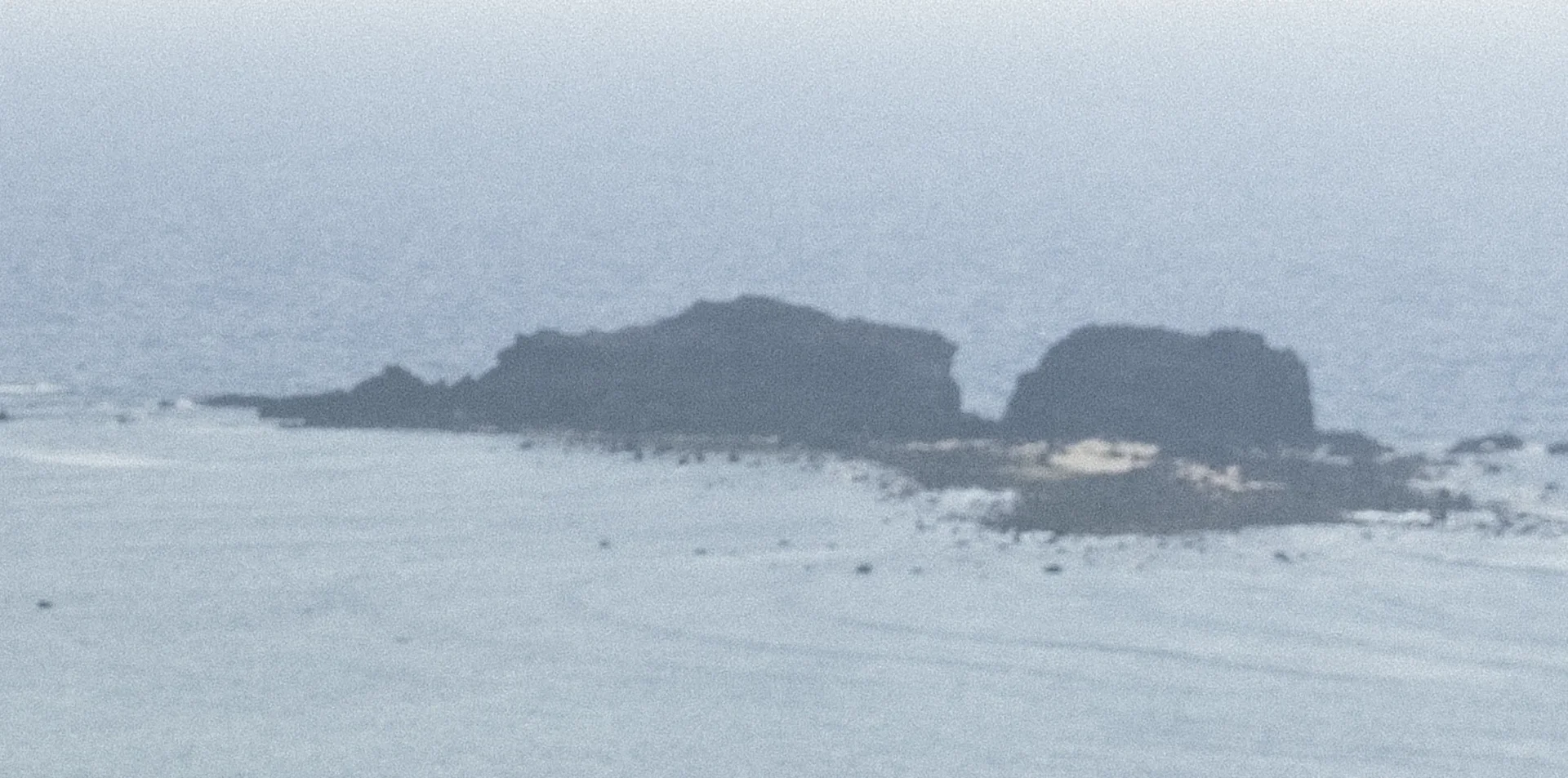
Picture a small island just offshore from Phú Quý, made entirely of black rock, without a single tree or a single inhabitant. Locals call it Hòn Nghiên, Hòn Mực — the Inkstone, the Ink.
Photo: Cuong Tran (tài khoản Flickr: Cuong Quoc) · Public Domain Mark 1.0
What people come for
Sitting on a speedboat to look at the cluster of black rocks in the clear sea. Local authorities advise only looking at the scenery from the speedboat.
Getting there and around
To reach Hòn Đen you must first get to Phú Quý island; the island lies offshore, more than a hundred kilometres from Phan Thiết. From the main island the islet can only be reached by speedboat or boat, and you must hire the vehicle (cotrang.org). According to a local guide, visitors can hardly get there on their own without going with local islanders. There are no services on the islet. No source mentions tickets or speedboat hire prices.
Before you go
Local authorities advise that at Hòn Đen you should only sit on the speedboat and look at the scenery, and not swim here. Venomous sea snakes, believed to be yellow-lipped sea kraits, have long lived in the rock crevices of the islet. By day they stay in their holes; they come out to feed only at night. The species is shy and does not attack people on its own initiative; the locality has not recorded anyone being bitten, and the advice is to keep away and not catch them. The rocks on the islet are sharp, jagged and can be slippery, especially when wet or when there are waves. That is one more reason not to go up onto the islet (a personal blog on Lemon8). In the south-wind season, around mid-year, the sea around the Hòn Đen, Hòn Giữa and Hòn Đỏ cluster is usually calmer and this is the season for taking a speedboat out to the islets. Even so, there are still stormy summer days when boats have to stop running. In the north-wind season, from the end of the year into early the next year, the sea is rough, boats to Phú Quý often have to stop, and tourism nearly halts. In this season, in the nearby Long Hải waters, wind and current have dragged a paddleboarder far from shore. There is no source about lifeguards, warning flags or currents specifically around Hòn Đen. No source does not mean safe. In April 2024, the Bình Thuận Department of Culture, Sports and Tourism also said Hòn Đen is not meant for tourists; it is unclear whether that has changed since.
What this place is
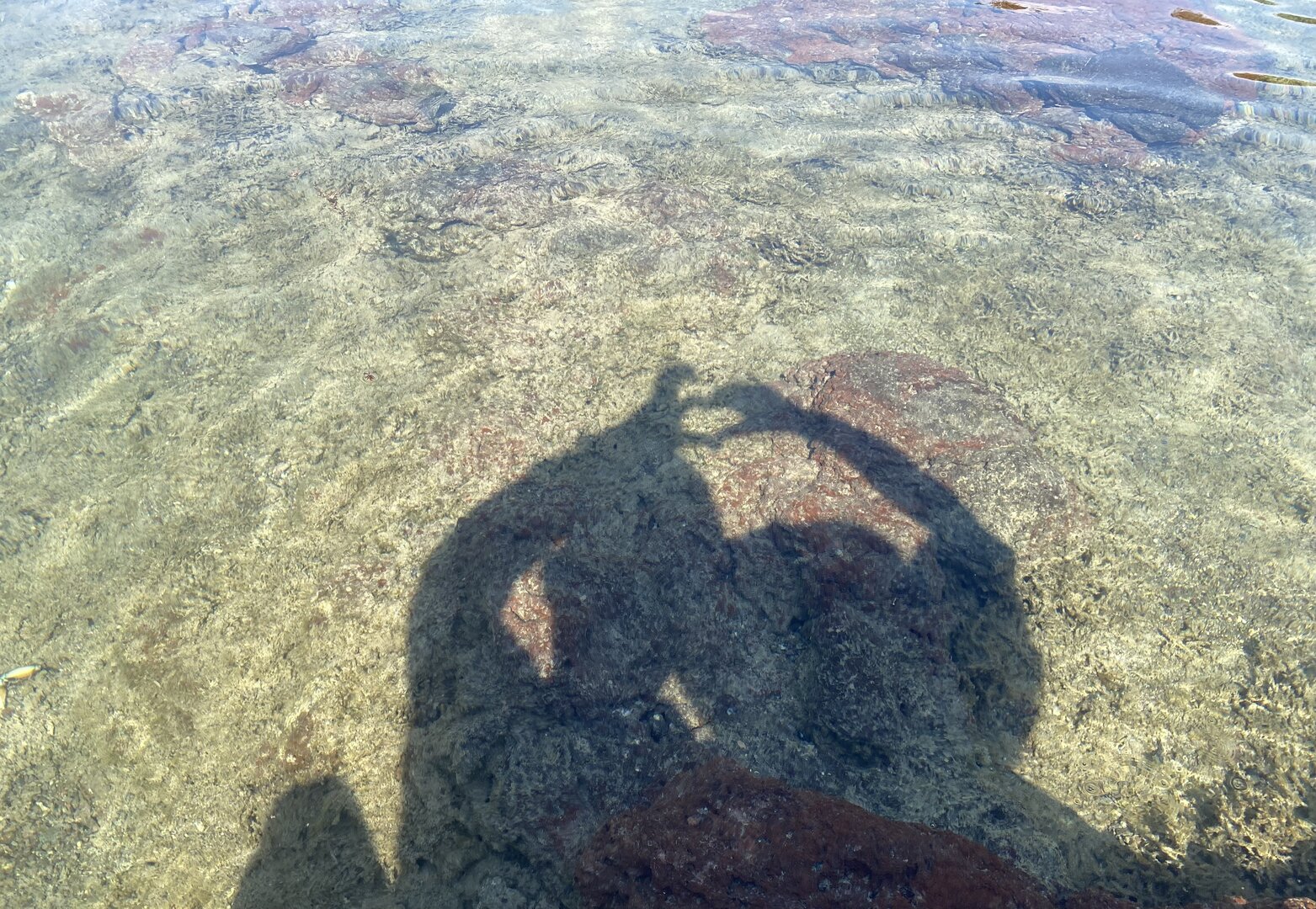
Hòn Đen is a small, uninhabited rocky islet just off the north-east of Phú Quý island (OpenStreetMap, way 1122839002). The whole islet is black rocks piled on top of one another in all kinds of random shapes, and the water around it is clear. There are no trees, no residents and no recreational activities on the islet. Locals also call it Hòn Nghiên or Hòn Mực. Hòn Đen, together with Hòn Giữa and Hòn Đỏ, spreads out in an arc around the beach on the north-east of the island. Hòn Giữa is a line of sharp rocky reefs right next to Hòn Đen.
Busy and quiet times
Hòn Đen is quiet. It is not a popular tourist spot and locals rarely come here; mostly a few groups of young people seek it out to explore. People from the island occasionally cross over to gather sea snails, and fishermen cast nets around it. That is local work, not an activity for visitors.
Photographs
1 of 1 on fileCuong Tran (tài khoản Flickr: Cuong Quoc) · Public Domain Mark 1.0 · source
The story
Hòn Đen: an inkstone of rock off Phú Quý
Picture a small island just offshore from Phú Quý, made entirely of black rock, without a single tree or a single inhabitant. It is named for the colour of its stone: Hòn Đen, “Black Islet”. Locals also call it Hòn Nghiên and Hòn Mực — nghiên is an inkstone, mực is ink, the tools on a writer’s desk in the old days. It is not a swimming beach. The local authorities advise that anyone visiting Hòn Đen should stay seated in the boat and look, and not swim here.
Vibe
Tags
Source
Hòn Đen was located using the island polygon on OpenStreetMap (way 1122839002, tagged place=islet), cross-checked against Wikidata Q32201144 and a Google Maps pin. The cross-check was done on 26 Sep 2026; there are other places called Hòn Đen in Khánh Hòa and Ninh Thuận, which are not this one. The names Hòn Nghiên, Hòn Mực, the row of rock ridges at Hòn Giữa, the island's wind seasons and the administrative unit of Phú Quý special zone, Lâm Đồng Province, come from the Vietnamese Wikipedia article on Phú Quý. The scene of black rocks piled on one another and the clear water come from taucaotoc.vn (17 Feb 2021); Kenh14 (10 Apr 2024) copied this article almost word for word, so it is not counted as a second source. The cluster of three arc-shaped islets comes from the local blog diphuquy.com (25 Nov 2024). That the islet has no trees, no residents and no entertainment, and the line ‘not for tourists’, are the words of the Director of the Bình Thuận Department of Culture, Sports and Tourism in Znews (10 Apr 2024) and Tiền Phong (11 Apr 2024). Getting out to the islet by speedboat, the words of a local guide, the scene with few visitors, and the advice to only view it from the boat and not swim come from Dân trí (10 Apr 2024). VietNamNet the same day cites the Phú Quý district Office of Culture and Information with the same advice. The story of sea snakes living long in the rock crevices and villagers going over to catch snails comes from Tiền Phong (11 Apr 2024). The timid nature of the snakes comes from Dân trí (11 Apr 2024); the species is identified only from video. Sharp, slippery rock comes from a personal blog on Lemon8, so this is a weak source. The need to hire a speedboat comes from the aggregator site cotrang.org. The distance from Phan Thiết to the island comes from the VnExpress guide (2022). The season for speedboat trips comes from a survey article by the provincial delegation published on vietnam.vn (23 Mar 2026). The rough-sea season comes from Tuổi Trẻ/Người Lao Động (30 Dec 2025), Báo Lâm Đồng (19 Nov 2025), Znews (18 Feb 2025) and VnExpress (13 Jul 2024). The paddleboard incident in the sea off Long Hải comes from VietnamPlus (Oct 2024); the article does not say it happened at Hòn Đen. Left out on purpose: the ‘nest of 15 snakes, the most venomous in the world’, because the Phú Quý District People's Committee said it was inaccurate (Apr 2024); the story of wading out to the islet at low tide, because no source speaks of depth or currents and the authorities advise viewing only from a speedboat; every distance figure from the shore (100 m, 200–300 m, 700 m, 1.8 km), because the sources disagree; the praise ‘beautiful and safe’ and the 2022 coral-viewing dive tour, because they were outdated by the April 2024 advice; swimming, SUP paddling, diving, check-ins, watching sunrise and sunset on the islet, because only aggregator sites say so and it contradicts the advice; coral and sea cucumbers around the islet and ‘unweathered basalt’, because only a resort site or aggregator sites say so; a marine protected area, because it is unclear whether one has been established; the ‘December to June’ period, because it overlaps the northeast monsoon (gió bấc) season; boat travel time, and the line that sea ferries are the ‘only means’ of reaching the island. There is no source yet on lifeguards, rip currents, the boundary of the SUP-prohibited zone or speedboat rental prices.
Place data is compiled from many sources across the internet by a team of automated AI agents that collect, enrich, check, challenge, score, edit, review and verify it.
Ratings & comments
Anyone can read. Sign in to rate, comment and like.