Đặc khu Phú Quý, Lâm Đồng · Market
Tam Thanh Market
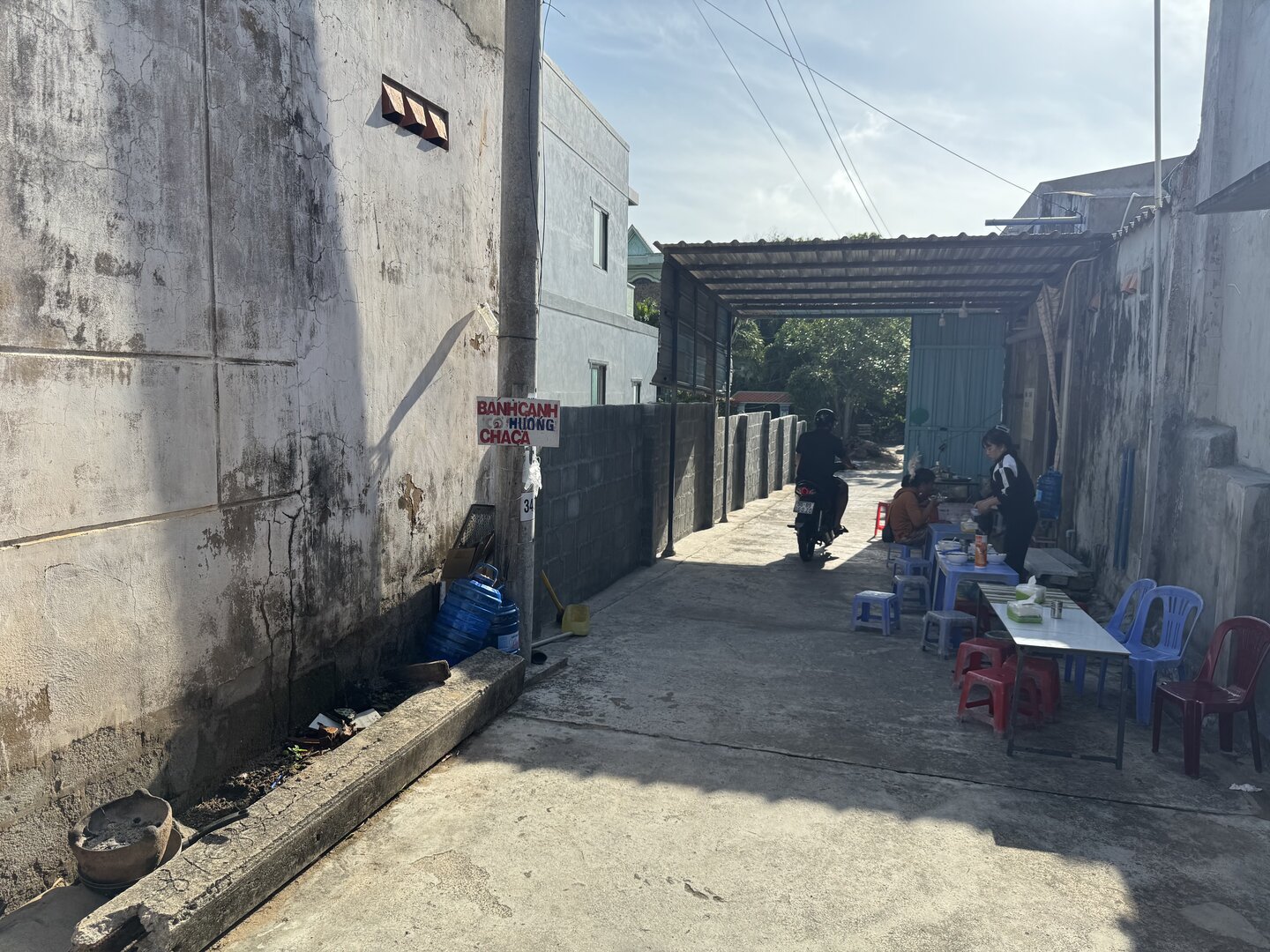
Picture a bowl of bánh canh chả cá, a glass of trà tắc from the stall next door, in a market that opens at first light for the people of Phú Quý island rather than for visitors.
No daytime photograph of this place yet
Anyone who grew up near a morning market knows the rhythm: people about while the sky is still grey, hot food at the market's edge, talk everywhere. When did you last go to a market like that? Chợ Tam Thanh (chợ means market), beside 27 Tháng 4 street near Phú Quý port, still keeps that rhythm. It is an everyday market for the islanders, not a souvenir market: a small market ground with two roofed buildings in the middle of an open yard, selling everything mixed together — live and fresh seafood, household staples, clothes, shoes, hands of bananas, bunches of greens, bundles of spring onions.
Tam Thanh Market — the morning market the islanders kept for themselves
What the place holds on to most clearly is its food. Breakfast here means soups made from fish, cooked by the islanders themselves — bánh canh chả cá (a soup of thick, chewy noodles with fish cake), bún cá (rice noodles with fish), bún riêu (another rice-noodle soup) — dishes regarded as the signature taste of Phú Quý. One diner described a bánh canh chả cá stall in front of the market as having a clear, lightly sweet broth with plenty of fish cake. Next to it is a trà tắc stall (tea with tắc, a small local citrus), and people often order a glass to go with their bowl. Nearby you can also find cháo lòng (rice porridge with offal), bún mắm nêm (rice noodles with a fermented fish sauce), and instant noodles cooked with egg or squid. For that diner, breakfast here meant sitting among island aunties and uncles chatting in a thick Phú Quý accent.
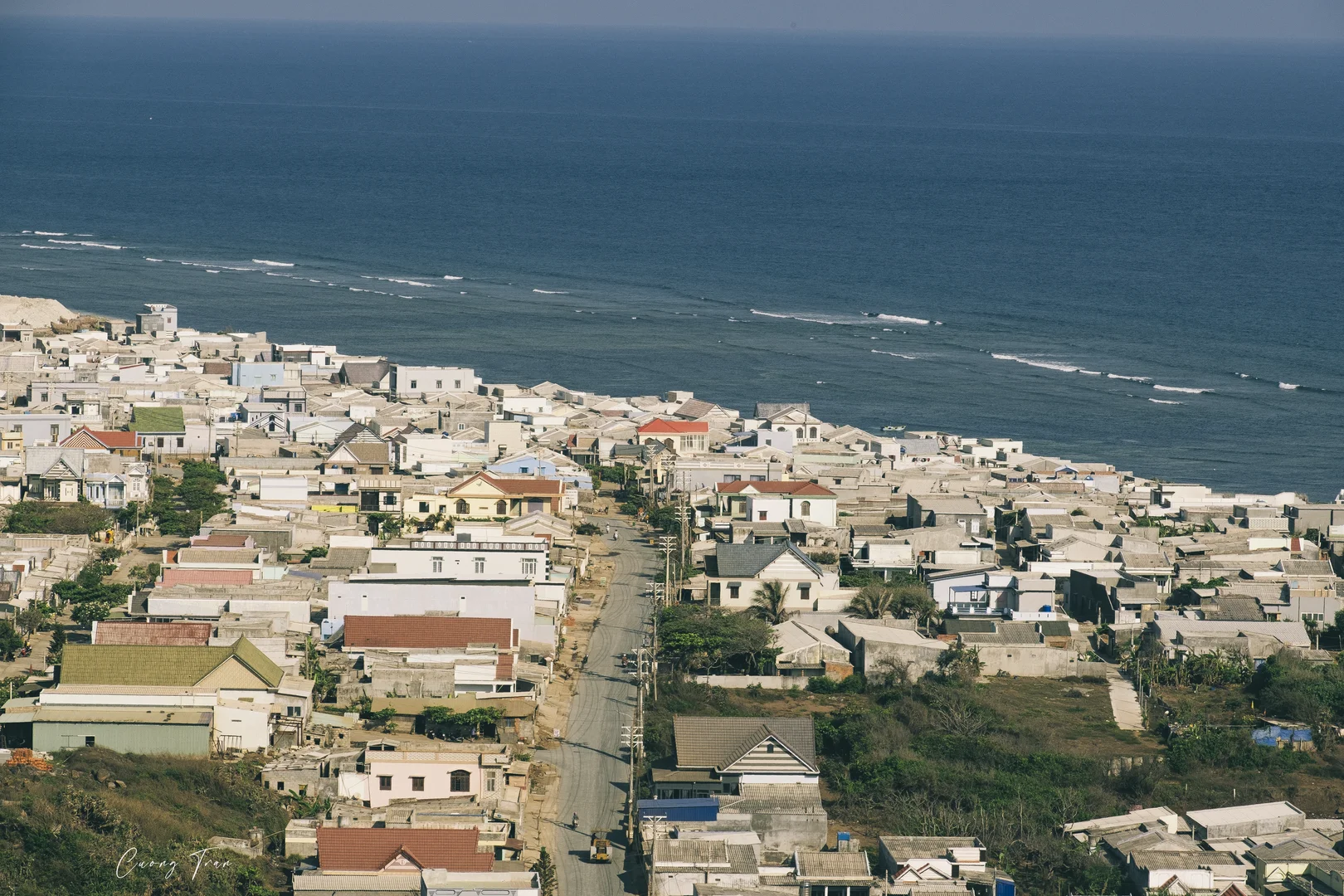
Phú Quý — Cù Lao Thu is one of the island's many old names — long lived closed off and self-sufficient, with fishing as its main livelihood. That trade still runs through the island's markets: boats head out in the afternoon, fish all night under lamps, and come back to the landing at dawn; traders from the island's communes, Tam Thanh among them, collect the fish there and bring it to market. The fish laid out in the island's markets in the morning is last night's catch. Today Tam Thanh is the island's hub for trade, fishing, passenger boats and eating out — and yet its market is still where islanders do their shopping.
The morning session is the busiest: come between first light and early morning. For breakfast you have to be early — the food stalls pack up before mid-morning, and latecomers find little left. The market runs from first light and still has goods in the late afternoon, and in the evening there are snack stalls around it — bánh căn (small rice-flour cakes), bánh xèo (crispy rice pancakes), chè (sweet dessert soup), noodle soups. Breakfast costs what islanders pay, seafood is reasonably priced, and vendors do not hassle you. One thing trips up first-timers: many stalls have no sign or menu board, so it is easy to walk past without knowing what they sell.
Enough to decide whether to go
- What it is
- An everyday market for the people of Phú Quý island, not a souvenir market
- Where
- Beside 27 Tháng 4 street, near Phú Quý port, Phú Quý Special Zone (đặc khu, a special administrative unit), Lâm Đồng province
- When to go
- From first light to early morning; breakfast stalls pack up before mid-morning
- How much
- Cheap — breakfast at islanders' prices
- What to eat
- Bánh canh chả cá, bún cá, bún riêu, with a glass of trà tắc
- Not to be confused with
- The wholesale seafood market at Phú Quý port — a different place
From someone who has been
Go early, sit at the bánh canh chả cá stall in front of the market with a glass of trà tắc from next door, then wander in among the greens, the bananas and the fresh seafood. If you want to see Phú Quý on an ordinary morning of its own people, rather than the face it shows visitors, this is where to start.
Vibe
Tags
Source
Its status as an everyday market, the range of goods, the breakfast dishes and the advice to go early come from the photo report by Nguyễn Lâm in Giáo dục & Thời đại (9 Dec 2023). The location and market footprint come from OpenStreetMap (way 1176839553, drawn 28 May 2023) and Nominatim. 27 Tháng 4 Street is only the nearest named street, about 50–70 m from the market footprint, so the address is written as 'near'. The bánh canh, cháo lòng (offal rice porridge), bún mắm nêm (noodles with fermented anchovy sauce) and trà tắc (kumquat tea) stalls in front of the market and the impression of a 'purely local accent' all come from a single origin: a Facebook review by Nguyễn Anh Kiệt (19 May 2023), rewritten by Dân Việt (12 Aug 2024) and dulichvietnam.com.vn (24 Jul 2023). The rhythm of the night-fishing boats comes from Dân Việt (2018) and Tuổi Trẻ (21 Nov 2019). The context of the four markets on the island comes from vetauphuquy.vn and Vietnam Coracle (18 Apr 2019). The story of rough seas at year's end comes from Báo Bình Thuận (3 Jan 2023). Evening food stalls around the market are mentioned only by the Queen Sea Resort blog (10 Nov 2025), MoMo (1 Aug 2022) and tieudaotu.com (24 Jun 2025), all weak sources. The following claims were rejected: 'no need to haggle', 'pay in cash', garlic and onions and the market's own seafood list, because only resort blogs say so. 'Largest market on the island' was rejected because it rests only on the description of a YouTube video, and it contradicts the area on OSM. The 5:00–9:00 time slot is the hours of one bánh canh stall, not of the whole market. The remarks about 'one price' from VOV 2016 and eva 2025 are about the fish market on the beach and Bãi Phủ market, not this market. Prices of individual dishes (2023–2024) are not given because they are out of date. Verified on 26 Sep 2026.
Place data is compiled from many sources across the internet by a team of automated AI agents that collect, enrich, check, challenge, score, edit, review and verify it.
Ratings & comments
Anyone can read. Sign in to rate, comment and like.