Đặc khu Phú Quý, Lâm Đồng · Religious site
Vạn An Thạnh
Picture a village communal house like any you may have seen in Vietnam, with wide courtyards, horizontal inscribed boards and parallel couplets, but with one difference: the main deity worshipped here is the whale.
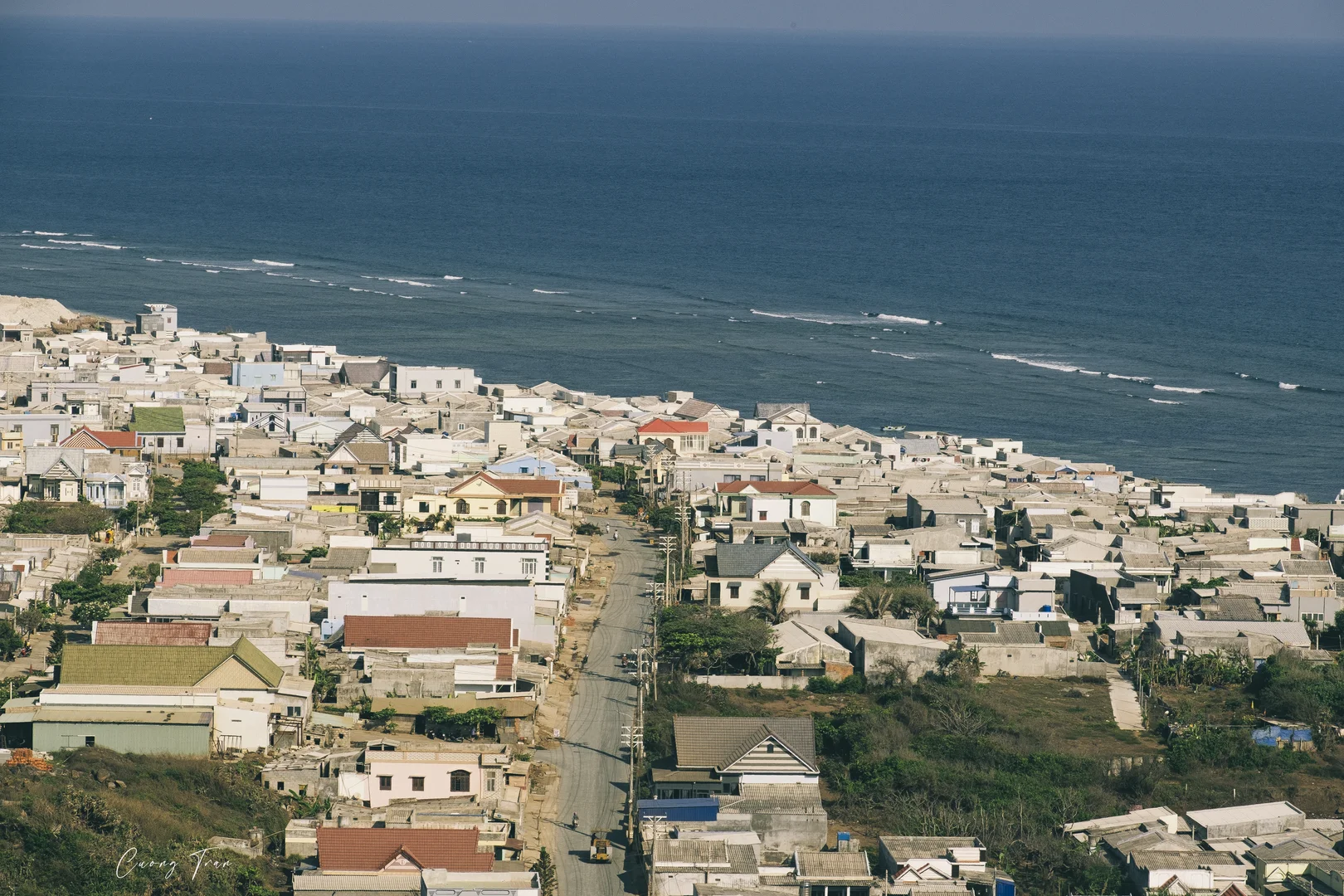
Rice-growing villages in Vietnam have a đình, the communal house where the village worships its guardian spirits and gathers. Fishing villages have a vạn. Vạn An Thạnh was built in 1781, is the oldest vạn on Phú Quý Island, and has been a national heritage site since 1996. It faces south, looking straight out to sea beneath rows of coconut palms. The Main Hall, the Võ ca (the pavilion used for rituals and performances) and the hall of the village founders are laid out in the shape of the Chinese character for three (三), with wide courtyards front and back where villagers play and watch hát bội, traditional Vietnamese opera, on festival days. The village's tutelary god, Thành hoàng, is worshipped here too, but only as a secondary figure. The main deity of the vạn is the God of the Southern Sea, known as cá Ông, “Lord Whale”.
The seaside village temple that still mourns whales
Have you ever wondered how long a village might wait for its own god? Here it was sixty years. The vạn stood without a single whale washing ashore until 1841, which also happened to be a Tân Sửu year in the lunar calendar cycle, like 1781. That year the first dead whale drifted onto the sand in front of the vạn. The village gave it a solemn burial and named it Vị Cố, “the Ancestor”. Its ancestral tablet is still on the altar, inscribed with the Tân Sửu year and the full moon of the tenth lunar month, and the death anniversary of Vị Cố became the anniversary of the whole vạn. By local custom, whoever first finds a whale washed ashore becomes its chief mourner, mourning for three years as an eldest son would, dressed in red with a red mourning band. According to the temple keeper, this is because red was the mourning colour of kings and royalty. Two to three years later, depending on the animal's size, the village exhumes the bones and enshrines them in the Tẩm, the bone shrine of the vạn.
The vạn worships and keeps dozens of skeletons of whales and leatherback turtles. In the exhibition hall, the skeleton of a sperm whale, a toothed whale, fills the middle of the room: 50 vertebrae, 30 pairs of teeth in the lower jaw, and not a single tooth in the upper one. Several skeletons of dolphins and of what fishermen call cá ông Chuông are arranged around it. According to the temple keeper, the layout recreates dolphins swimming behind a whale at sea. The skeletons were reconstructed by the Nha Trang Institute of Oceanography. The hall was completed in 2010. Because the exhibition hall at Vạn Thủy Tú in Phan Thiết was too cramped for the bả trạo troupe, who perform a ritual rowing song for the whale, this one was built larger so the festival can be performed right inside, among the bones.
Does it sound like something from an old book? In 2016, the Vạn An Thạnh heritage management board, together with local authorities and residents, still brought a whale carcass into Triều Dương Bay for burial. During the autumn ritual, fishermen take their boats out to sea with flags and drums to escort “ông Sanh”, a living whale, back to witness the ceremony at the vạn. Islanders who work far away still come back to the vạn for its festivals. As the local fishermen's folk saying goes: “When the Lord Whale comes to the village, it's like gold coming into the chest.” When a fishing village still mourns a whale today, don't you want to see for yourself what has kept these people bound to the sea for so long?
Timeline
- 1781like 1781
- 1841The vạn stood without a single whale washing ashore until 1841
- 1996National heritage site since 1996
- 2010The hall was completed in 2010
Enough to decide whether to go
- What it is
- A vạn: the whale-worship temple of a fishing village, the seaside counterpart of a village communal house (đình)
- Built
- 1781, a Tân Sửu year
- Status
- National heritage site since 1996
- Don't miss
- The sperm whale skeleton in the middle of the exhibition hall; the ancestral tablet of Vị Cố
- Visiting
- Still an active place of worship; the gate is usually locked, so call the number on the gate and the keeper will come to open it
- Address
- Triều Dương village, Phú Quý special zone, Lâm Đồng province
From someone who has been
The gate is usually locked. Call the number posted on it and the keeper, a former fisherman, will come to let you in. If you can go for the vạn's death anniversary in the middle of the tenth lunar month, which is also the autumn ritual, you'll find ceremonies, boat races, hát bội opera, lion dances and the bả trạo rowing performance.
Vibe
Tags
Source
Most of the facts on history, worship and artifacts come from a text by the Bình Thuận Museum posted on the website of the former Phú Quý District People's Committee, read through the Internet Archive snapshot of 27 Apr 2015. This text gives: the year of construction, 1781, the national monument listing in 1996, the 1841 whale-god (cá Ông) milestone and the principal deity Vị Cố, the 10 royal deity decrees, the funeral oration in Hán script, the 'Tam'-character layout, the orientation facing the sea, the Spring and Autumn sacrificial ceremonies, and the custom of exhuming bones. Báo Dân Việt (27 Sep 2022) gives the meaning of the name, the role of the vạn as the communal house of a sea village, the decrees entrusted to the three villages of Mỹ Khê, Hội An and Triều Dương together with the incense offerings, and the mourning custom. Báo Nông nghiệp Việt Nam (18 May 2022) gives the words of the vạn's keeper about the red mourning cloth. Báo Nhân Dân (22 Sep 2026) gives the current state: the locked gate, the caretaker, the activities on the death-anniversary day. VietNamNet (2016) gives the number of vertebrae and teeth of the sperm whale skeleton, how it is displayed and the whale burial of 2016. Đại biểu Nhân dân (2012) gives the restoration by the Nha Trang Institute of Oceanography. Du lịch Việt Nam (a repost from Báo Bình Thuận) gives the year the exhibition house was completed. Báo Lâm Đồng gives the bas-relief figures. The location was cross-checked against OpenStreetMap. Last checked on 26 Sep 2026. Things deliberately left out: the length and weight of the whale skeletons, because sources give four different lengths and two different weights; the exact number of skeletons ('over 70' or 'nearly 100' including leatherback turtles); the exact death-anniversary date of the vạn, because sources differ by one day; the date of the fishermen's prayer festival (lễ cầu ngư), because two sources contradict each other; the age 'over 240 years', because the original text made a subtraction error; the promotional sentences of a ferry-ticket sales site; and the story of the whale in 1960, because there is only one account. Tickets and opening hours are left blank, because there is no source yet from the Management Board of the Phú Quý special-zone monuments.
Place data is compiled from many sources across the internet by a team of automated AI agents that collect, enrich, check, challenge, score, edit, review and verify it.
Ratings & comments
Anyone can read. Sign in to rate, comment and like.