Hoi An Ancient Town, Da Nang · Religious site
Trieu Chau (Chaozhou) Assembly Hall
Picture yourself walking down Trần Phú street in Hội An, starting at Chùa Cầu, and simply keeping on until the street runs out.
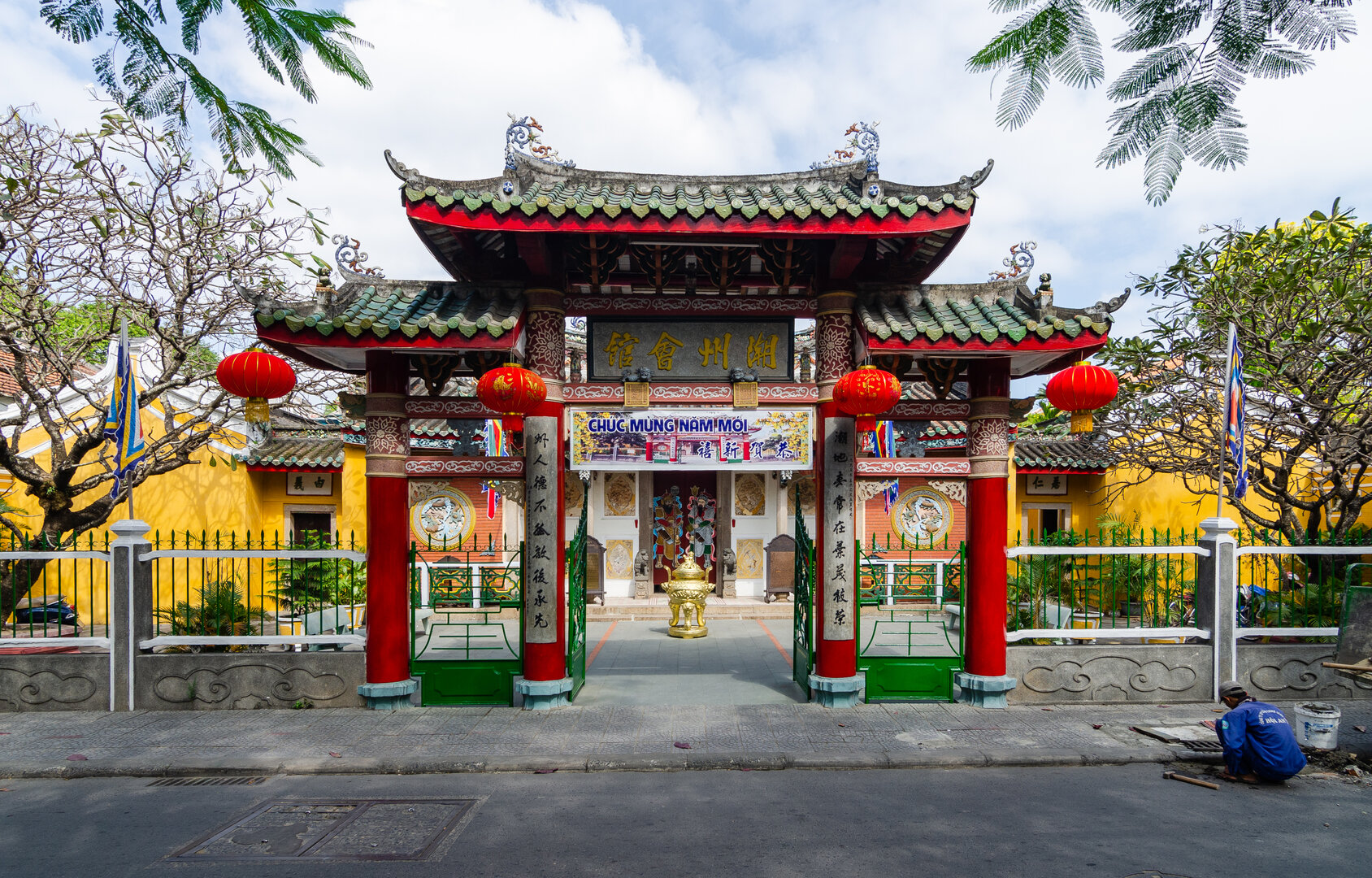
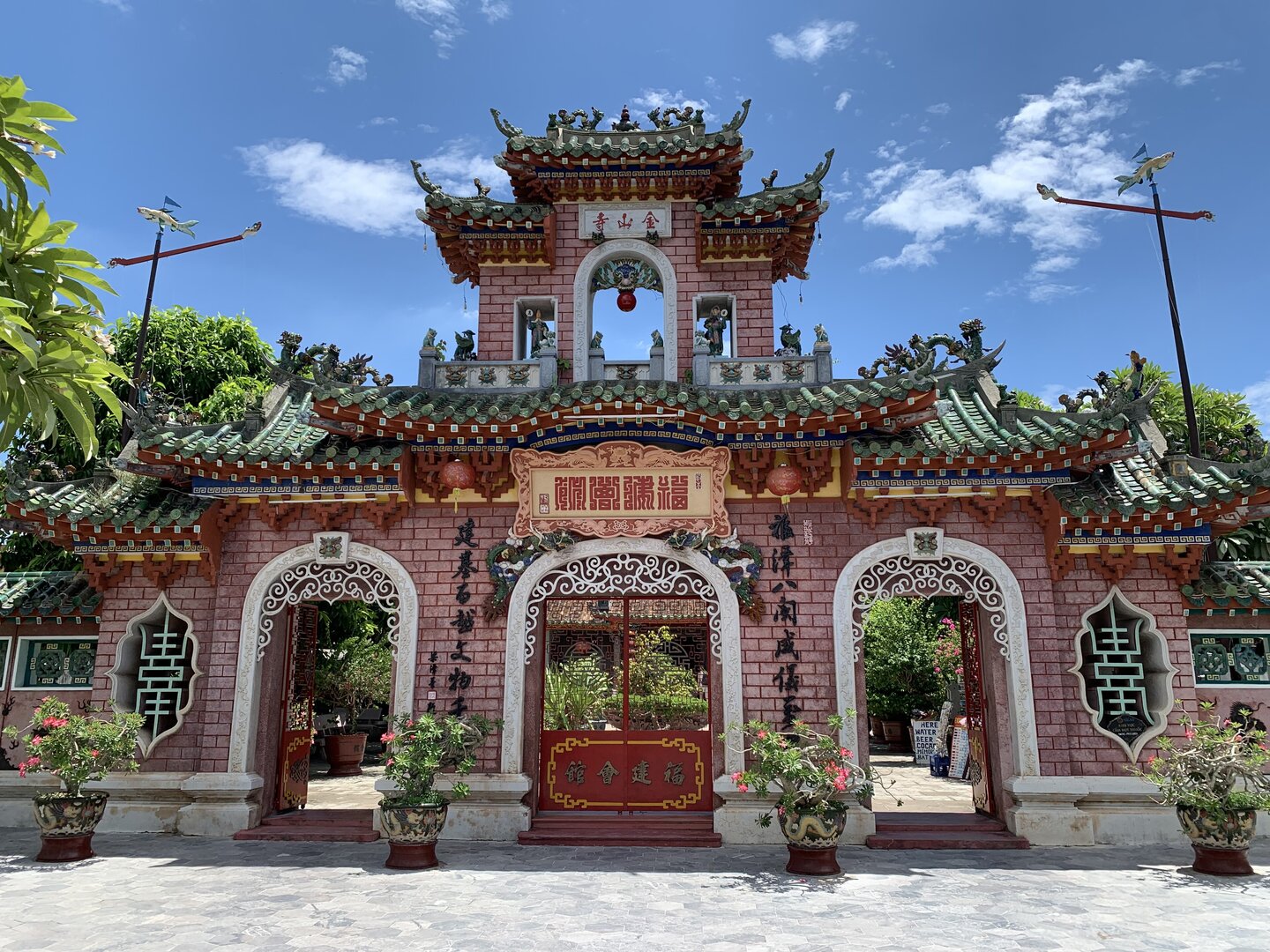
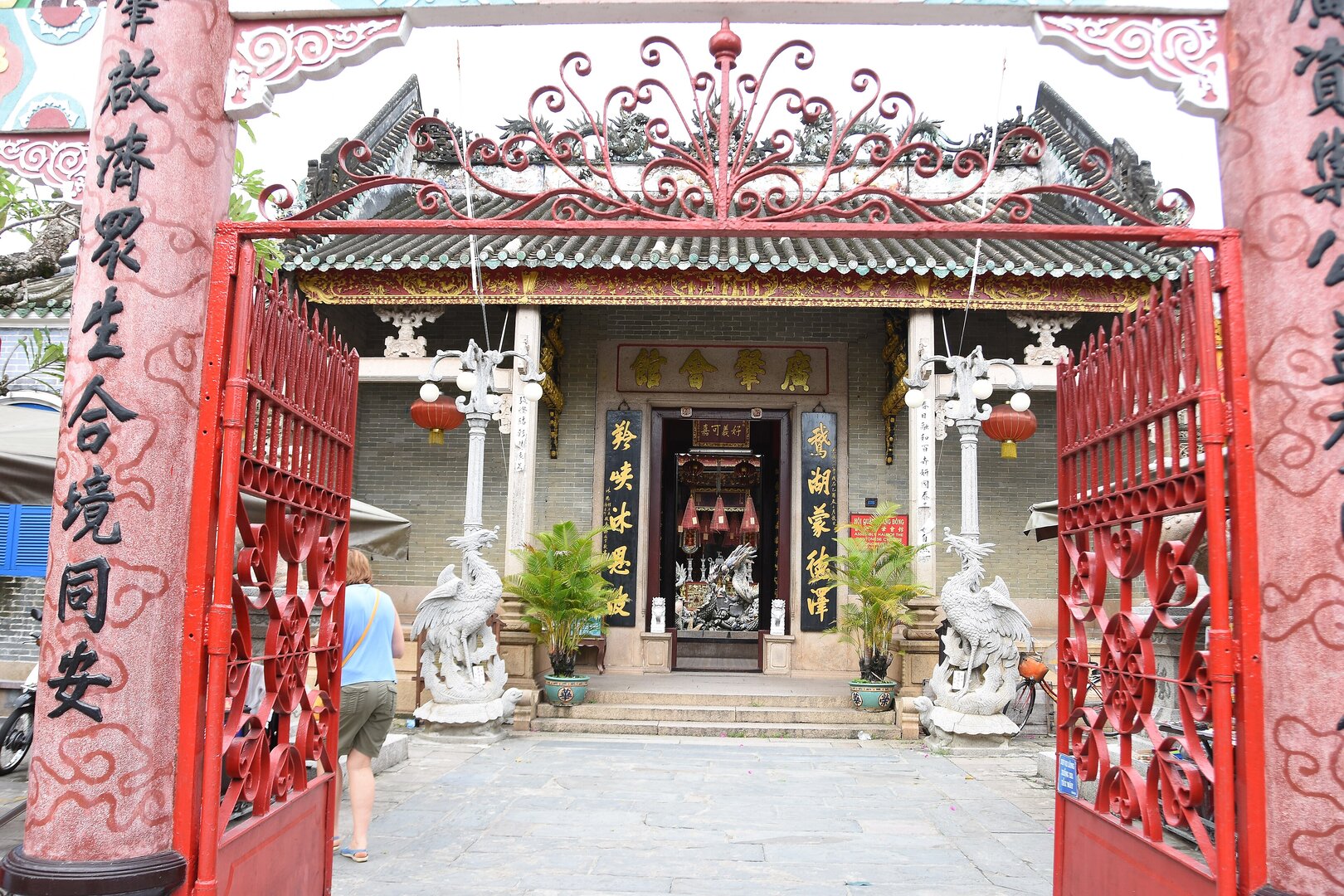
Picture yourself walking down Trần Phú street in Hội An, starting at Chùa Cầu, and simply keeping on until the street runs out. Where it ends, the name changes to Nguyễn Duy Hiệu. Along the roadside runs a wall with two iron gates — something the other assembly halls in town do not have. Behind the gates lies a wide courtyard, and only then the building itself: Hội quán Triều Châu, the assembly hall of the Chaozhou Chinese community, known locally as Chùa Ông Bổn.
Where the old street ends, a house goes back to its old job
It was built in 1845 by Chaozhou merchants who came to trade and stayed. They needed a place to gather with people from their home region, and a place to pray. The main deity in the sanctuary is Phục Ba tướng quân, god of the sea swell, who rescues trading junks in trouble; the side bays hold Tài Bạch tinh quân and Phước Đức chánh thần. Are you curious who people who lived by the sea addressed their prayers to? The answer hangs on the wall, in a horizontal lacquered board, gold characters on red, reading Hải quốc ân ba, in place since 1886.
But this house has not held worship without a break for nearly two hundred years. For a stretch of the twentieth century it did other work: first as the office of the Sơn Phong ward people's committee, then from 1988 as a workshop of the 8/3 wool-carpet cooperative. Only in 1990 was it handed back to the Ban Trị sự Triều Châu, the board of trustees of the Chaozhou congregation — and that August the caretakers restored the East and West houses and set in relief the four characters Nguyên Viễn Lưu Trường. Today it is doing its old job again: every year on the 16th day of the first lunar month there is the Nguyên tiêu offering and the memorial rite for the founding ancestors, from early morning to late afternoon, with the community and visitors alike coming in to offer incense.
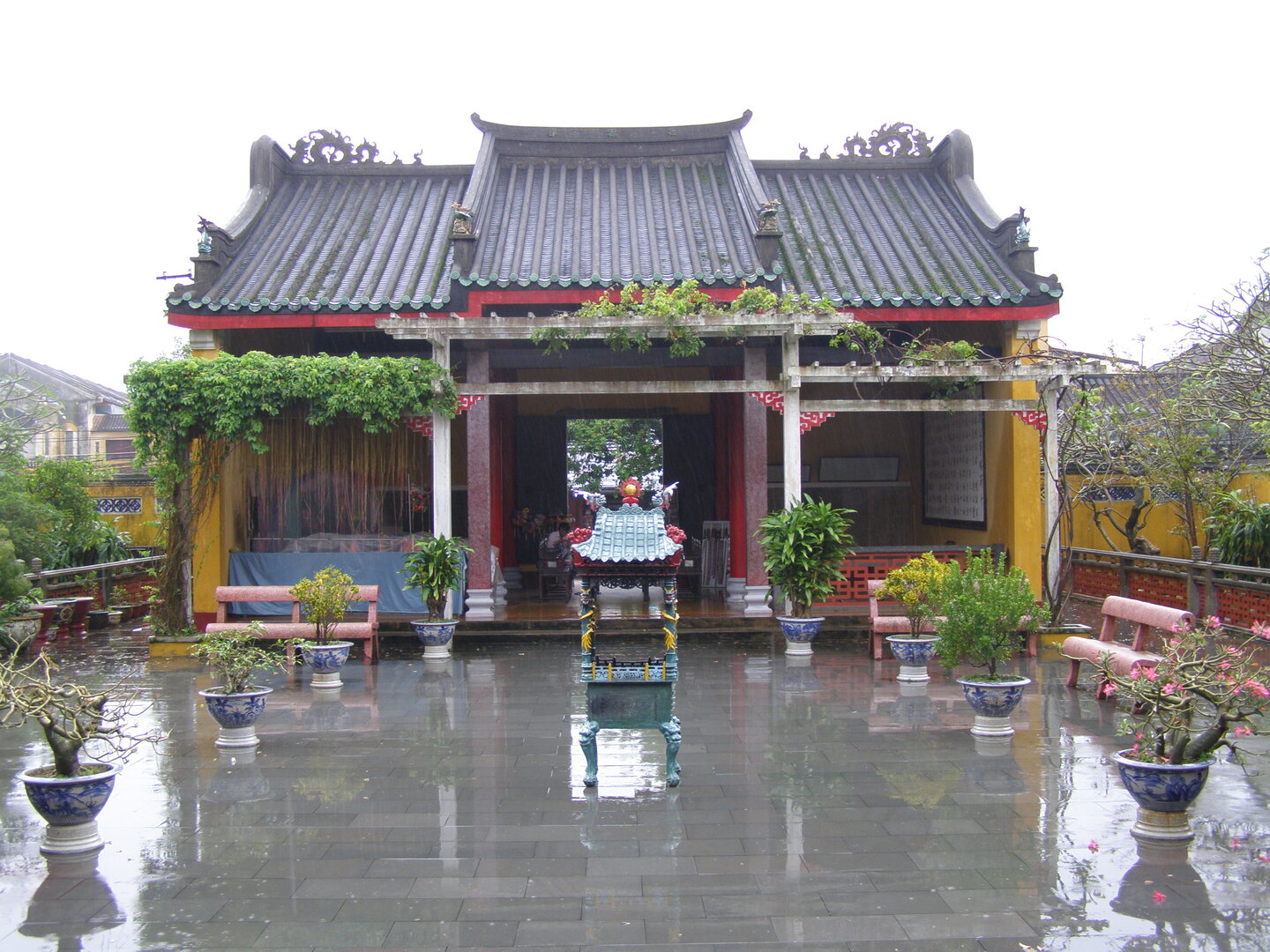
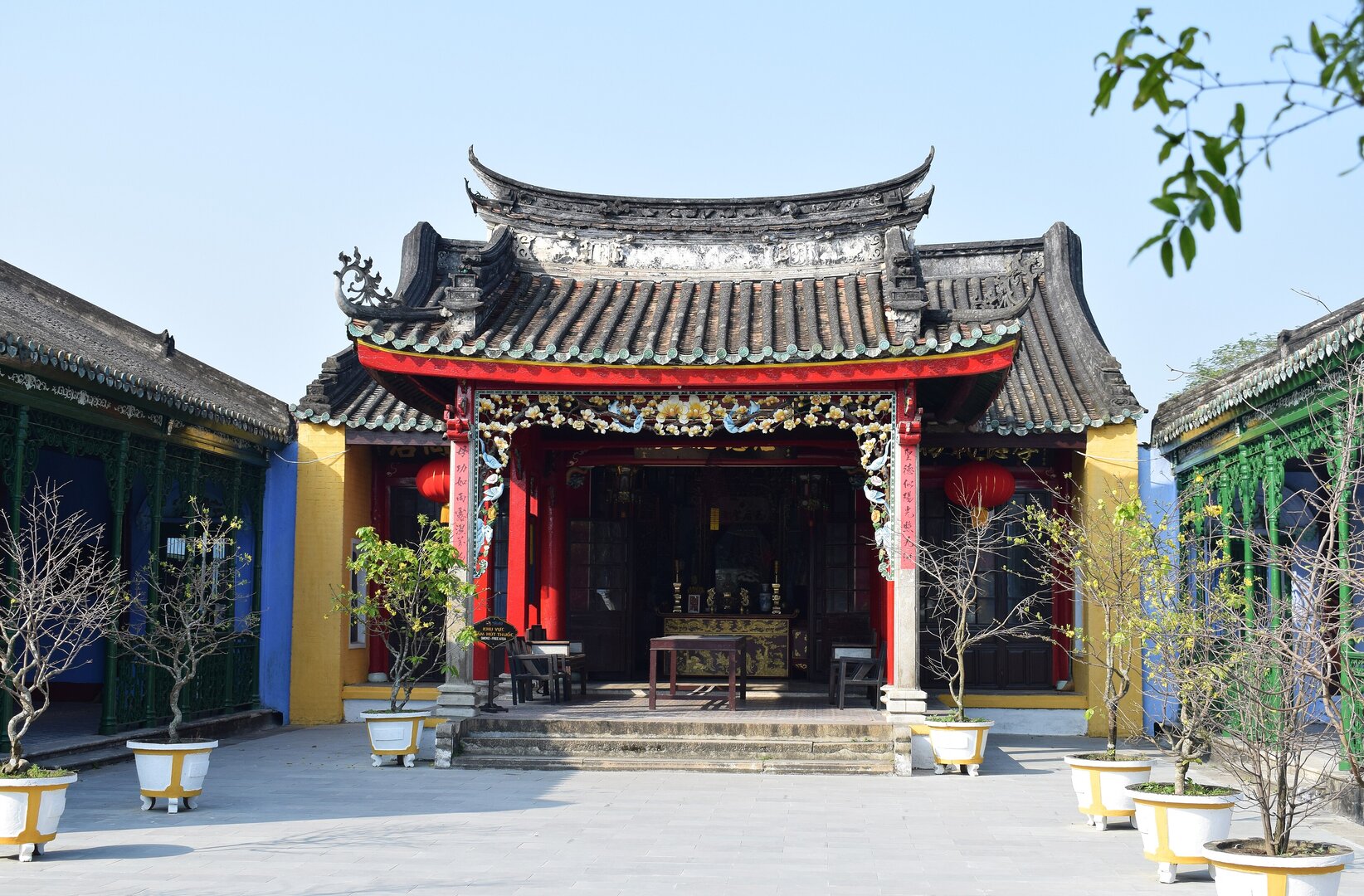
Walking in from the gate, the order goes: two iron gates, the courtyard, a three-bay front hall, an open sky-well, then three steps up flanked by two lions lying and facing the sanctuary. On the two sanctuary doors are painted door gods in military dress with weapons in hand — Tần Thúc Bảo with a tiger's beard and a black face, Uất Trì Kính Đức with a white one; among the five Chinese assembly halls in Hội An, door gods painted on the doors appear at only two, and this is one. What deserves the longest look, though, sits at the main altar: a wooden panel assembled from separate pieces and cut clean through in several layers, showing squirrels among bunches of grapes together with scenes of royal life from old legend. Look up and there is a tube-tile roof in the Huế court style, each tile end capped with a green-glazed ceramic disc carved with a chrysanthemum, and on the ridge two dragons flanking the moon, pieced together from fragments of porcelain. How many days did some carver spend cutting through those layers of wood, and what was he thinking as he made it for the house of people far from home?
Timeline
- 1886in place since 1886
- 1988then from 1988 as a workshop of the 8/3 wool-carpet cooperative
- 1990Only in 1990 was it handed back to the Ban Trị sự Triều Châu
- 2026entry is on the shared Old Town ticket (verified 2026-09-07)
Photographs
4 of 4 on fileEnough to decide whether to go
- Where
- Nguyễn Duy Hiệu, Hội An
- What it is
- Assembly hall of the Chaozhou Chinese community, known as Chùa Ông Bổn; still an active place of worship
- Built
- 1845
- Best thing to see
- The carved wooden panel of squirrels and grapes at the main altar; the two door gods painted on the sanctuary doors
- Admission
- No separate ticket sold at the door; entry is on the shared Old Town ticket (verified 2026-09-07)
- Main festival day
- 16th day of the first lunar month — the Nguyên tiêu offering and the memorial rite for the founding ancestors (verified 2026-09-07)
From someone who has been
The hall stands at the eastern end of the old quarter, exactly where Trần Phú stops — walk from Chùa Cầu and this is the natural end of the loop. For most of the daytime and the evening the old quarter is open only to pedestrians and non-motorised vehicles, so do not count on riding a motorbike to the door. Anyone who loves woodcarving, and anyone who would rather see a place of worship still in use than a display case, should save extra time in front of the main altar.
Vibe
Tags
Source
The founding date of 1845, the principal deity General Phục Ba and the hall's place in Hội An's system of five Chinese assembly halls are confirmed by two independent layers of sources: the 1992 monument record of the Hội An Monuments Management Board and the table of Hội An assembly halls on Chinese Wikipedia, citing 谢氏 (2007) and 裴 (2005). All the description of architecture, artefacts and the chain of 20th-century uses has only a single source — the 1992 file, now 34 years old — so read them as the condition at the time the file was made. That the hall still holds regular worship was independently confirmed by Báo Văn hoá on 1 Mar 2026 through the Bính Ngọ Nguyên tiêu (Lantern Festival) programme. The ticket structure and pedestrian-street hours come from the update of 16 Mar 2026 by the Hội An World Cultural Heritage Conservation Centre; the ticket price was re-confirmed by the Hội An City People's Committee press conference via Báo Công an Đà Nẵng. Coordinates and the English name come from OpenStreetMap way 448044645; the English name is a community label, not a name published by the managing body. The house number 157 once stored in the system was rejected — it is an odd number whereas all five assembly halls carry even numbers, and the OpenStreetMap house-number range places 157 about 1.2 km east of the real location; the number 362 recorded here was read directly from the number plate on the wall pillar of the hall in a photo by Steffen Schmitz taken in Jan 2020, and matches the heritage list of the Conservation Centre itself. The ward name after 1 Jul 2025 is left blank because the main text of the merger resolution has not been read. The hall does not publish separate opening and closing hours and has no website or phone number of its own, so those fields are left blank rather than filled in. Photos by Steffen Schmitz and Vuong Tri Binh, licensed CC BY-SA 4.0 via Wikimedia Commons.
Place data is compiled from many sources across the internet by a team of automated AI agents that collect, enrich, check, challenge, score, edit, review and verify it.

Ratings & comments
Anyone can read. Sign in to rate, comment and like.