Hoi An Ancient Town, Da Nang · Religious site
Hoi An's All-Chinese Assembly Hall
Picture yourself walking down Trần Phú street, holding the old-town ticket that almost everyone who comes to Hội An ends up holding.
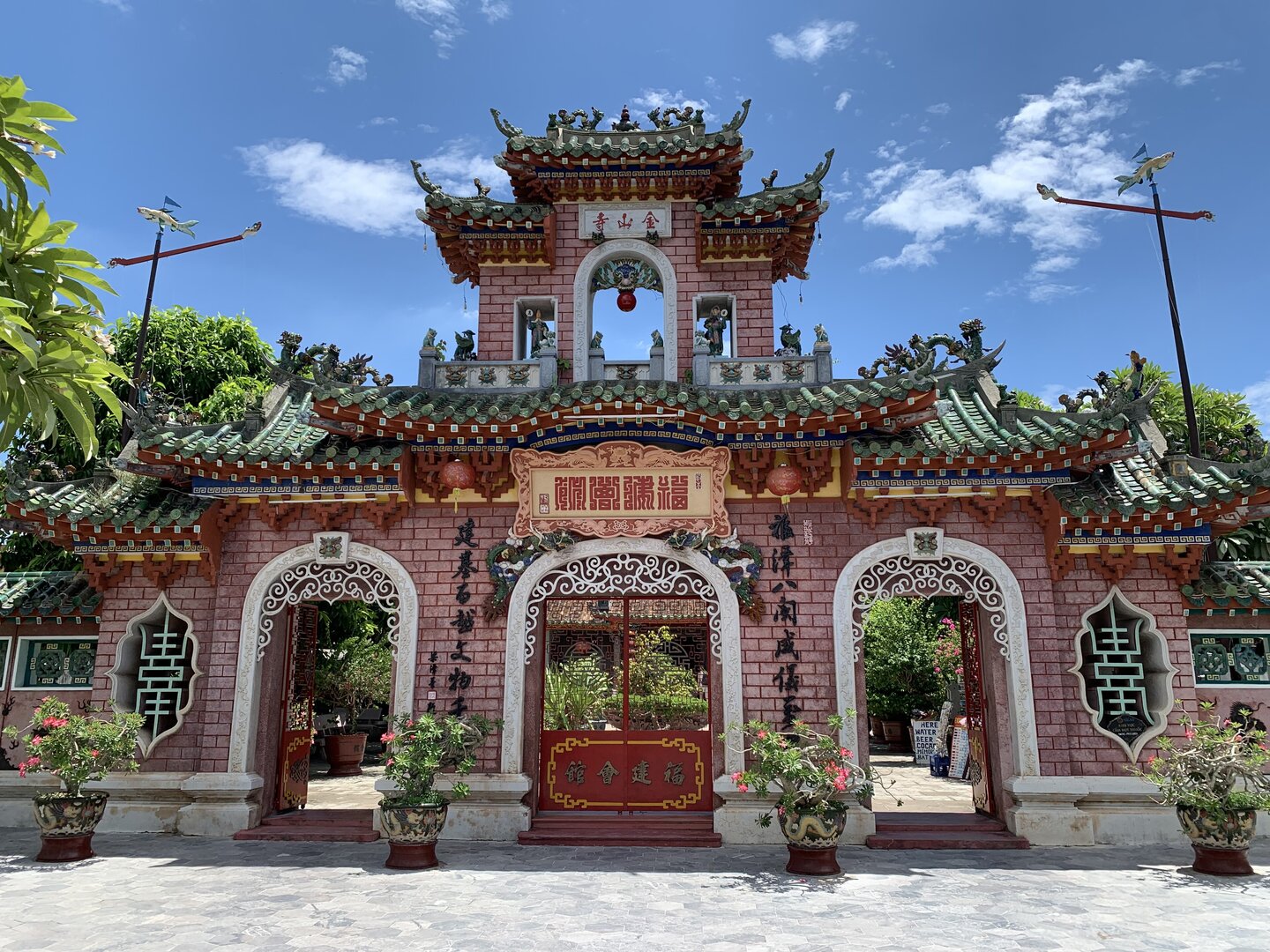
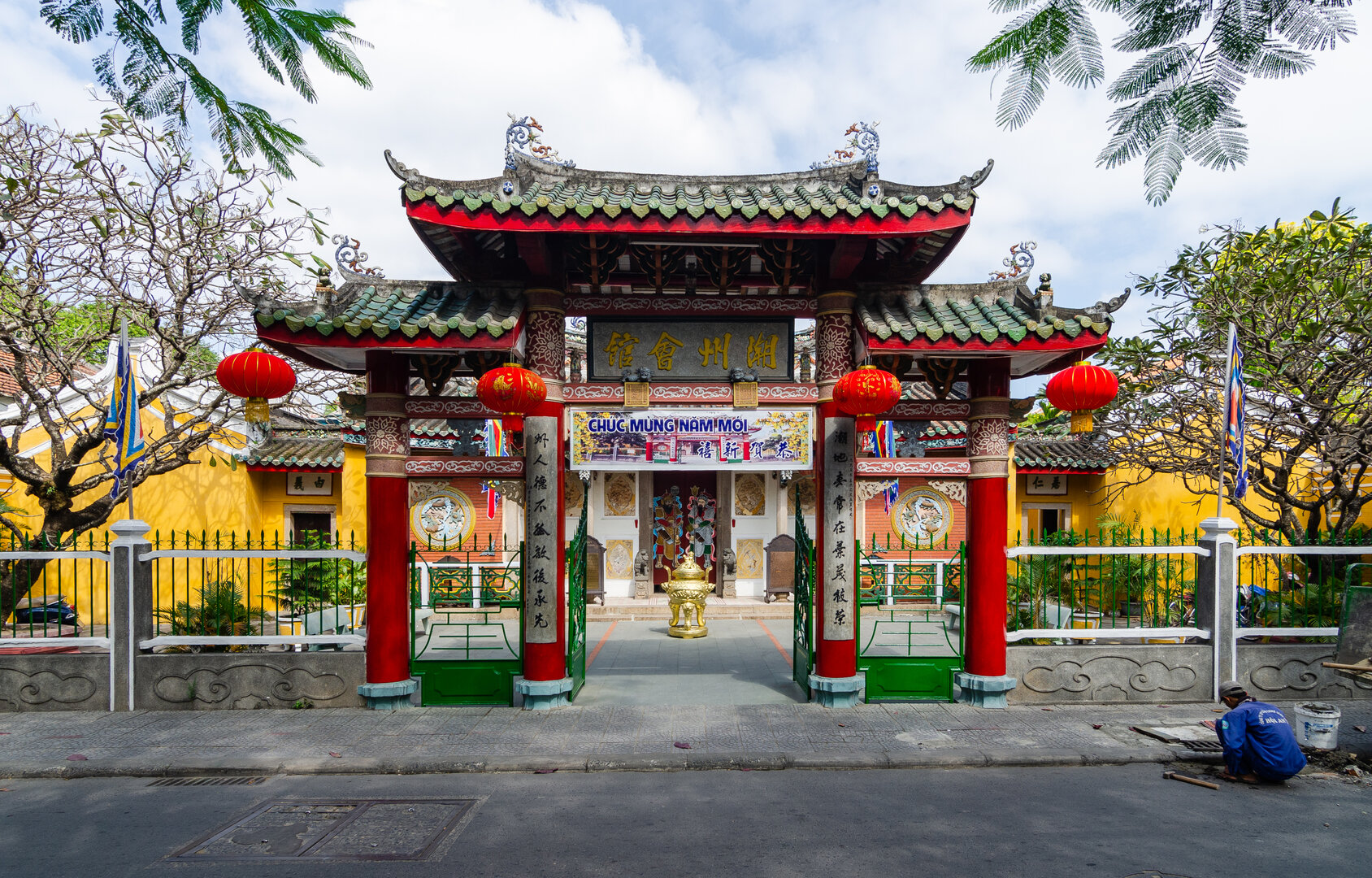
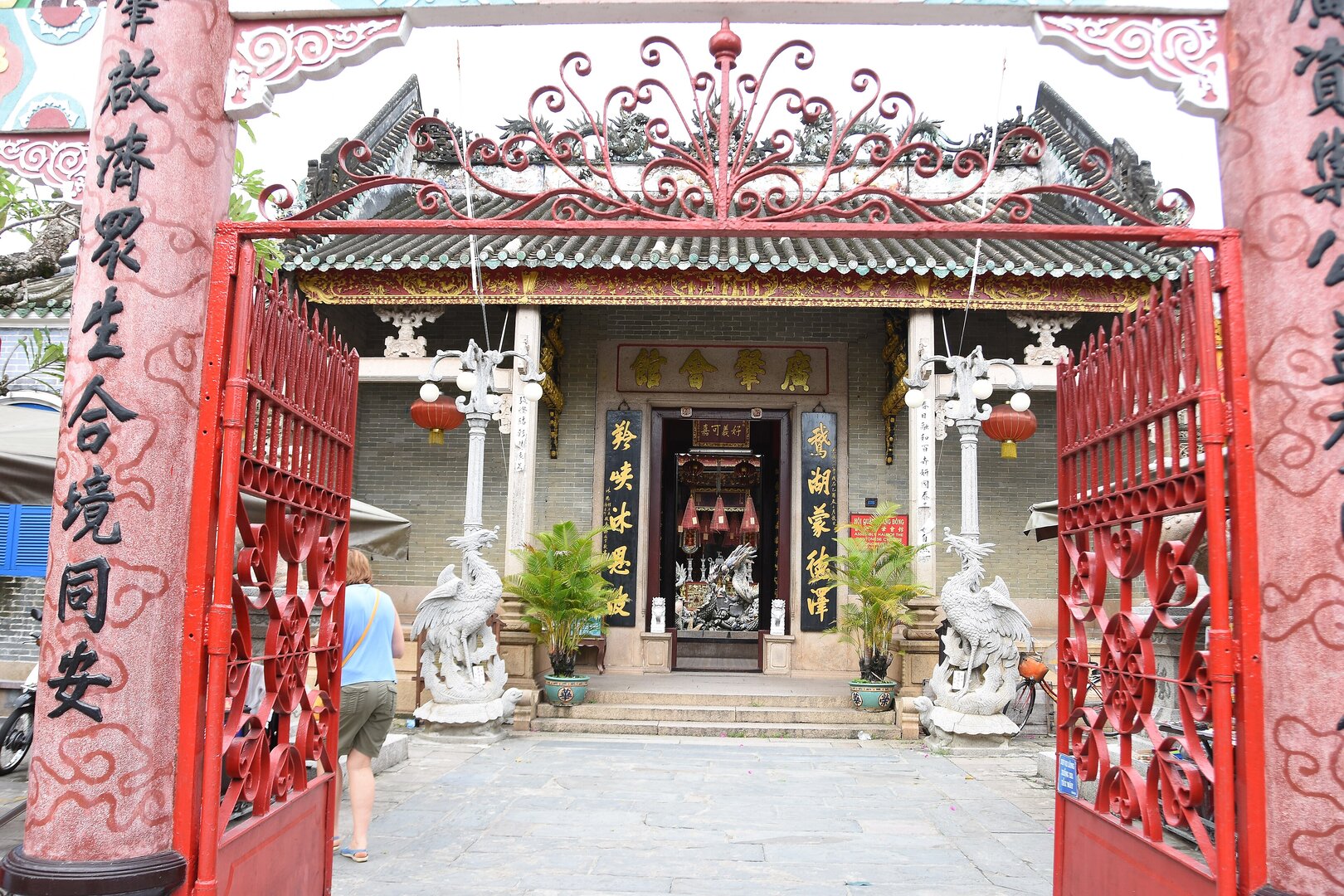
Picture yourself walking down Trần Phú street, holding the old-town ticket that almost everyone who comes to Hội An ends up holding. Four Chinese assembly halls are named on it. You stop in front of one more assembly-hall gate, check the ticket again, and its name is nowhere on the list. This is Hội quán Ngũ Bang — the Five Congregations Assembly Hall — and the fact that it sits outside that list says a good deal about it.
The hall held in common, and the community with no house of its own
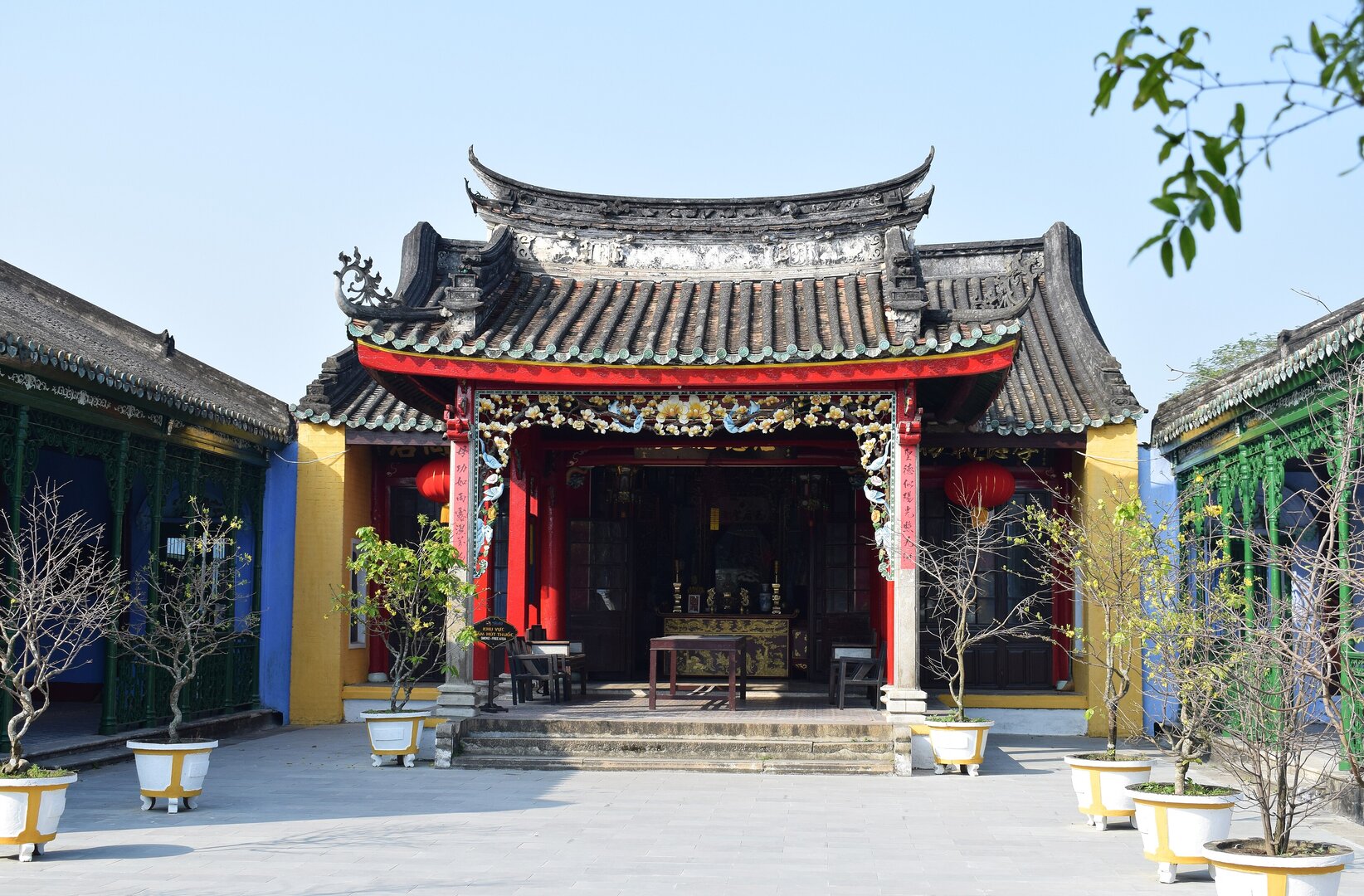
It was built around 1741, inside the old town that UNESCO inscribed as a World Cultural Heritage site in 1999. Each of the four other assembly halls in the old town belongs to one bang — a congregation of Chinese migrants organised by the region they came from. This one is held in common by all five: Phúc Kiến, Triều Châu, Quảng Đông, Hải Nam and Gia Ứng. And "in common" is not a slogan here: the Gia Ứng congregation had no hall of its own, so they gathered in this one. For one community out of the five, the shared house was the house.
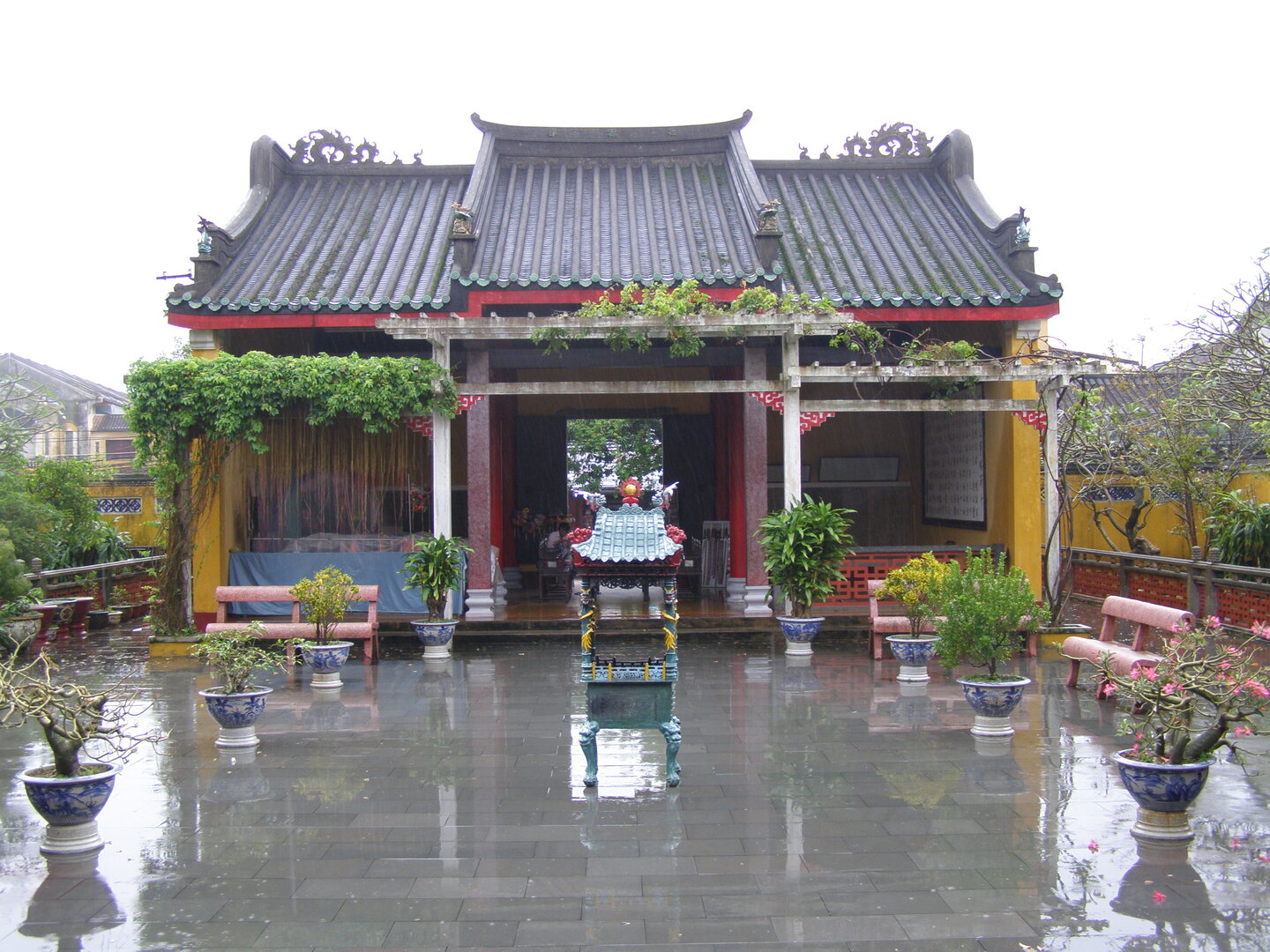
Are you curious what the two low buildings running down either side of the courtyard were for? They are the tả vu and hữu vu, the flanking side halls, and the Chinese community used them to teach their children Chinese script, from primary through secondary level. That is why the place carries two more names: Trung Hoa công học, and trường Lễ Nghĩa — the Lễ Nghĩa school. A place of worship and a place of schooling at once. In the main sanctuary stands the altar of Thiên Hậu Thánh Mẫu, the sea goddess who protected Chinese seafarers; flanking her are Thuận Phong Nhĩ and Thiên Lý Nhãn, the one who hears far and the one who sees ten thousand miles, watching for a boat in trouble.
So what does this heritage still mean today? It still does the work it was built to do. Every year in the third lunar month, the Chinese community of Hội An holds the Thiên Hậu Thánh Mẫu feast day here and at the nearby Phúc Kiến hall, with the head of the congregation leading the main rite. And because the core of the old town belongs to people on foot for most of the day into the evening, you will arrive at the gate slowly, walking — close to the way people have always arrived here, long before there was any ticket.
A community of seafaring merchants lands at an unfamiliar river port and builds, first of all, a place to worship together and to teach their children letters. What do you think they were most afraid of losing? If that question interests you, try stopping at the gate the ticket doesn't mention.
Photographs
8 of 8 on fileEnough to decide whether to go
- What it is
- The assembly hall shared by the five Chinese congregations of Hội An, and a temple to the sea goddess Thiên Hậu Thánh Mẫu
- Built
- Around 1741
- Where
- 64 Trần Phú, Hội An, Đà Nẵng
- Most worth seeing
- The Thiên Hậu altar flanked by Thuận Phong Nhĩ and Thiên Lý Nhãn; the tả vu and hữu vu side halls that once served as Chinese-language classrooms
- Still in use for
- The annual Thiên Hậu Thánh Mẫu feast day in the third lunar month, led by the head of the congregation (verified 2026-09-07)
- Ticket and access
- Not among the sights covered by the old-town ticket; reach it on foot, as the old-town core is closed to vehicles for most of the day (verified 2026-09-07)
From someone who has been
Plan the walk from wherever you park, since this stretch of Trần Phú is closed to vehicles for most of the day. The hall is not covered by the old-town ticket, so don't treat that ticket as your key to the door — ask the caretaker before stepping into the courtyard. If you come during the third-lunar-month feast day, you will find a hall in the middle of a rite rather than an exhibit: stand back a little, and don't cut through the ceremony.
Vibe
Tags
Source
Identity and coordinates were checked against OpenStreetMap node 6151138385, which sits exactly at 15.877757 / 108.330059; a query within a 120 m radius found no duplicate row (read on 7 Sep 2026). The nature of the hall as the shared assembly hall of the five congregations (Phúc Kiến, Triều Châu, Quảng Đông, Hải Nam, Gia Ứng), the fact that the Gia Ứng congregation has no assembly hall of its own, and the deities worshipped come from Võ Thị Ánh Tuyết & Đào Vĩnh Hợp, 'Temples and Assembly Halls of the Chinese in the Cultural and Religious Life of Hội An Residents' (Vietnamese original title translated), VNUHCM Journal of Social Sciences and Humanities. The date of about 1741 and the function as a Chinese-language school — written in the past tense — come from the tourism portal of the Đà Nẵng Department of Culture, Sports and Tourism; the original page is built with JavaScript and could only be read through a search engine's rendered copy, so it is treated as medium-strength confirmation, not strong. The legal basis of protection — national monument under decision 506/VH-QĐ of 19 Mar 1985, special national monument in 2009, UNESCO World Cultural Heritage on 1 Dec 1999 — comes from the Department of Cultural Heritage; the protection comes from the hall being a component of the whole Hội An Ancient Town, and there is no separate classification decision for the hall. The post-merger administrative unit is based on clause 21, Article 1 of Resolution 1659/NQ-UBTVQH15 of 16 Jun 2025. The Lễ vía Thiên Hậu Thánh Mẫu (feast day of the Holy Mother Thiên Hậu) and the pedestrian-hours of Trần Phú street come from the Hội An World Cultural Heritage Conservation Centre; the list of sights covered by the ancient-town ticket was checked on 7 Sep 2026. The physical condition is based on a Vietnam News Agency (TTXVN) report of 10 Oct 2024. Photos by Chainwit., Mig Gilbert and Steffen Schmitz on Wikimedia Commons, licences CC BY 4.0 and CC BY-SA 2.0/4.0, credited per photo. Checked and NOT used: the English name 'Hoi An's All-Chinese Assembly Hall' — only a tag entered by the community on OpenStreetMap, not an official name; the national monument classification date of 17 Feb 1990 together with the dates 1690, 1697, 1757 and the articles about an 'assembly hall over 300 years old' — all of these belong to the Phúc Kiến assembly hall at 46 Trần Phú, about 50 m away; the sentence 'has kept almost intact its original architecture' — it contradicts the 2024 warning about deterioration; 'free admission 07:00–17:00' — no operating source says so; the '500 years' age of the iron incense urn — the monument record only gives its size, 119 cm in diameter and 86 cm high, and no age; and the address 362 Nguyễn Duy Hiệu — that is the Triều Châu assembly hall. Still unresolved: the year it was renamed 'Trung Hoa Hội quán' (the 1992 record gives a restoration in 1855, one research article gives 1928), the year the stele 'Dương Thương Hội quán công nghị điều lệ' was erected (1741 or 1744), the content of the 10 articles on the stele, the number of restorations, the orientation of the building and the number of horizontal lacquered boards.
Place data is compiled from many sources across the internet by a team of automated AI agents that collect, enrich, check, challenge, score, edit, review and verify it.

Ratings & comments
Anyone can read. Sign in to rate, comment and like.