An Nhon Tay, Ho Chi Minh City · Attraction
Ben Duoc Tunnels
Picture yourself in front of a stone stele three metres tall, and then realising that the man who wrote the text carved on it also wrote 'Viếng lăng Bác' (Visiting Uncle Hồ's Mausoleum), a poem taught in Vietnamese schools. The stele stands at Bến Dược.
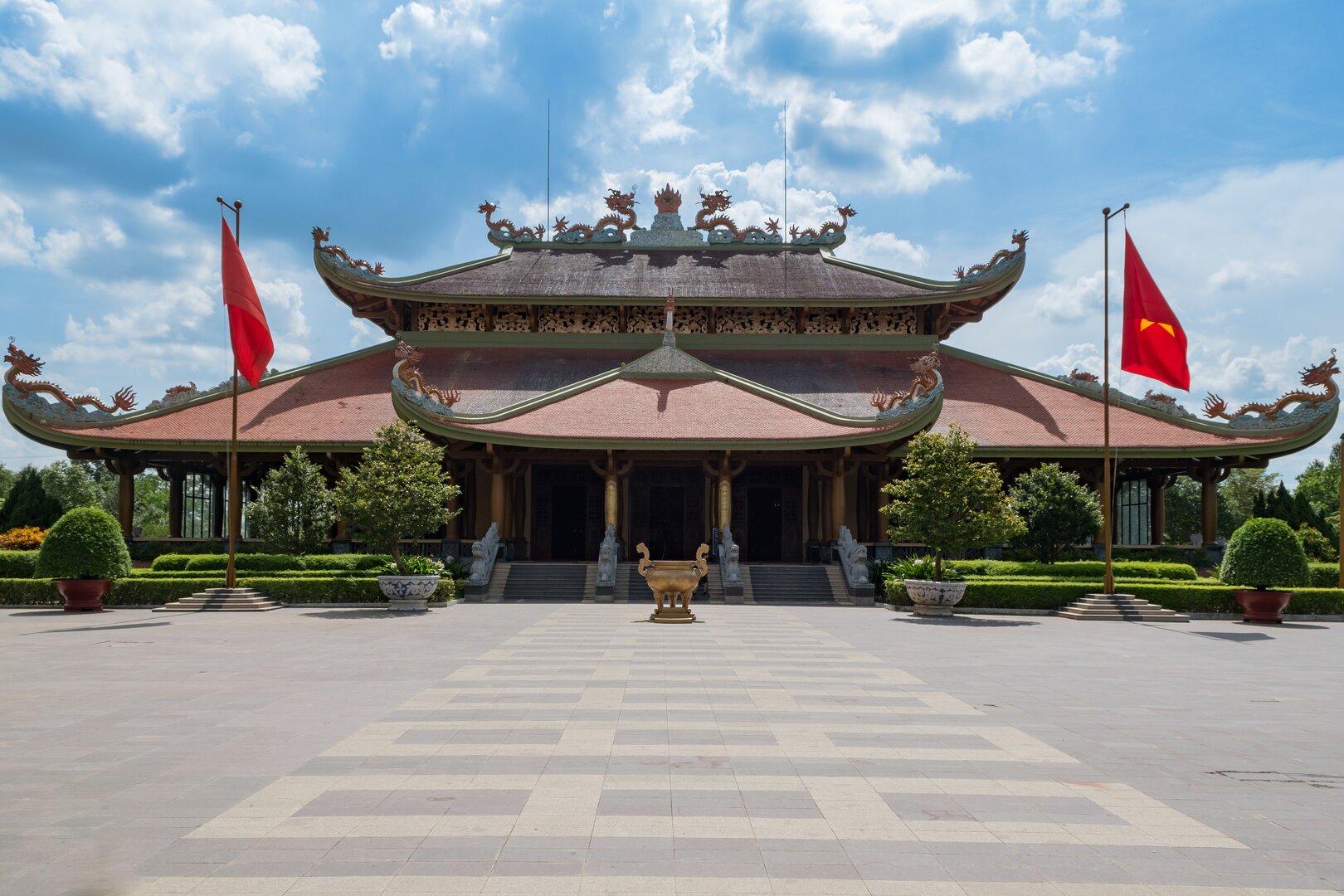
The poet was Viễn Phương. He did not write about Củ Chi from a distance. After his release from prison in 1962, he went into the Củ Chi battlefield to keep fighting and writing poetry, and he has a whole book of stories and reportage called 'Quê hương địa đạo' (Homeland of Tunnels, 1981). His text 'Đời đời ghi nhớ' (Remembered Forever), chosen through a competition, is now carved on a stele cut from a block of stone taken from Ngũ Hành Sơn (the Marble Mountains, Đà Nẵng) and housed in the stele pavilion of the Bến Dược Temple. The temple and the tunnel area are part of one heritage site. It is open to visitors, and tickets are sold.
Bến Dược Tunnels: where people still come looking for a name
Bến Dược is one of the two preserved sites of the Củ Chi Tunnels Historical Site. It was the base of the Khu ủy (the regional Party committee) and the Military Region Command of Sài Gòn – Chợ Lớn – Gia Định. The Củ Chi tunnels go back to the resistance war against the French, when they were only short stretches for hiding documents and sheltering cadres. A secret shelter with a single opening was easy to surround, so people extended it into a tunnel with many exits. The whole Củ Chi system eventually ran to more than 200 km of tunnels, some sections two or three levels deep, some so narrow, called 'eo' (waists), that you had to squeeze through sideways. All of it was dug with nothing but hoe blades and 'ki', woven bamboo baskets for carrying soil. The spoil was dumped into flooded bomb craters, shaped into termite mounds, or spread over fields and planted with crops. In January 1967, US forces launched Operation Cedar Falls, known in Vietnamese as 'Bóc vỏ trái đất' (peeling the earth's skin), with about 30,000 troops over 19 days, and one of its targets was this very base. The site's heritage dossier records that between 1954 and 1975 about 500,000 tonnes of bombs and shells fell on Củ Chi, roughly 1.5 tonnes for every resident.
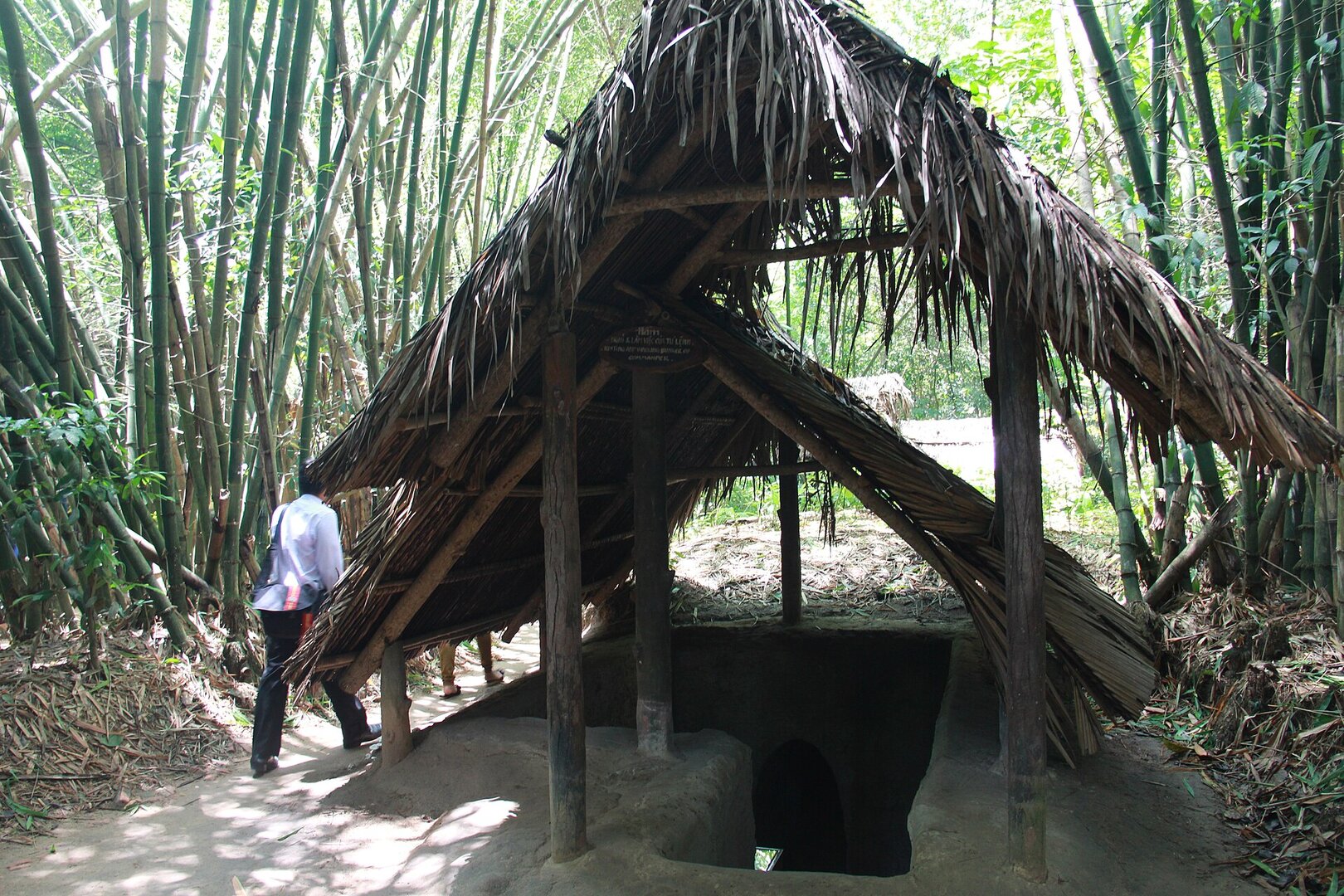
Have you ever wondered how a tunnel entrance that many people went in and out of every day could stay hidden, so hidden that even a broken blade of grass had to be put right? In the tunnel area, visitors do not wander on their own. After a documentary film in the hall, a guide leads each group and explains every stop: the bunkers where the leaders of the Khu ủy and the Command lived and worked, a medical bunker, a surgery bunker, A-frame shelters built not to collapse when bombs and shells burst nearby, a well, a weapons workshop, and a Hoàng Cầm stove, a kitchen that hides its smoke underground. The guides wear guerrilla clothing and show how people slipped into the tunnels and camouflaged them. Visitors can taste cassava dipped in 'muối đậu' (salt with peanuts), the food of the guerrillas. At the Bến Dược Temple, more than 45,000 names of fallen soldiers and Heroic Vietnamese Mothers (a state honorary title) are carved on a wall stepped into eight staggered tiers, lit from below by lamps hidden in the steps so the names can still be read from the ground. Behind the temple, the granite monument 'Hồn thiêng đất nước' (Sacred Soul of the Nation) by sculptor Phan Thị Gia Hương faces the Sài Gòn River: up close it is a falling teardrop, and from further back the teardrop becomes a pen.
So what does this heritage still mean today? It is still doing its job. People still come to find the names of their relatives on the wall, and the temple's management board provides information on the names of the fallen. The temple still holds silent tributes and incense offerings for groups, free of charge. On some moonlit nights, the site runs an evening visit called 'Trăng Chiến Khu' (Moon over the War Zone), recreating tunnel digging, basket weaving, rice pounding and call-and-response folk singing under the moon. In 2025, Bùi Thạc Chuyên's film 'Địa đạo: Mặt trời trong bóng tối' (literally 'Tunnels: Sun in the Dark') brought the Củ Chi tunnels to cinemas. Its character Tư Đạp is modelled on Tô Văn Đực, a Hero of the People's Armed Forces who helped create the 'mìn gạt' mine used across the Củ Chi battlefields. The director sums up the resistance in Củ Chi in one line: a war fought inside the earth. Yet the film crew could not shoot inside the real tunnels. To know how dark and tight that earth is, you have to go yourself. And when you stand before Viễn Phương's stele, will you read it as words carved in stone, or as the voice of someone who once lived on this very battlefield?
Photographs
7 of 7 on fileEnough to decide whether to go
- What it is
- Base of the Khu ủy (regional Party committee) and the Military Region Command of Sài Gòn – Chợ Lớn – Gia Định; one of the two preserved sites of the Củ Chi Tunnels Historical Site
- Address
- Phú Hiệp hamlet, An Nhơn Tây commune, Hồ Chí Minh City
- Heritage status
- National historical and cultural relic (1979); part of the Củ Chi Tunnels Special National Relic (ranked at the end of 2015)
- Today
- Open to visitors, tickets sold; the tunnel area is visited in guided groups
- Most worth seeing
- The base's tunnel area, the Hoàng Cầm stove, the wall of more than 45,000 names in the Bến Dược Temple, the 'Hồn thiêng đất nước' monument
From someone who has been
The Bến Dược Temple and the tunnel area are not in the same spot. Electric carts link the temple, the tunnels and the other points on the site. If you are coming to look for a relative's name, ask the temple's management board. This place suits people who learned 'Viếng lăng Bác' at school without knowing its author was once at Củ Chi, families searching for a relative's name, and anyone who saw the film 'Địa đạo' and wants to see the real tunnels.
Vibe
Tags
Source
The identity, location and extent of the Bến Dược Tunnels come from the page of the Củ Chi Tunnels Historical Site itself and the heritage record of the Department of Cultural Heritage, read on 11 Sep 2026. The coordinates were checked against the point 'Địa Đạo Bến Dược' on OpenStreetMap. The address under the new administrative units (Phú Hiệp hamlet, An Nhơn Tây commune) agrees across four sources: the Historical Site's footer, the boundary on OpenStreetMap, VnExpress (10 Jul 2026) and the Vietnamese Wikipedia article on An Nhơn Tây; the full text of Resolution 1685/NQ-UBTVQH15 has not been read. The history of how the tunnels were formed, the structure of the shelters, the Crimp operation (early 1966) and Cedar Falls operation (Jan 1967), and the list of shelters and artifacts come from the Historical Site's page and heritage record, cross-checked against English Wikipedia, VnExpress (10 Jul 2026), Tuổi Trẻ (19 Dec 2025) and Dân Việt (18 Jan 2025). The core of the Bến Dược junction battle was further cross-checked against the memoir essay by Diệp Hồng Phương published on Văn Chương Việt. The section on the Bến Dược Martyrs' Memorial Temple (architecture, the Viễn Phương stele inscription, ceramic mural, monument) comes from Tạp chí Kiến trúc (12 Aug 2025), Thanh Niên (10 Apr 2026), Báo Cần Thơ and the Historical Site's page. The two explanations of the name 'Bến Dược' rest only on a literary memoir and on the accounts of local elders, so read them with caution. Opening hours of 7:00–17:00 every day come from the footer of the Historical Site's website, re-read on 11 Sep 2026; OpenStreetMap (edited in 2022) lists an opening time of 9:00. We do not state ticket prices because the Historical Site's notice (19 Jan 2026) and VnExpress (10 Jul 2026) give two different amounts. We also do not state figures that have only one source or that differ between sources: the year the first tunnel sections were dug (1946 or 1948), the end date and troop numbers of the Crimp operation, the number of guerrillas and casualties in the Bến Dược junction battle, the number of American 'tunnel rat' soldiers, the exact number of names on the stele, and the areas of the zones. Photos come from Wikimedia Commons, credited photo by photo.
Place data is compiled from many sources across the internet by a team of automated AI agents that collect, enrich, check, challenge, score, edit, review and verify it.
Ratings & comments
Anyone can read. Sign in to rate, comment and like.