Xã An Nhơn Tây, TP. Hồ Chí Minh · Religious site
Đền Gia Định
Picture the three names people still use for one city, Sài Gòn, Chợ Lớn and Gia Định, sharing the name of a single temple. That temple stands not downtown but inside the Củ Chi Tunnels complex.
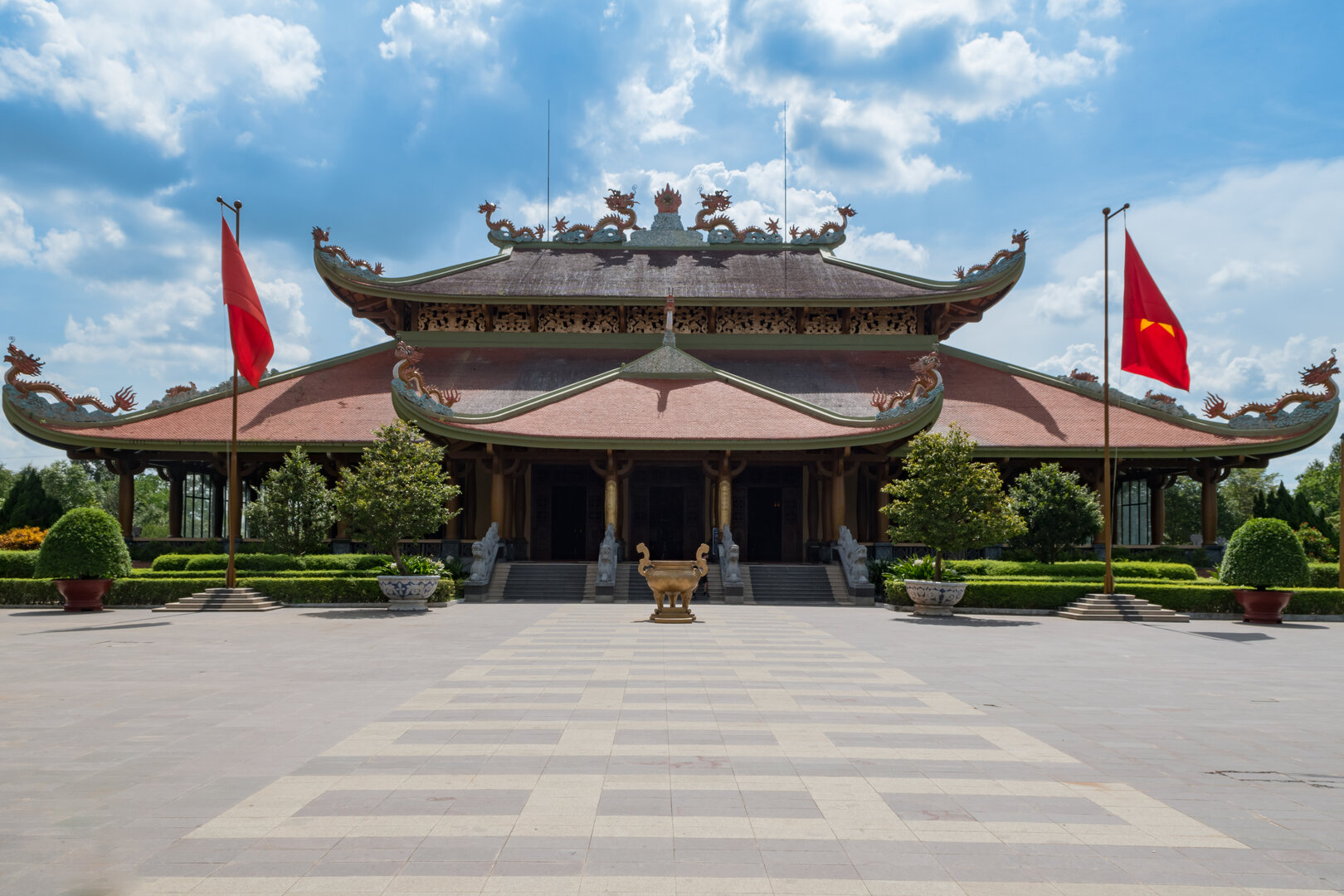
Đền Gia Định (Gia Định Temple) is also known as the memorial temple of the Sài Gòn – Chợ Lớn – Gia Định Revolutionary Tradition Area. It is not a temple to a deity. It honours people who served the revolution in that land: leaders of the Party and the State, of the Regional Party Committee (Xứ ủy), of the Central Office for South Vietnam (Trung ương Cục miền Nam), of the zone and city Party committees, and others who gave a great deal to Sài Gòn – Chợ Lớn – Gia Định. The temple lies within the Củ Chi Tunnels Historical Site. Don't mistake it for the Bến Dược Martyrs' Memorial Temple: that is a separate temple, and many delegations offering incense visit the two in turn.
Where the city of three names has returned on the fifth day of Tết for many years running
Are you curious why the city chose this spot for its memorial instead of a square in the centre? In 2015 the chairman of the city People's Committee explained the choice: Nguyễn Văn Linh, Võ Văn Kiệt, Trần Văn Trà, Tô Ký, Mai Chí Thọ and many veteran revolutionaries held their ground and worked here. The Hố Bò base in this area was a solid rear area through two wars of resistance. The temple was placed exactly where those people once stayed.
The temple grounds cover about 4.2 hectares. They hold a garden, a tam quan (a three-entrance ceremonial gate), the main temple with a smaller temple on each side, and a few ancillary buildings. The grounds belong to a larger 13.5-hectare tradition area, which also has a stele house, a ceremonial area, a lotus pond and a stone bridge. The stele carries the title "Sài Gòn - Chợ Lớn - Gia Định, Sacred Land Shaded by Heroes". It was composed by Professor Vũ Khiêu, who holds the state title Hero of Labour. That title is worth reading with your own eyes.
So what does this place mean today? The answer is tied to one day of the year. The fifth day of Tết, the Lunar New Year, is the day of the Sài Gòn – Chợ Lớn – Gia Định revolutionary tradition gathering. For many years running, the city's leaders have come here on that day to offer incense and flowers. It began at Tết 2011, when the area was still being built and delegates planted trees in memory of Uncle Hồ (President Hồ Chí Minh) on the construction site. On the fifth day of Tết in 2016, the ceremony receiving the Special National Site certificate for the Củ Chi Tunnels was also held here. According to a 2022 newspaper article, the temple had become a "red address", a Vietnamese term for a place tied to revolutionary memory. There the Gia Định resistance tradition club of the military, civilian, government and Party bloc held its gatherings. A heritage site doesn't need to be a hundred years old to matter. It only needs people who come back. Would you like to see for yourself the place a city of three names chose to remember the people who held it?
Enough to decide whether to go
- What it is
- A memorial temple to people who served the revolution in Sài Gòn – Chợ Lớn – Gia Định
- Where
- Phú Hiệp hamlet (ấp), Củ Chi area, inside the Củ Chi Tunnels complex, about 300 m from the Bến Dược Tunnels ticket counter
- Since
- The temple has hosted ceremonies since Tết 2011; the whole tradition area was inaugurated on 27 December 2015
- Worth seeing
- The tam quan gate, the main temple and its two side temples; the stele titled "Sacred Land Shaded by Heroes"
- Its day
- The fifth day of Tết, when the city has held incense offerings for many years running
- Not to be confused with
- The Bến Dược Martyrs' Memorial Temple, a different temple in the same complex
From someone who has been
If you're already heading to the Bến Dược Tunnels, this temple is only about three hundred metres from the ticket counter. It suits people who want to understand how the city looks back on its own history more than people looking for an ancient building.
Vibe
Tags
Source
Facts about the temple come from the press and monument records, re-read on 9 Oct 2026. The name 'Đền Gia Định' appears verbatim in five news outlets: Đại biểu Nhân dân (VNA, 7 Feb 2011), Pháp Luật TP.HCM (12 Feb 2016), Sài Gòn Giải Phóng (9 Feb 2019), VOV and Nhân Dân (2022). The full name is written in two ways ('Khu truyền thống' in Sài Gòn Giải Phóng; 'Khu lịch sử truyền thống' on the Ho Chi Minh City Party Committee site and in Nhân Dân), and there is no original document to choose between them. Those worshipped, the inauguration date and the 13.5 ha size of the Traditional Area (Khu truyền thống) come from Sài Gòn Giải Phóng and Tuổi Trẻ of 27 Dec 2015. The reason for choosing the land at the Hố Bò base, the groundbreaking date of 18 Feb 2010 and the title of the stele text by Professor Vũ Khiêu come from the article and the inauguration speech published in Tuổi Trẻ on the same day. The layout of the temple complex (garden, three-gate entrance, main temple, two side temples) and the fact that the Củ Chi Tunnels are a special national monument come from the file of the Department of Cultural Heritage. The incense-offering ceremony on the 5th day of Tết in 2011 comes from Báo Đại biểu Nhân dân. The ceremony receiving the special monument certificate on 12 Feb 2016 comes from Pháp Luật TP.HCM. Later ceremonies on the 5th day of Tết come from Sài Gòn Giải Phóng, Tuổi Trẻ, VOV and Nhân Dân. The role as a 'red address' comes from Nhân Dân (5 Feb 2022). The temple's location was cross-checked with OpenStreetMap. Four points were rejected. First, the claim that the name 'Đền Gia Định' appears in no source. Second, the hypothesis that this is another name for Đền Bến Dược: the 2016 article records the delegation offering incense at both temples, and the two structures are about 1 km apart. Third, the reading that the temple was built in 2010–2015: those milestones belong to the whole area, while the temple had been receiving ceremonies since early 2011. Fourth, the word 'every year': only nine ceremonies have been read. All details of Đền Bến Dược (the nine-storey tower, ceramic paintings, exhibition rooms) are excluded from this page. Opening hours, tickets and whether individual visitors may enter the temple still have no source from the operator.
Place data is compiled from many sources across the internet by a team of automated AI agents that collect, enrich, check, challenge, score, edit, review and verify it.
Ratings & comments
Anyone can read. Sign in to rate, comment and like.