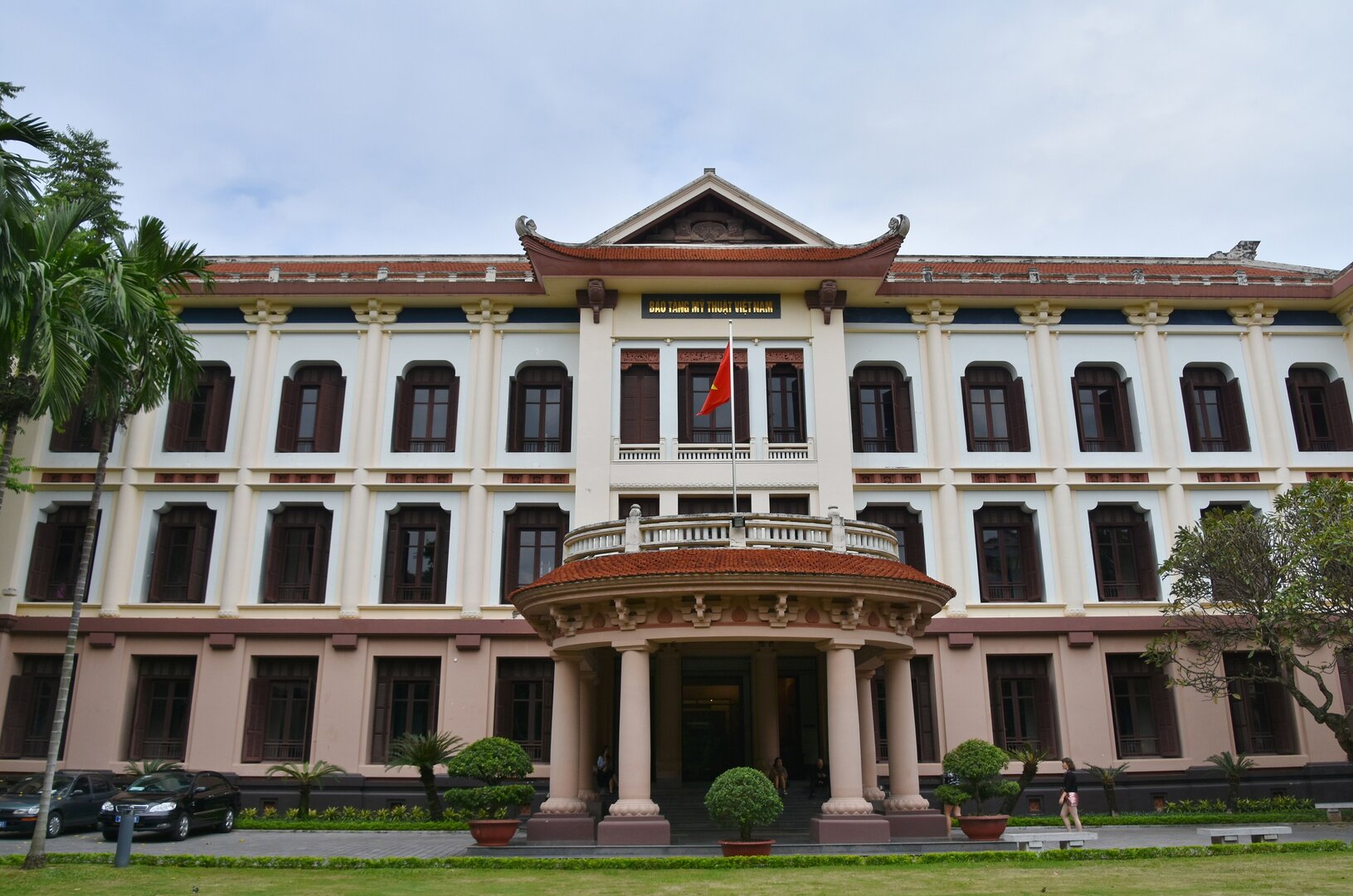
Vietnam National Museum of Fine Arts
Nguyen Thai Hoc, Hanoi · Museum
Quick facts
- Address
- 66 Nguyễn Thái Học, Hà Nội, Việt Nam
- Coordinates
- 21.03060, 105.83700
Where next?
Compiled by AI · source-checked
Picture an eight-year-old girl on a rattan chair, hands in her lap, looking straight at the person painting her — and the portrait dates from 1943.
The girl was real: Nguyễn Minh Thúy, born in 1935, a young relative of the painter Trần Văn Cẩn. Are you curious what became of her? She became a teacher, and lived until 2024. The painting travelled further: in 2004 an Australian conservator, Caroline Fry, was invited to restore it, and the musician Paul Zetter wrote a minuet for it. Today "Em Thúy" is one of nine National Treasures — the state's highest designation for an object — hanging in this building.
Em Thúy Is Still Eight
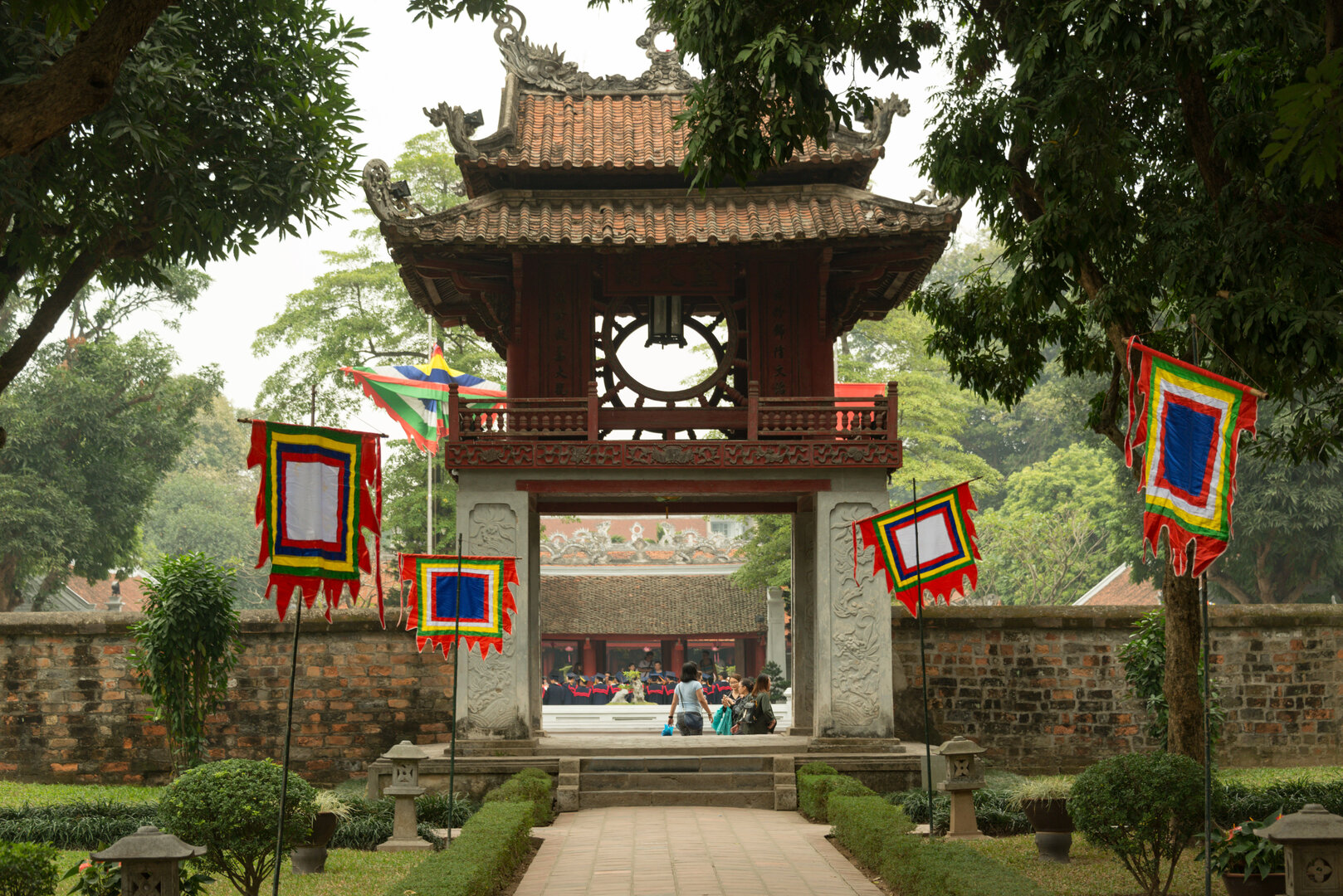
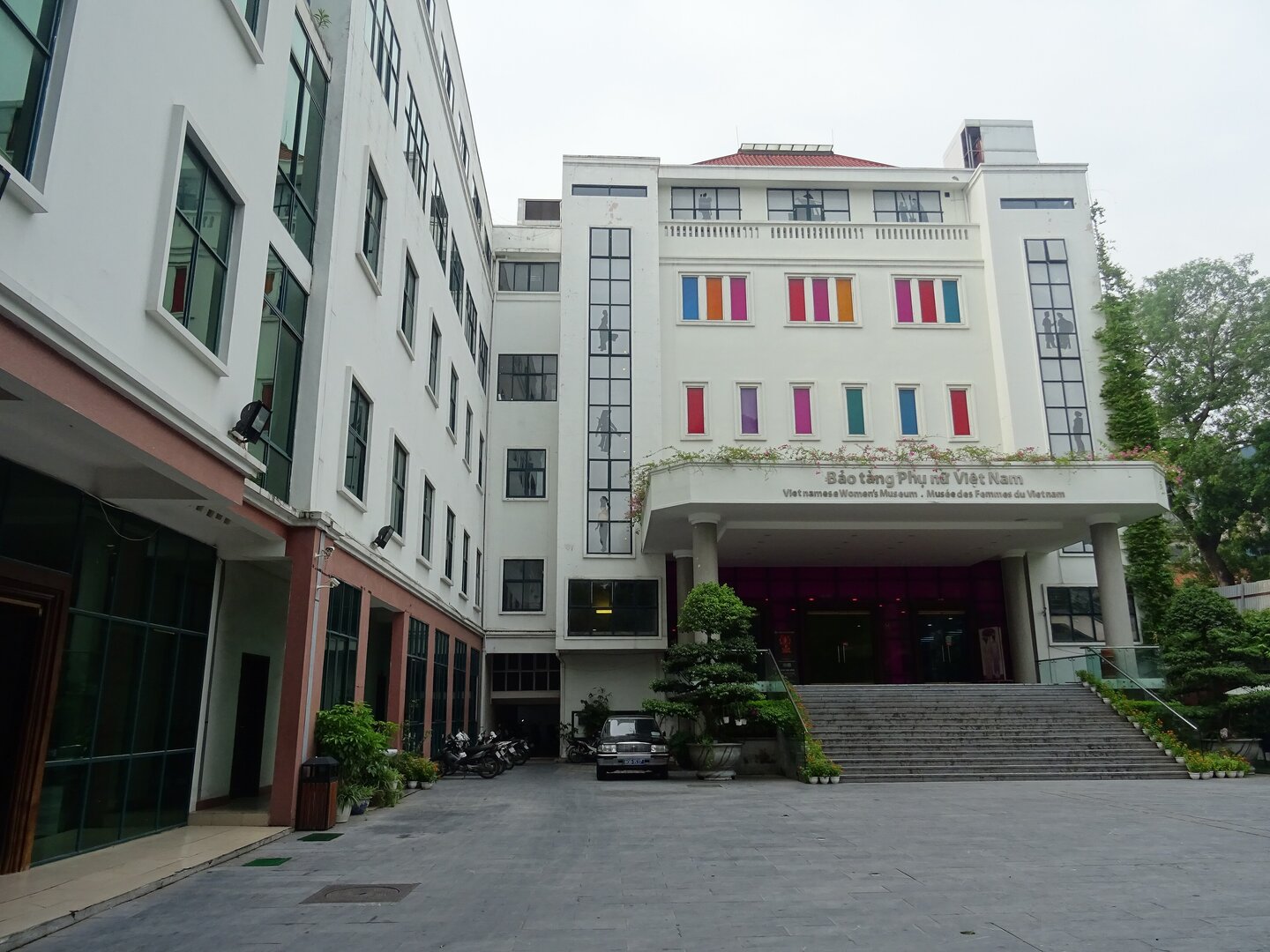
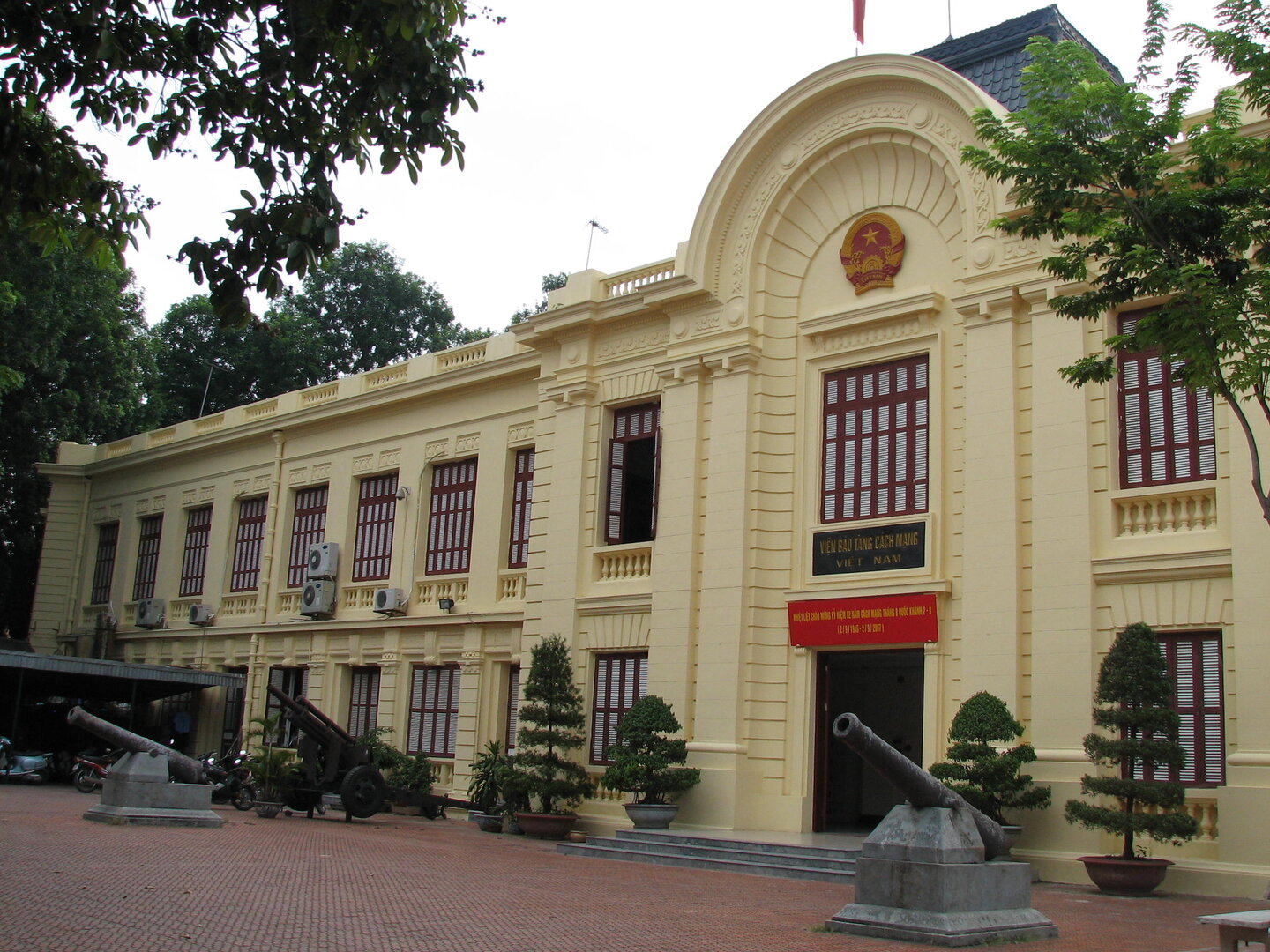
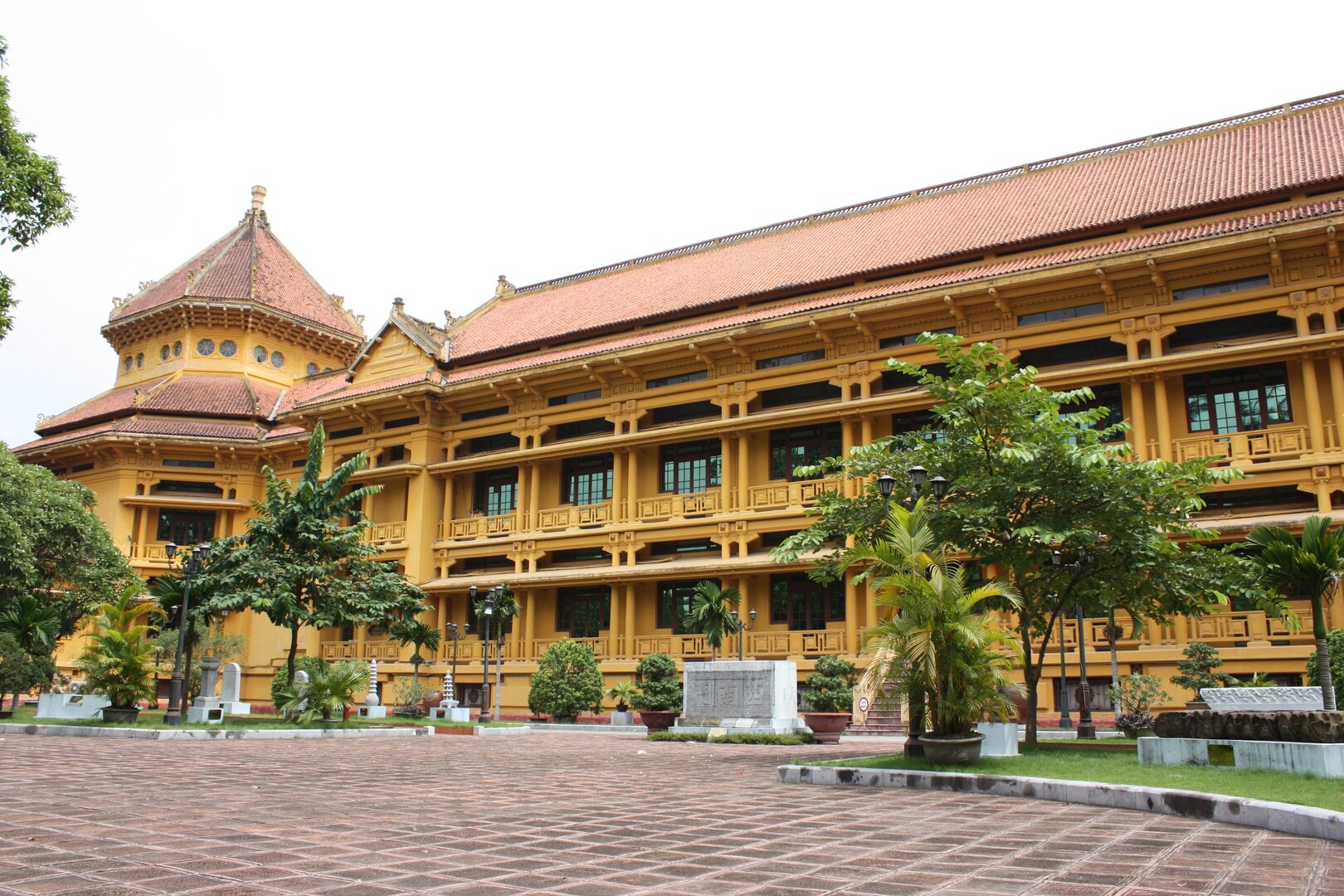
The building had an earlier life, and that is the part few people guess. The French built it as lodgings for the daughters of French officials from across Indochina who came to Hà Nội to study. In 1962 the state handed it to the Ministry of Culture to be converted into a place for collecting, keeping and displaying works of art — and in that conversion, a European-style building was given decorative details borrowed from the Vietnamese village communal house. It opened to visitors in 1966. If you have ever stood at Văn Miếu – Quốc Tử Giám, the Temple of Literature, this place sits directly behind it, facing it.
Inside, the displays run across three floors: prehistoric and proto-historic art, then the 11th to 19th centuries, then the 20th century up to the present, with separate sections for folk art and traditional applied art; the ceramics collection sits in the basement of building B. What holds people longest is often not a painting at all — it is the Quan Âm bodhisattva statue from Hội Hạ pagoda, in 16th-century style, built from joined wood, over three metres tall, roughly three tonnes, with forty-two arms, seated on a lotus throne raised by demons out of the South Sea. The nine National Treasures here also include Nguyễn Sáng's "Admission to the Party at Điện Biên Phủ", Nguyễn Tư Nghiêm's "Gióng", Nguyễn Gia Trí's lacquer folding screen, and the dragon-carved doors from Keo pagoda.
And here is the part most easily missed: this was never only a building to look at. It is still doing its work — research, collecting, inventory, conservation. A restoration room founded in 1972, raised into a centre for the conservation and repair of artworks in 2006, still takes in objects belonging to other institutions: the Independence Palace, the Presidential Palace historical site, museums in Quảng Ninh and Hồ Chí Minh City. Of the nearly 21,000 objects the museum holds, only about two thousand are out in the light; the rest sit in storage at a second facility in Hoàng Cầu – Ô Chợ Dừa, which is not open to visitors. On the third floor, a room is set aside for children to sit and draw. So what is a national collection, in the end — what is hung on the walls, or everything being kept and healed where you cannot see it?
Photographs
12 of 12 on fileEnough to decide whether to go
- Working hours
- Tuesday08:30–17:00
- Wednesday08:30–17:00
- Thursday08:30–17:00
- Friday08:30–17:00
- Saturday08:30–17:00
- Sunday08:30–17:00
- MondayClosed
*Opening hours can change on public holidays, during maintenance, or for private events.
Written by Vietlume · from the sources listed under Sources
- What it is
- National fine arts museum, at 66 Nguyễn Thái Học, Hà Nội
- Open to visitors since
- 1966; the building was handed over and converted from 1962, originally French-era student lodgings
- Most worth seeing
- 9 National Treasures, among them "Em Thúy" and the 42-armed Quan Âm statue from Hội Hạ pagoda
- Displays
- Three floors, prehistory to the present; ceramics in the basement of building B
- Easy to find by
- Directly behind and facing Văn Miếu – Quốc Tử Giám (the Temple of Literature)
- Tickets
- Ticketed, in the range of a few tens of thousands of đồng; an audio guide is available in several languages
Good to know before you go
The galleries open during daytime only and close one day a week, so don't leave it to late afternoon. The café in the grounds opens earlier and closes later than the galleries do. If you plan to photograph: dress decently, keep quiet, and don't plant yourself in front of an object — the museum limits how long you may linger in one spot to shoot, and staff may ask you to stop. With small children, ask about the creative space on the third floor; it runs its own programme and its own ticket.
Vibe
Tags
Source
All 9 sources
- vnfam.vnofficial site
Opening hours · Prices · Address & location · Nature · Other details
- Wikidataopen data
Address & location · Contact · Name
- Wikipediaopen encyclopedia
Address & location · Other details
- bvhttdl.gov.vnpublic authority
Name
- vietnamplus.vnnewspaper
Other details
- baophapluat.vnnewspaper
Other details
- nguoihanoi.vnnewspaper
Other details
- tuoitre.vnnewspaper
Other details
- vietnam.vnwebsite
Other details
Read the full note
Opening hours, ticket prices, guided tours and the hours of the café space were read directly from the official site vnfam.vn on 10 Sep 2026 — the site is a React app, so the figures sit in the site's own JavaScript bundle and not in the HTML. The price of the iMuseum VFA audio guide comes from 3d.vnfam.vn on the same day. The founding date of 24 Jun 1966, the figure of nearly 21,000 exhibits and the 9 National Treasures follow TTXVN/VietnamPlus of 24 Jun 2026; the list of the nine treasures follows Báo Pháp Luật Việt Nam. The status as a national museum under the Ministry of Culture, Sports and Tourism follows the Ministry's own portal. The history of the building, the distribution of exhibits between the two sites and the history of the Centre for the Conservation and Restoration of Fine Art Works follow the museum's introduction page; the exhibition themes and the Indochina Fine Arts generation follow Vietnamese Wikipedia. The story of the original model for the painting ‘Em Thúy’ follows Tuổi Trẻ of 10 Jul 2024. The photography rules in effect from 1 Feb 2026 follow Báo Pháp Luật Việt Nam of 2 Feb 2026. Four claims were rejected and not published: the figure ‘about half of the paintings are copies’ — a TIME article of 4 May 2009, the closest source to the origin of this story, states plainly that no one knows what the proportion is; the founding date of 26 Jun 1966 on Wikidata, two days off from the museum's own; four artefacts recognised as National Treasures in 2025 that were on display here in May 2026, because they belong to the collection of the Kính Hoa museum, lent for display, and not to this museum; and the free-entry days by weekday circulating on travel blogs, because no official source has announced them. The year the building was constructed and its French-era name could not be established, so they are left blank rather than guessed. The ward after the 1 Jul 2025 administrative reorganisation is also left blank because there is no source mapping the house number to the new unit. The photos were taken by Richard Mortel, Smuconlaw, Daderot, Daaé and Grenouille vert, published on Wikimedia Commons under CC BY 2.0, CC BY-SA 3.0, CC0 and public domain; full credit is given on each photo.
Source-checked by Vietlume: compiled by AI from public sources, then checked against each source above before publishing.
Star ratings & comments
Anyone can read. Sign in to rate, comment and like.