Hai Bà Trưng (Hai Ba Trung) Temple (Đồng Nhân (Dong Nhan))
Hà Nội
Compiled by AI · source-checked
- Meaning
- Moments
- Plan your visit
Meaning
A temple to Trưng Trắc and Trưng Nhị at 12 phố Hương Viên, Hà Nội, forming with chùa Viên Minh and đình Đồng Nhân a Special National Relic complex. It keeps 27 royal decrees from the Lê and Nguyễn dynasties and eight worship statues.
Moments
Plan your visit
Số 12 phố Hương Viên, Hà Nội
Practical details
Highlights
Planning
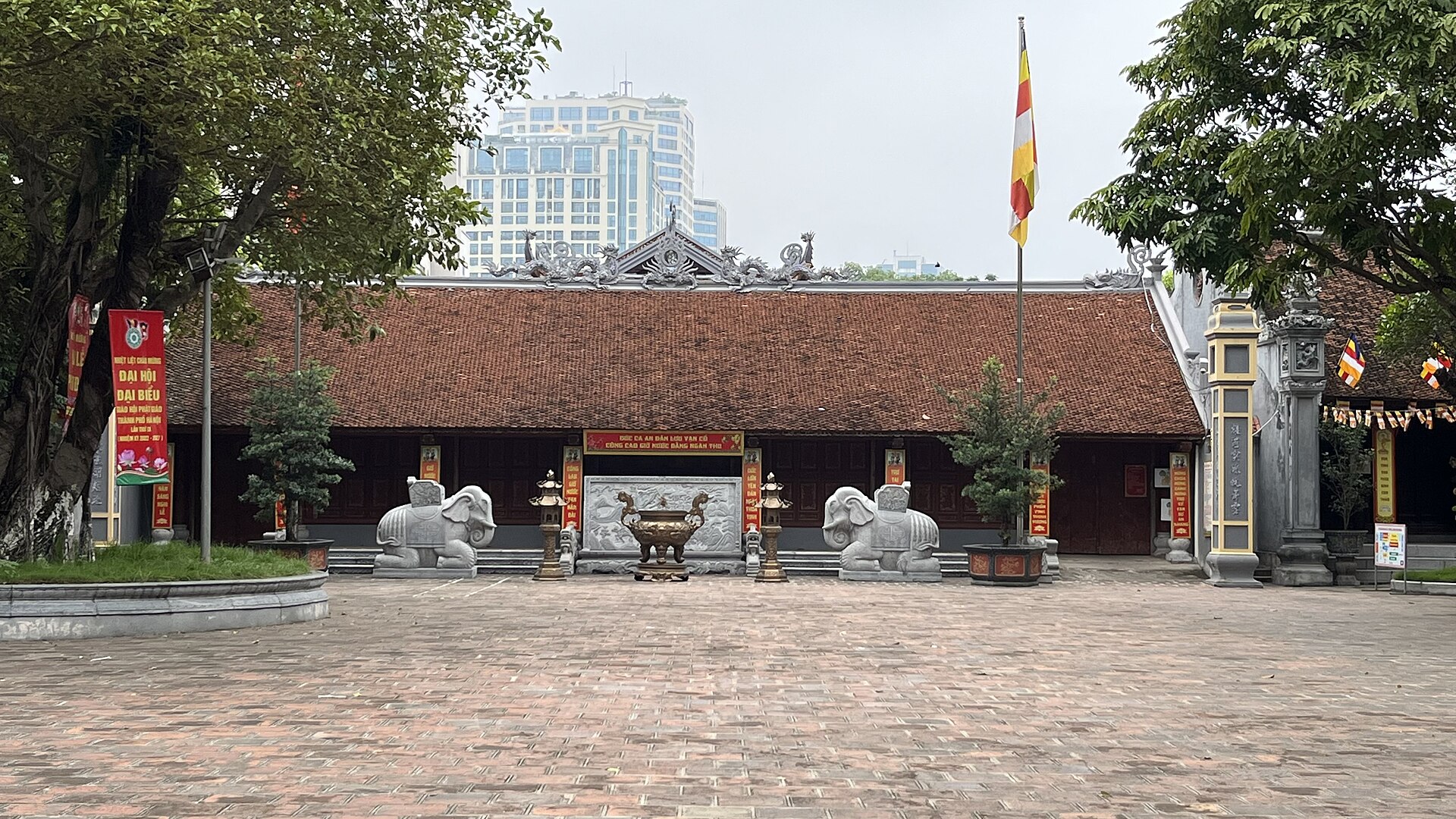
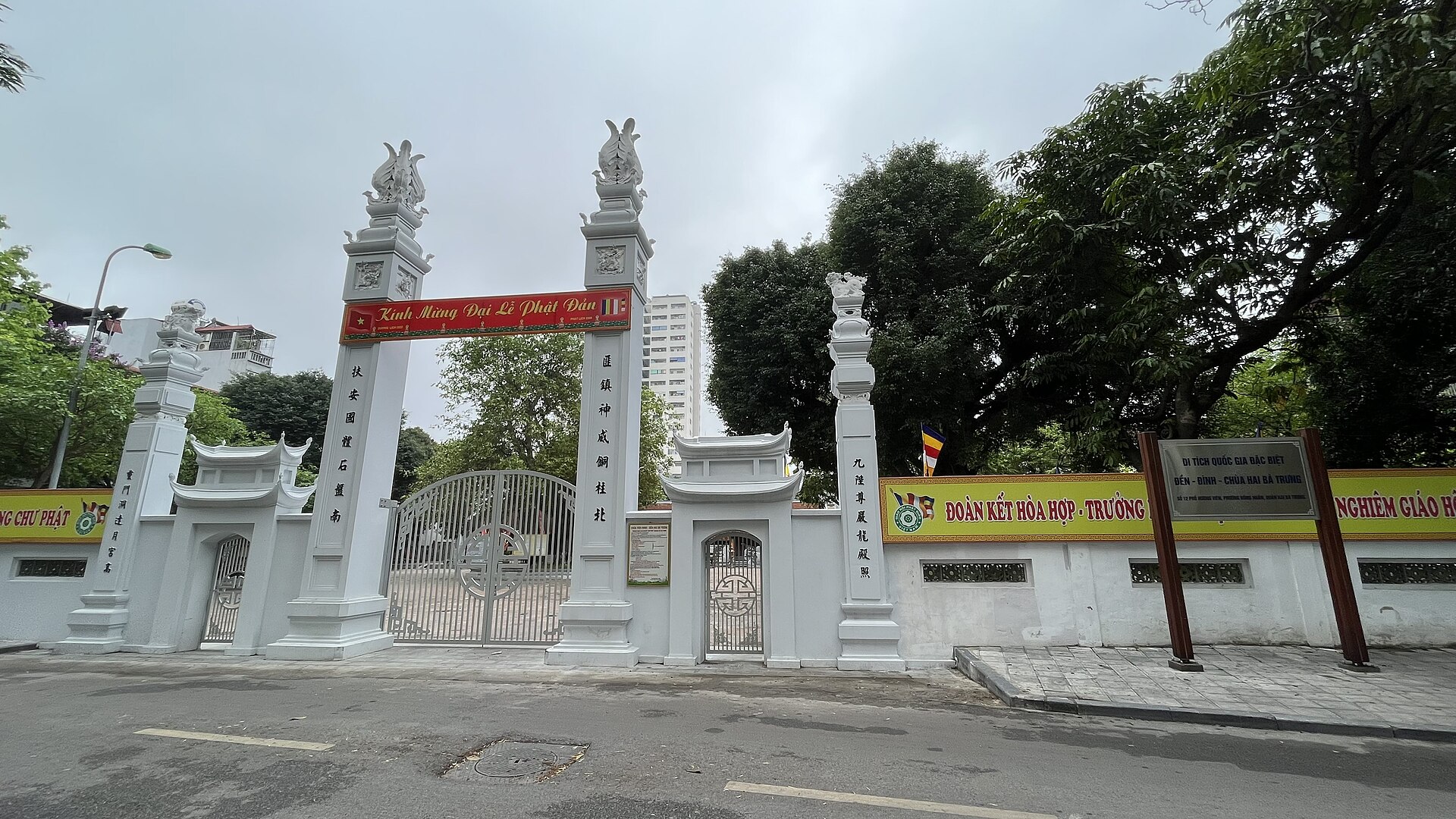
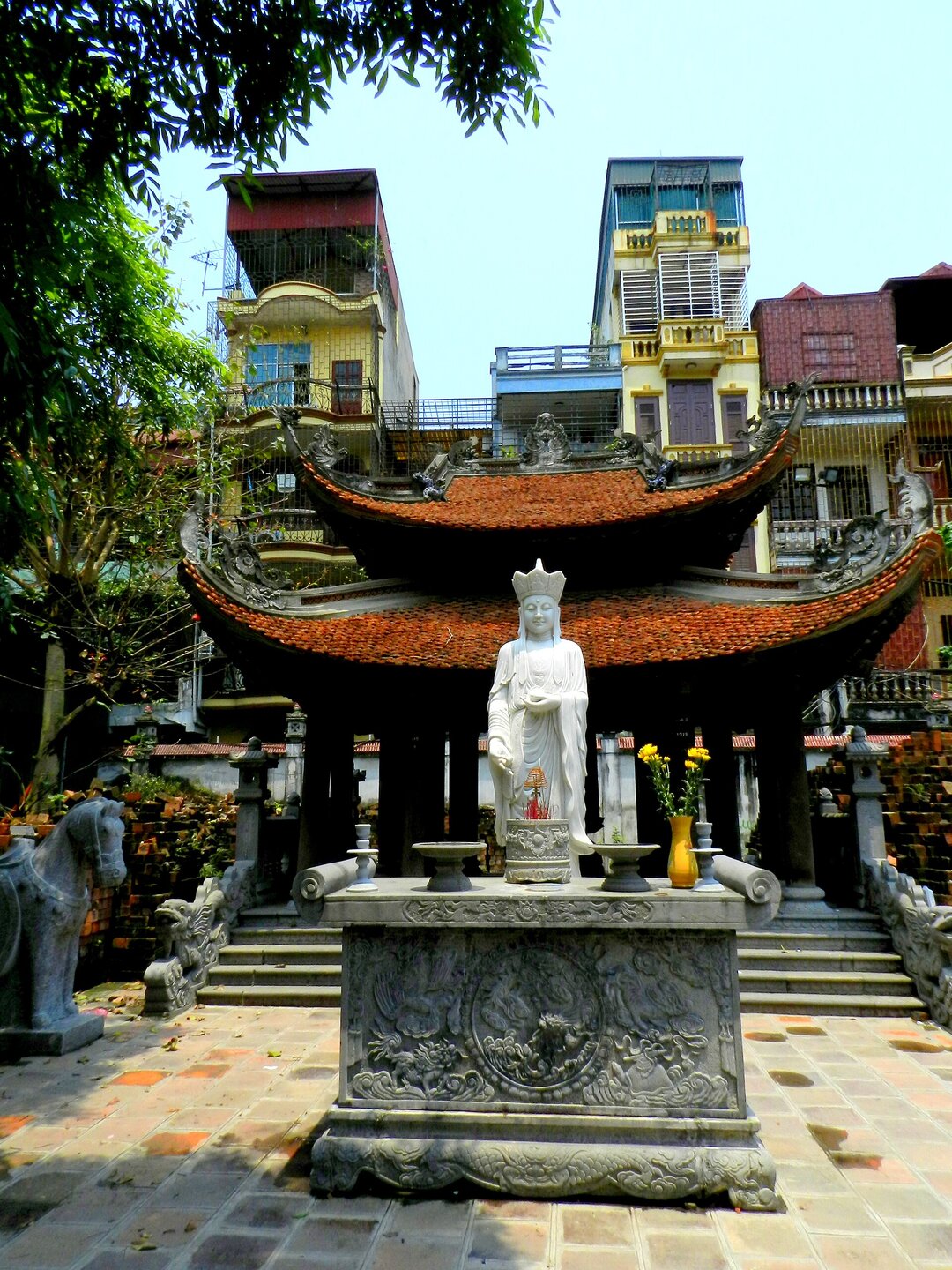
- The temple is at 12 phố Hương Viên. In front of it is a half-moon pond, and the way in passes four large brick gate pillars; chùa Viên Minh stands to the left of the temple and đình Đồng Nhân right beside it on the right. The temple is still an active place of worship; opening hours, tickets and dress rules have no official source yet.
Atmosphere
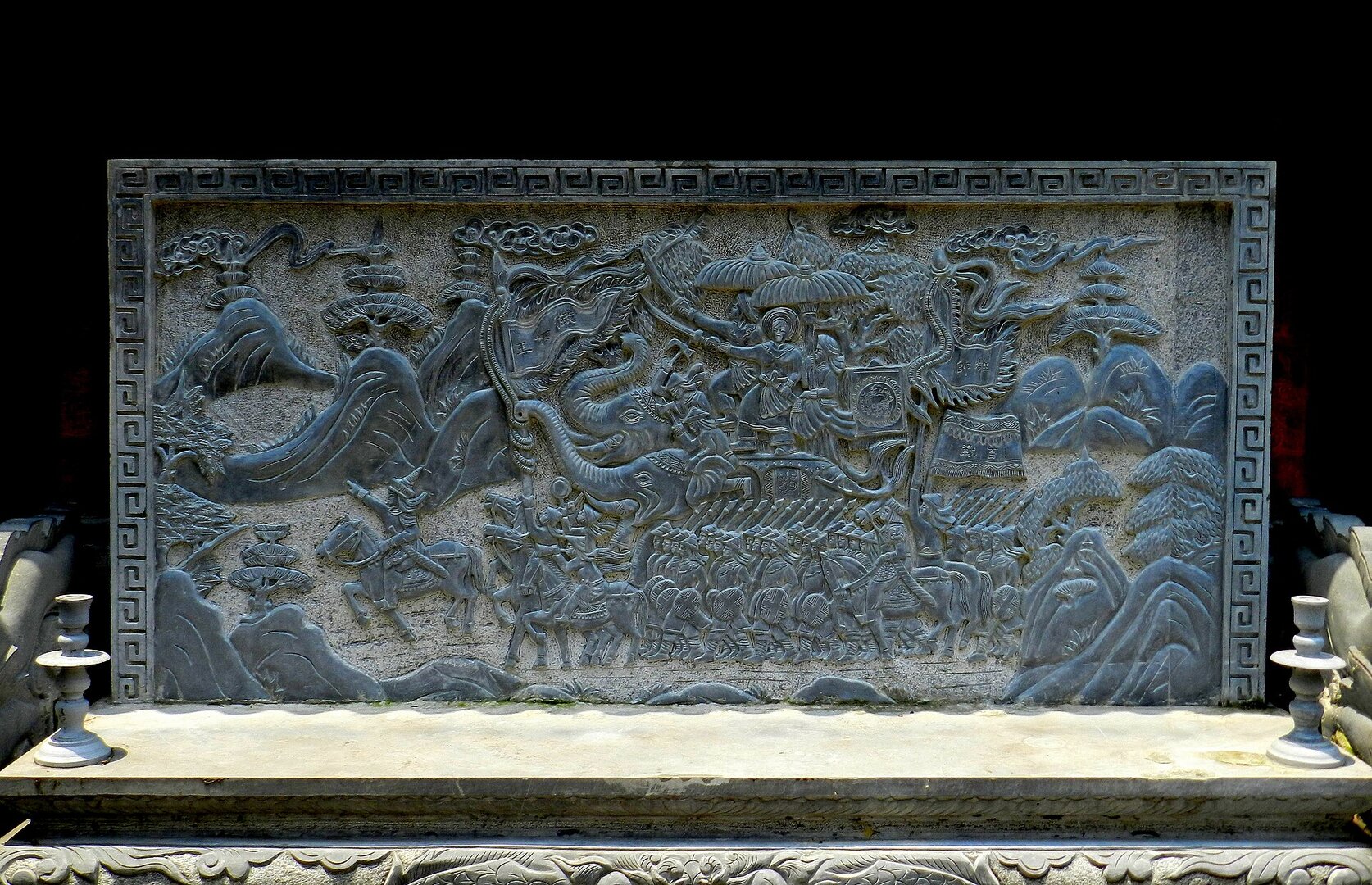
- Đền Hai Bà Trưng, also called đền Đồng Nhân, honours Trưng Trắc and Trưng Nhị, the two sisters who raised the banner of revolt in the year 40. Together with chùa Viên Minh (Viên Minh Pagoda) and đình Đồng Nhân (Đồng Nhân communal house), the temple forms the Đền – Chùa – Đình complex, recognised as a Special National Relic on 31 Dec 2019. Legend has it that a stone statue of the sisters drifted to the Đồng Nhân riverbank and villagers used red cloth to bring it ashore; according to the temple's legend record, the temple was built in 1142 under King Lý Anh Tông, and in 1819 riverbank erosion led villagers to move it to Hương Viên hamlet.
Popular for
- The temple keeps 27 royal decrees from the Lê and Nguyễn dynasties, eight worship statues, two ancient stone steles recording the sisters' story and two Nguyễn-dynasty palanquins. The statues of the sisters are larger than life, Trưng Trắc in a yellow robe and Trưng Nhị in a red robe, arms raised as if rallying troops. The temple festival is held around the 6th day of the second lunar month, with a procession carrying water from the Red River (sông Hồng), incense offerings and a re-enactment of the sisters' story, and it has been recognised as national intangible cultural heritage.
Source
Last verified 16 Nov 2026
- Still open
- hanoi.gov.vn · checked 16 Nov 2026
- History
- hanoi.gov.vnbaovanhoa.vnnhandan.vn +2 · checked 16 Nov 2026
- Address & location
- nhandan.vnOpenStreetMap · checked 16 Nov 2026
- Getting there
- Wikipedia · checked 16 Nov 2026
All 7 sources
- hanoi.gov.vnpublic authority
Still open · History · checked 16 Nov 2026
- baovanhoa.vnnewspaper
History · Other details · checked 16 Nov 2026
- nhandan.vnnewspaper
History · Address & location · Other details · checked 16 Nov 2026
- bvhttdl.gov.vnpublic authority
History · checked 16 Nov 2026
- vov.vnnewspaper
History · checked 16 Nov 2026
- OpenStreetMapopen data
Address & location
- Wikipediaopen encyclopedia
Getting there · Name · Other details · checked 16 Nov 2026
Read the full note
Information about this place was checked on 16 Nov 2026. The names, the four-pillar entrance, the half-moon pond and the statues of the sisters come from Vietnamese Wikipedia. The address at 12 phố Hương Viên, who is worshipped, the inventory inside the temple (27 royal decrees, eight statues, two stone steles, two palanquins) and the main festival day on the 6th day of the second lunar month come from Báo Nhân Dân. The legend of the stone statue, the founding year 1142, the 1819 relocation and the festival's national intangible heritage status come from Cổng thông tin điện tử Hà Nội (the Hà Nội city portal, English edition, 2025). The Special National Relic status of the Đền – Chùa – Đình complex (31 Dec 2019) comes from the portal of the Ministry of Culture, Sports and Tourism. The 'nội công ngoại quốc' layout, the layout of the complex, chùa Viên Minh and đình Đồng Nhân come from Báo Văn hoá. The 1962 national relic ranking comes from VOV. The location was cross-checked against OpenStreetMap. Báo Văn hoá, Nhân Dân and the Hà Nội portal may all draw on the same 2020 certificate ceremony documents, so they are not counted as three independent sources. Dropped: the seven-bay front hall, the wooden elephants with real tusks, the 4,000 m² grounds and the 'days 4–7' festival dates, because they appear only on one commercial travel page, which also confuses this temple with đền Hát Môn; the opening hours and 'free entry' from another page, because it mixes this temple up with đền Hạ Lôi (Mê Linh); and the number of female generals, because two sources disagree (6 and 12). The 1926 memorial for Phan Chu Trinh in the temple courtyard appears only on Wikipedia, without a citation, so it is not shown yet. Opening hours, tickets and the new ward after 1 Jul 2025 have no official source yet.
Source-checked by Vietlume: compiled by AI from public sources, then checked against each source above before publishing.


Star ratings & comments
Anyone can read. Sign in to rate, comment and like.