Phường Bến Thành, TP. Hồ Chí Minh · Market
Ben Thanh Market
A working market with sixteen doors, finally called heritage after more than a century of just selling things.
No daytime photograph of this place yet
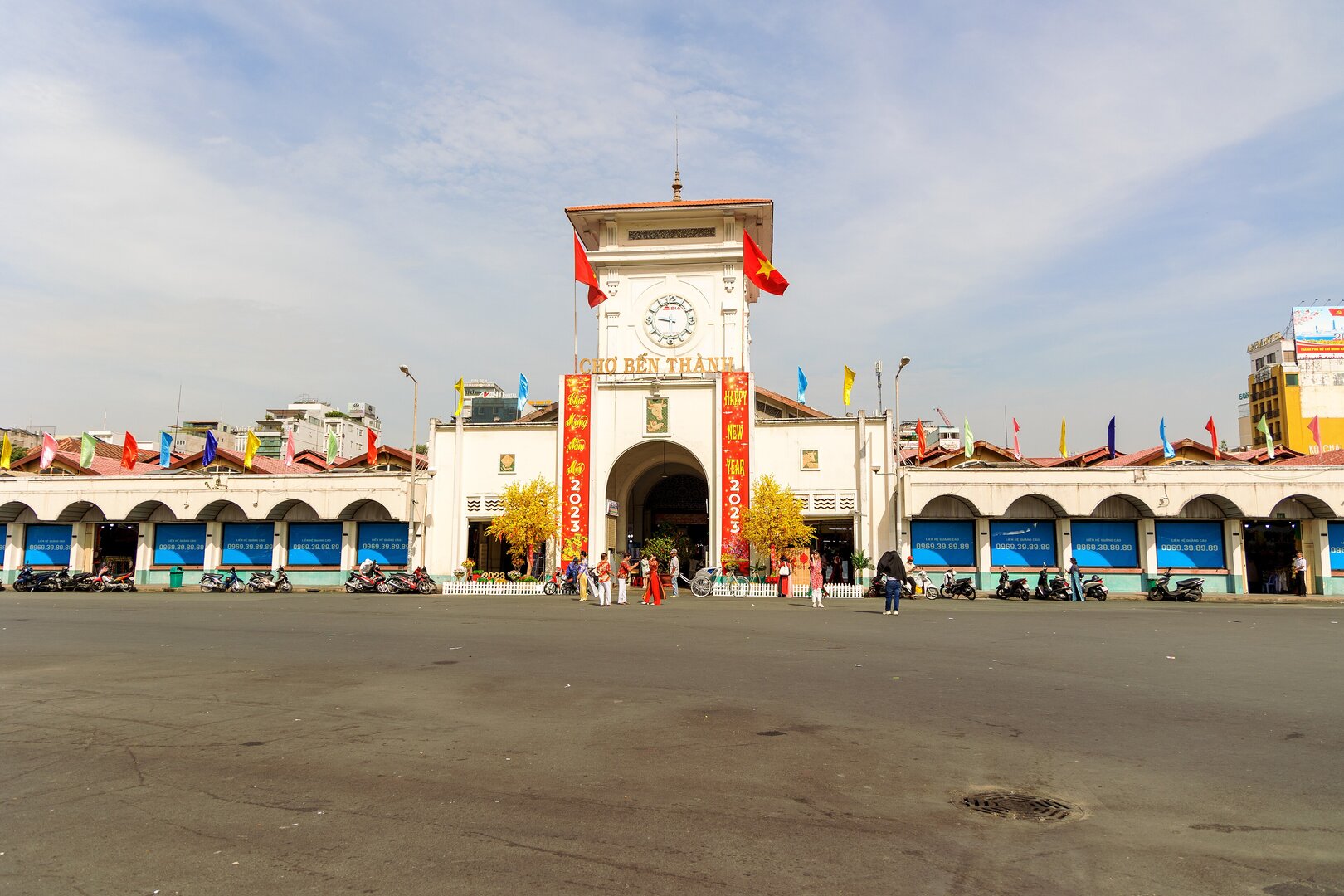
Picture a low-roofed hall in the middle of Ho Chi Minh City, four big doors opening on four sides. There is nothing behind glass in here. There are somewhere between fourteen hundred and fifteen hundred stalls actively selling, packed into more than thirteen thousand square metres. The name is familiar enough that the whole ward around it carries the same one: Bến Thành. And since late 2024, it is a monument.
A Market First, a Monument Later
Four main doors, twelve smaller ones — sixteen ways into a single floor. That sounds like architectural trivia until you pick the wrong one. The south door leads into fabric and dry goods. The north door opens on fresh flowers, fruit, fresh food and the eating section. The east door is cosmetics and confectionery. The west door is footwear, handicrafts, souvenirs. Choose wrong and you walk the entire length of the market before you reach what you came for.
This is a market, not a street, which means it has walls and a real closing time. The fresh-food and eating sections wake at first light, well before the fabric, shoe and souvenir sections. Arrive late and you do not find a street still lit up — you find locked doors. But the evening here does not switch off, it moves outdoors: a night market sets up on the two flanking streets, Phan Bội Châu and Phan Chu Trinh, with the stalls put up by the market's own management board. One market, two spaces. Come at night looking for a way into the nhà lồng — the covered hall — and you will very likely miss it.
The building has stood here since 1912–1914, yet only in late 2024 was it listed as a city-level architectural and artistic monument: more than a hundred and ten years of being a market before anyone called it heritage. The first thing that status did was turn a coat of paint into something you have to ask permission for — repainting must be approved by the managing body, and the lines and motifs must be kept intact. A refurbishment in early 2026, timed to land before Tết Bính Ngọ, the lunar new year, showed exactly where that line falls. The body of the market had to be painted to match its existing state, and in early 2026 the new look was being reconsidered; the sponsoring company admitted it could not establish the roof's original colour and so went with the current state and with the roofs of buildings of the same era along Lê Lợi street. Do you already carry a colour for this place in your head? In a quick poll after the repainting, 65 per cent of more than seven thousand six hundred respondents said the new colour left them deflated, because it did not match the one they remembered.
Photographs
29 of 30 on fileKevin Rutherford· CC BY-SA 2.0 · source
Daderot· CC0 · source
Radek Kucharski· CC BY 2.0 · source
Fumihiko Ueno· CC BY 3.0 · source
Hajotthu· CC BY 3.0 · source
Daderot· CC0 · source
Daderot· CC0 · source
Daderot· CC0 · source
Simon_sees· CC BY 2.0 · source
NKSTTSSHNVN· CC BY-SA 4.0 · source
ntt· CC BY-SA 3.0 · source
Erwin Verbruggen from Amsterdam, The Netherlands· CC BY-SA 2.0 · source
Hajotthu· CC BY 3.0 · source
Stephan Ridgway· CC BY 2.0 · source
Diego Delso· CC BY-SA 3.0 · source
Jean-Marie Hullot· CC BY 3.0 · source
源義信· CC BY-SA 4.0 · source
Daderot· CC0 · source
Hajotthu· CC BY 3.0 · source
Rudolph.A.Furtado· CC0 · source
Ngô Trung· CC BY 3.0 · source
Rudolph.A.Furtado· CC0 · source
Matsuoka.A· CC BY-SA 4.0 · source
trungydang· CC BY 3.0 · source
Rudolph.A.Furtado· CC0 · source
Daderot· CC0 · source
Daderot· CC0 · source
Bahnfrend· CC BY-SA 4.0 · source
源義信· CC BY-SA 4.0 · source
Enough to decide whether to go
- What this is
- A working market that is also a city-level architectural and artistic monument
- Where
- South door onto Lê Lợi street, Bến Thành ward, Ho Chi Minh City
- Which door
- 4 main doors and 12 smaller ones, each side leading into a different kind of goods
- When to come
- Early morning for the fresh-food and eating sections; once the hall closes, the night market opens outdoors
From someone who has been
Come in the morning if you want to see the market actually working, and pick your door before you step in rather than letting the length of the place teach you. If you plan to buy branded goods, know this: through 2026 the market has been a regular target of city market-control inspections for counterfeit branded goods, sold fairly openly under evasive labels — “like auth”, “1:1”, “super fake”, “xuất dư” (supposed surplus from an export run) — graded into tiers by price. Hearing those words tells you what you are being offered. And if you came only to look: this place was called heritage only after more than a century of simply being a market, so thirty years from now, what do you think will be the part worth keeping?
Vibe
Tags
Source
Data compiled from the city-level monument ranking file (Ministry of Culture, Sports and Tourism; Hồ Chí Minh City Party Committee, 20 Nov 2024), the Vietnam National Authority of Tourism, OpenStreetMap and Wikidata, together with dated press. Photos from Wikimedia Commons, credited photo by photo. Verified on 31 Aug 2026.
Place data is compiled from many sources across the internet by a team of automated AI agents that collect, enrich, check, challenge, score, edit, review and verify it.
Ratings & comments
Anyone can read. Sign in to rate, comment and like.