Thien Vuong Co Sat Pagoda (Chùa Tàu (Chua Tau))
Đà Lạt, Lâm Đồng
Compiled by AI · source-checked
- Meaning
- Moments
- Plan your visit
Meaning
A pagoda of Đà Lạt's Chinese community, officially Thiên Vương Cổ Sát, founded in 1958 and stretched along a pine-covered hillside on Khe Sanh street; the way up passes the Tứ Đại Thiên Vương (Four Heavenly Kings), the Tây Phương Tam Thánh (Three Saints of the Western Pure Land) statues and an open-air Thích Ca (Shakyamuni) Buddha on the hilltop.
Moments
Plan your visit
Đường Khe Sanh, Đà Lạt, Lâm Đồng
Practical details
Highlights
Crowd
- The pagoda is still a place of worship and study for the Phật giáo Hoa tông: the Lâm Đồng provincial Buddhist executive board appointed its abbot on 22 Sep 2010 and handed over the decision at the dedication of the main hall on 2 Jun 2012, when the three statues of A Di Đà (Amitābha), Quán Thế Âm (Avalokiteśvara) and Đại Thế Chí (Mahāsthāmaprāpta) had just been gilded.
Planning
- The Tây Phương Tam Thánh statues are often said to be carved from solid agarwood, but the Địa chí Đà Lạt (Đà Lạt gazetteer) records camphor wood and Thanh Niên finds that more plausible; as for the round jackfruit-wood table rumoured to turn wherever players think, in 2012 a survey team concluded it moves from unconscious pressure of the players' hands. As of 8 Nov 2026 the pagoda has no website and no source of its own on opening hours, ceremony times, fees or dress code; sources give different house numbers, so look for the pagoda by name on Khe Sanh street.
Atmosphere
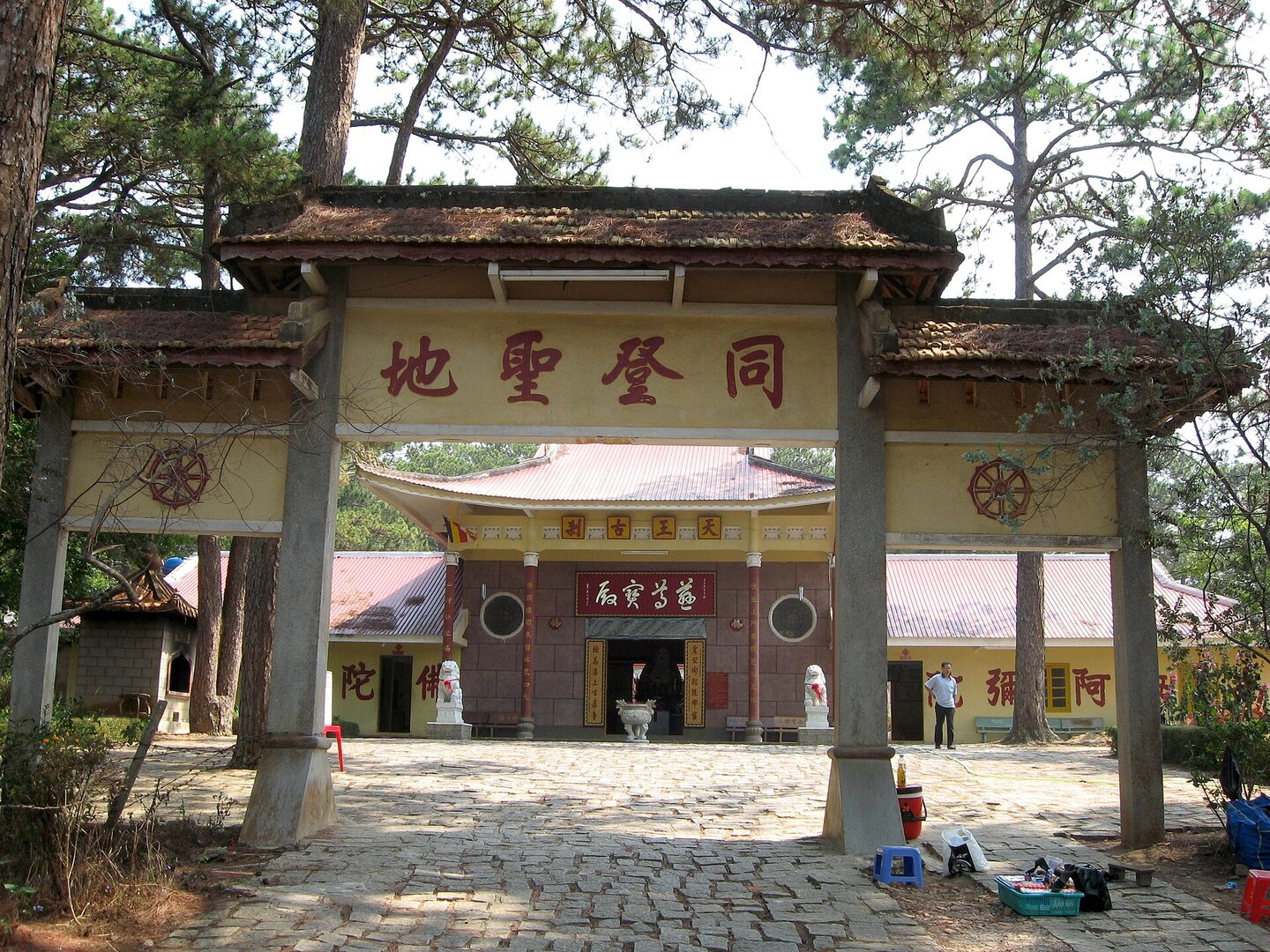
- A pagoda of Đà Lạt's Chinese community, officially named Thiên Vương Cổ Sát and belonging to the Phật giáo Hoa tông (Chinese-Vietnamese Buddhist sect); Hòa thượng (Most Venerable) Thích Thọ Dã founded it in 1958 on a high, broad hill covered in green pines, south-east of central Đà Lạt. At first the pagoda had only 3 bays roofed with corrugated metal, and its present look is the result of several renovations; unlike the closed layout around a courtyard well that Chinese pagodas usually have, it stretches along a steep hillside.
Popular for
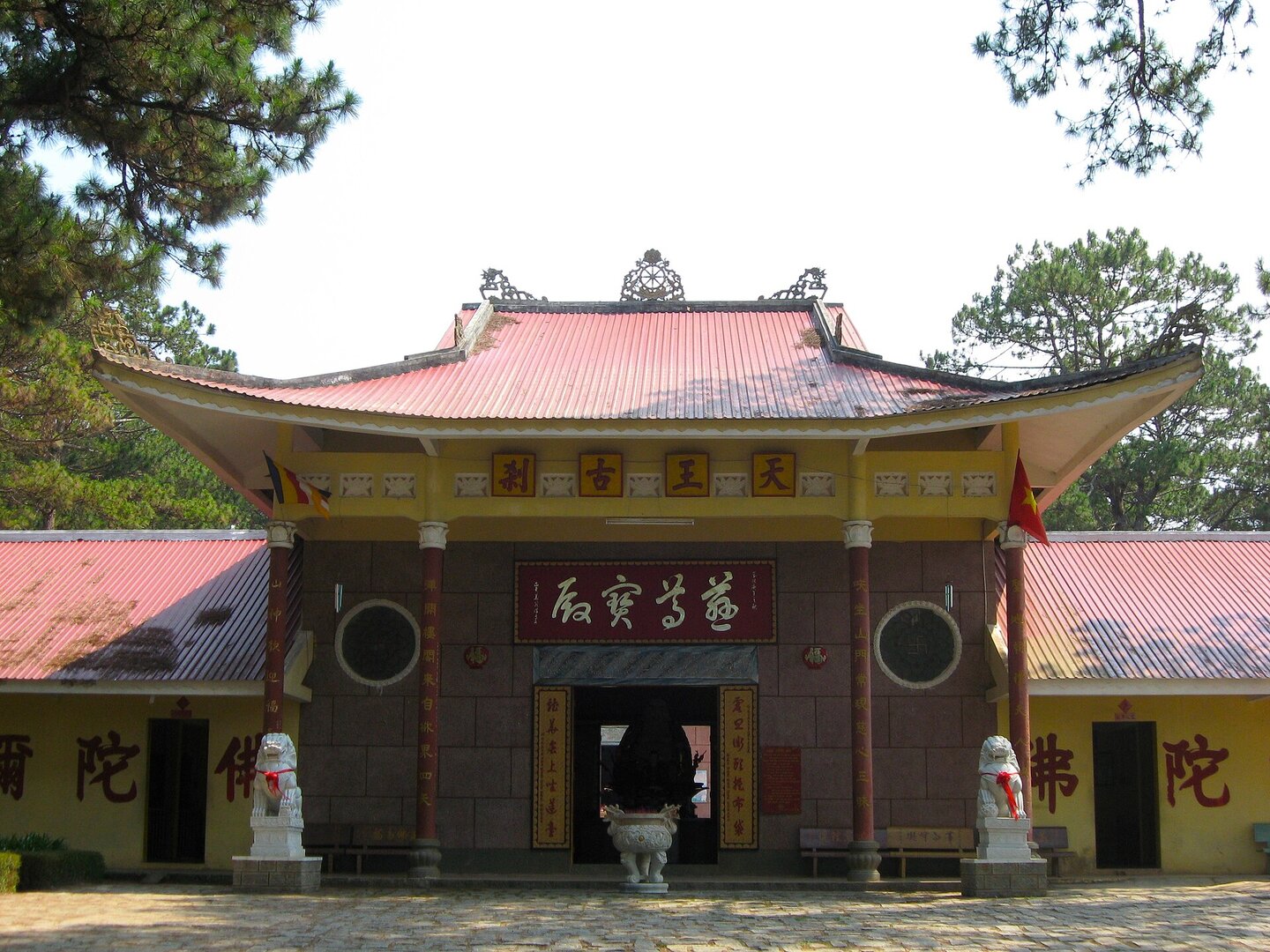
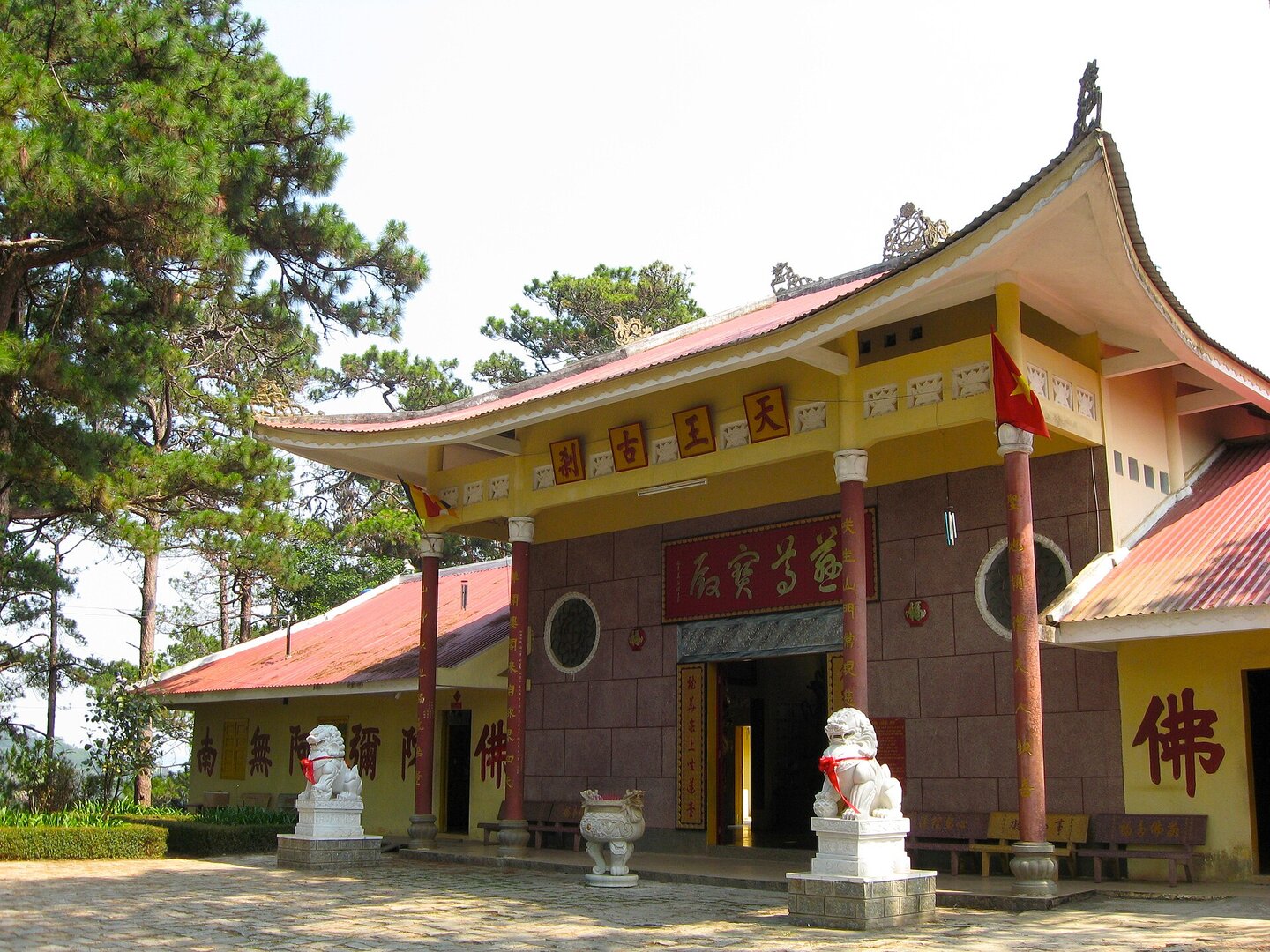
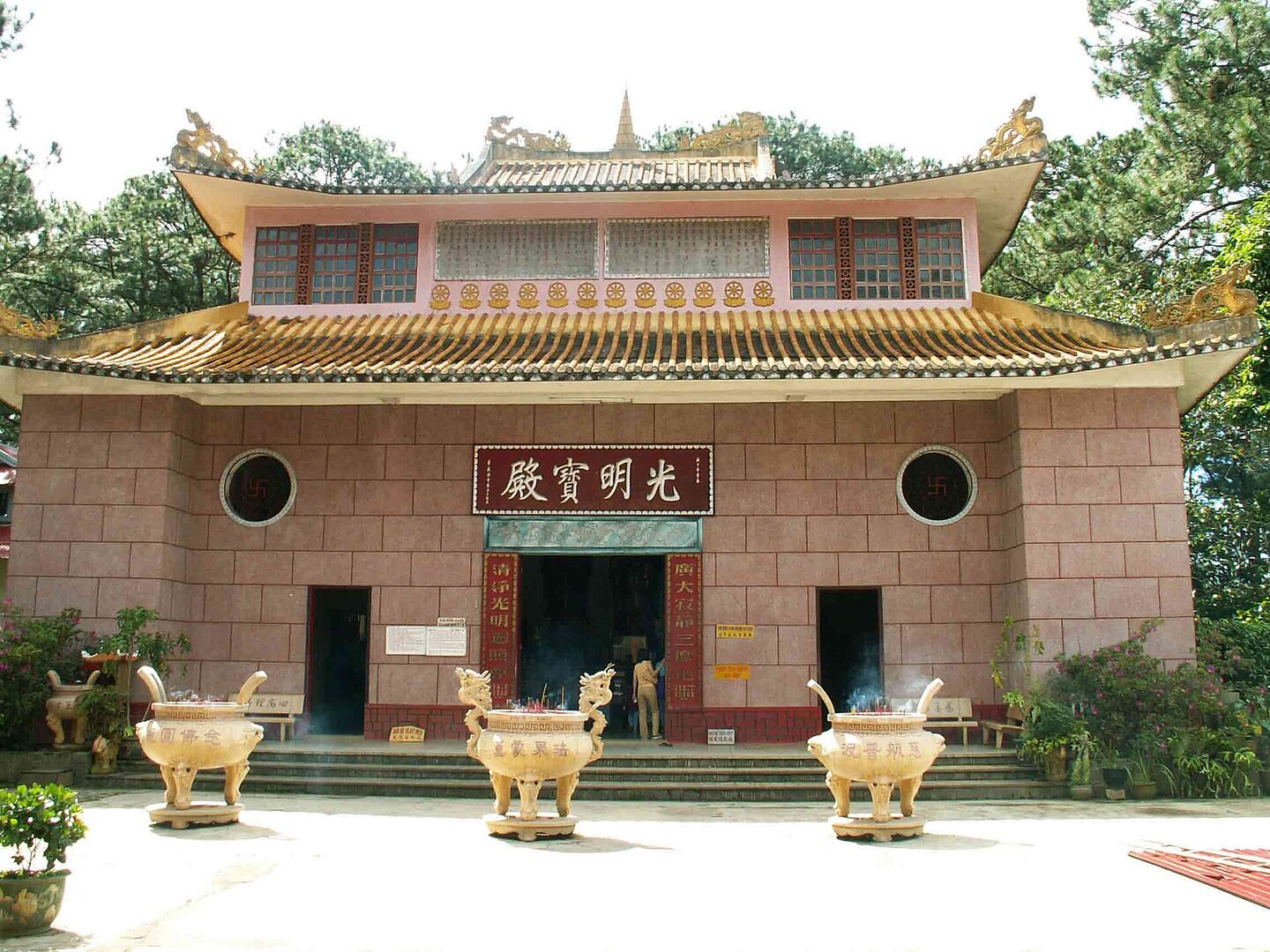
- Past the gate is the first hall, with a Di Lặc (Maitreya) statue in the middle and four 2.6 m statues of the Tứ Đại Thiên Vương (Four Heavenly Kings) guarding its corners; across a courtyard is the main hall, Quang Minh Bảo Điện, housing the Tây Phương Tam Thánh (Three Saints of the Western Pure Land) statues, said to have been brought from Hong Kong in 1958; on the highest part of the hill behind stands an open-air Thích Ca (Shakyamuni) Buddha more than 10 m tall. On the main hall's vaulted ceiling, among a relief of celestial musicians playing vertical and transverse flutes, pipa and cymbals, sits a Western lyre, which Thanh Niên guesses was a free-spirited variation by the plasterers.
Source
Last verified 8 Nov 2026
- Still open
- giacngo.vn · checked 8 Nov 2026
- Address & location
- thanhnien.vn · checked 8 Nov 2026
All 4 sources
- giacngo.vnnewspaper
Still open · Other details · checked 8 Nov 2026
- thanhnien.vnnewspaper
Address & location · Name · Other details · checked 8 Nov 2026
- OpenStreetMapopen data
Name · checked 8 Nov 2026
- Wikipediaopen encyclopedia
Other details · checked 8 Nov 2026
Read the full note
Identity and location: the coordinates match the centre of the building outline 'Chùa Tàu (Thiên Vương Cổ Sát)' on OpenStreetMap (relation 18645373, read 8 Nov 2026). The Wikipedia/Wikidata coordinates are not used because that point is about 340 m to the north. From the 'Góc ký họa' (sketch corner) article in Thanh Niên newspaper (Lam Yên, published 6 Sep 2026): the official name, the 3 corrugated-metal bays at the start, the layout stretched along a steep hillside, the order of first hall, main hall and open-air Thích Ca Buddha, the Tây Phương Tam Thánh statues, the lyre on the vaulted ceiling, the spinning-table story and the agarwood-versus-camphor debate. The 'camphor wood' line from the Địa chí Đà Lạt (Đà Lạt gazetteer) was read only through Thanh Niên because the original page returns a 404 error. From Giác Ngộ newspaper (published 5 Jun 2012): the founding year 1958, the founder Hòa thượng Thích Thọ Dã, the Phật giáo Hoa tông sect, the pine hill south-east of the centre, the renovation of the late 1980s, the 2008–2012 restoration of the main hall with the gilding of the three statues, and the abbot's appointment. Rejected: Wikipedia's 'north-east' direction and its line that 'only one person looks after the pagoda', because Giác Ngộ gives south-east and records an appointed abbot; the lineage name 'Hoa Nghiêm tông', which is a different school; the height and weight of the statues, because the sources disagree; a renovation year of 1988 or 1989, because two sources contradict each other; the house number 385 or 31C and the ward name, because the sources disagree and no source maps the new ward; closing time and 'free entry', because only travel blogs give them, with no source from the pagoda. The Hội quán Triều Châu (Teochew guild hall) story appears only on Wikipedia and pages copying it, so it is not used yet. Photos are from Wikimedia Commons: Diane Selwyn (public domain, taken 2011), Tú My and Liftold (CC BY-SA 3.0, taken around 2006–2008). All photos predate the dedication of the restored main hall in 2012.
Source-checked by Vietlume: compiled by AI from public sources, then checked against each source above before publishing.
Star ratings & comments
Anyone can read. Sign in to rate, comment and like.