Hàn (Han) River Bridge
Đà Nẵng
Compiled by AI · source-checked
- Meaning
- Moments
- Plan your visit
Meaning
Han River Bridge is a water view place in Đà Nẵng. Good for: cầu sông hàn (han river bridge), swing bridge, cable-stayed bridge.
Moments
Plan your visit
Nối đường Lê Duẩn (bờ Tây) và đường Phạm Văn Đồng (bờ Đông) qua sông Hàn, Đà Nẵng
Practical details
Highlights
Planning
- Construction began on 2 Sep 1998, and the bridge opened on 29 Mar 2000 with a ceremony held on the main axis of Bạch Đằng Street. It was the first swing bridge designed and built by Vietnamese engineers and workers. Its funding included contributions from Đà Nẵng residents and organisations, alongside other sources. The Đà Nẵng Department of Transport records that it was recognised as an outstanding-quality project for 2000–2005. Today it is still a working traffic bridge and still swings late at night, on a schedule that changes by announcement. Vietlume has not found an official schedule from the operator. There have been night-time vehicle bans for maintenance of the swing mechanism, such as the one in August 2022.
Atmosphere
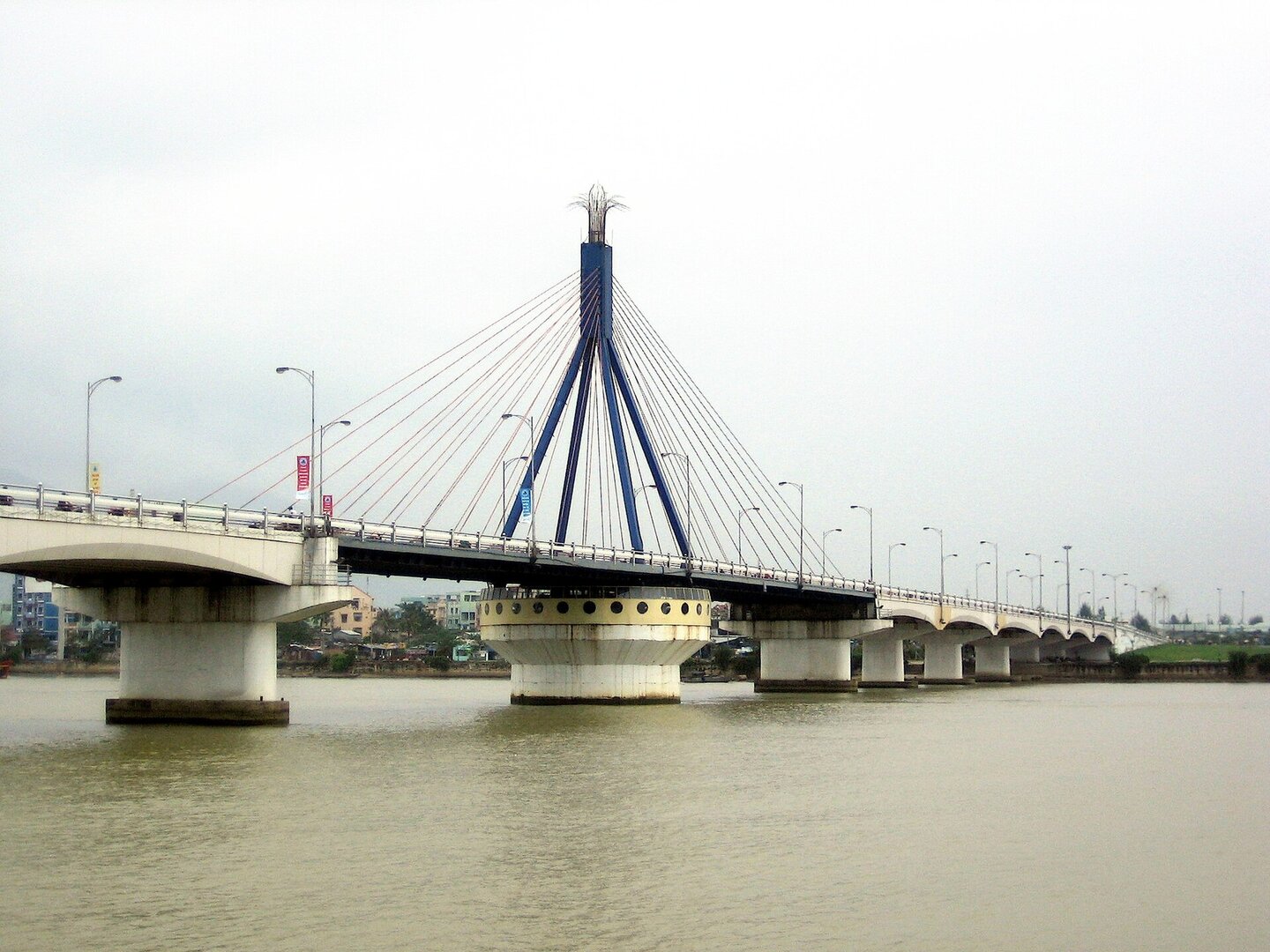
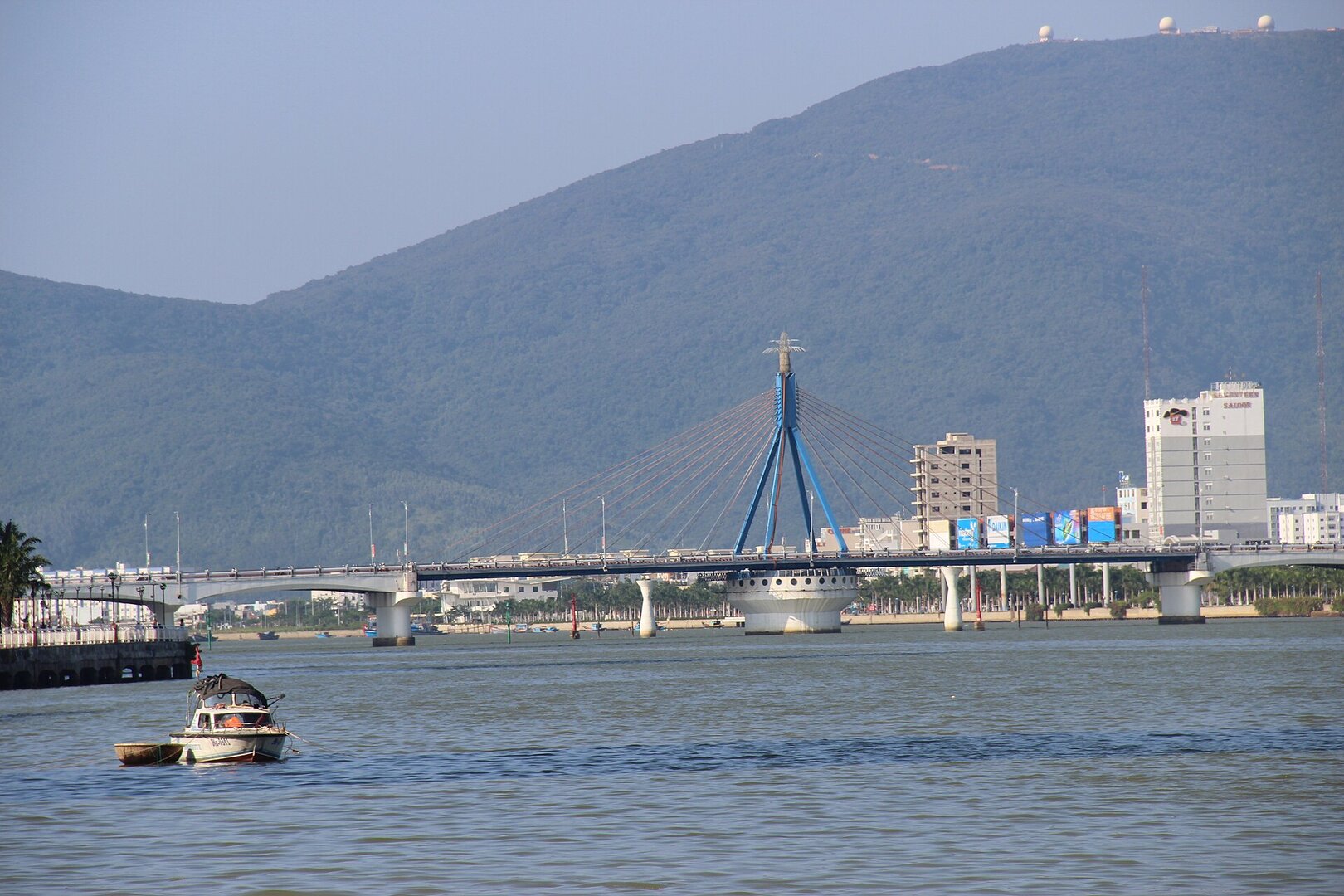
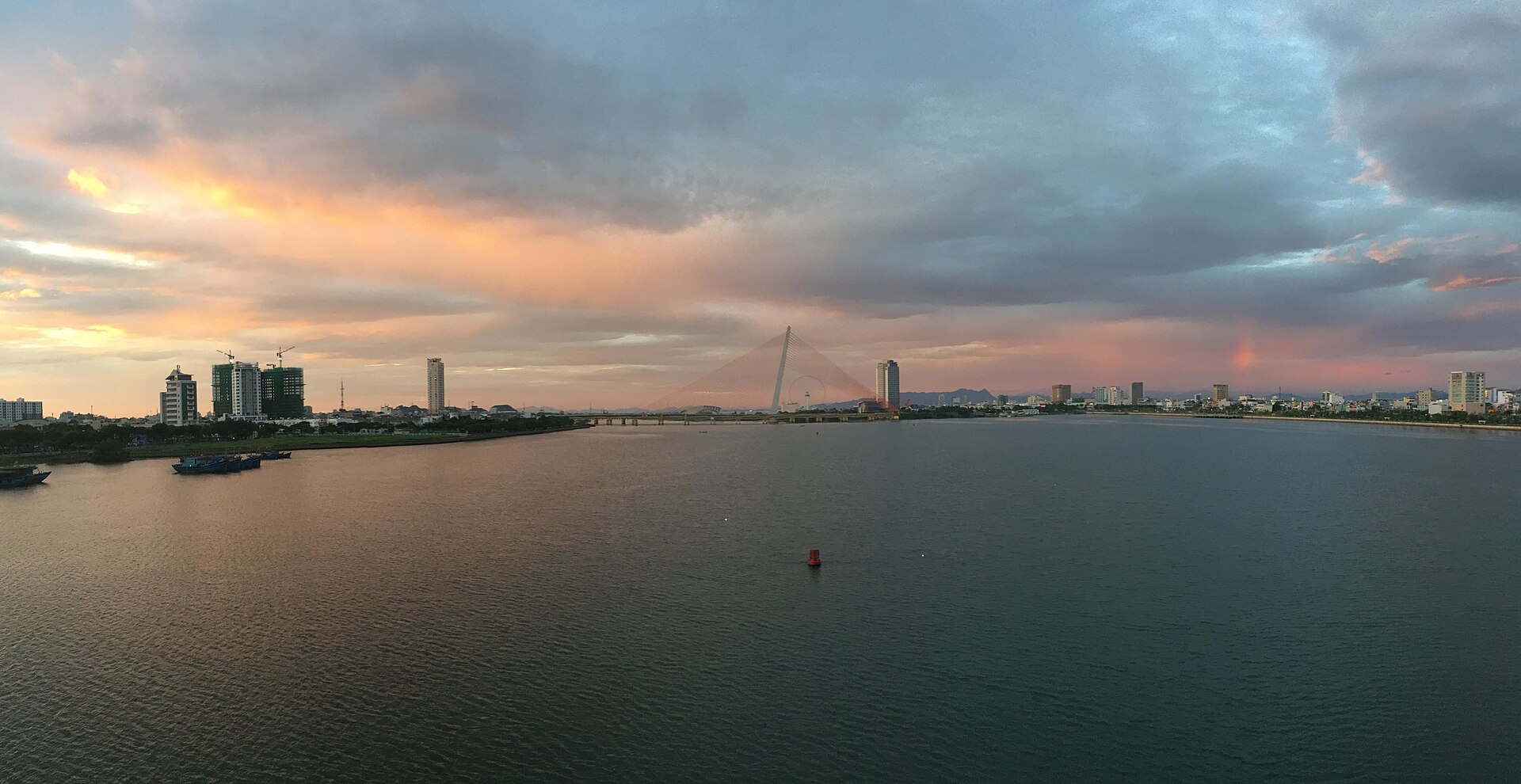
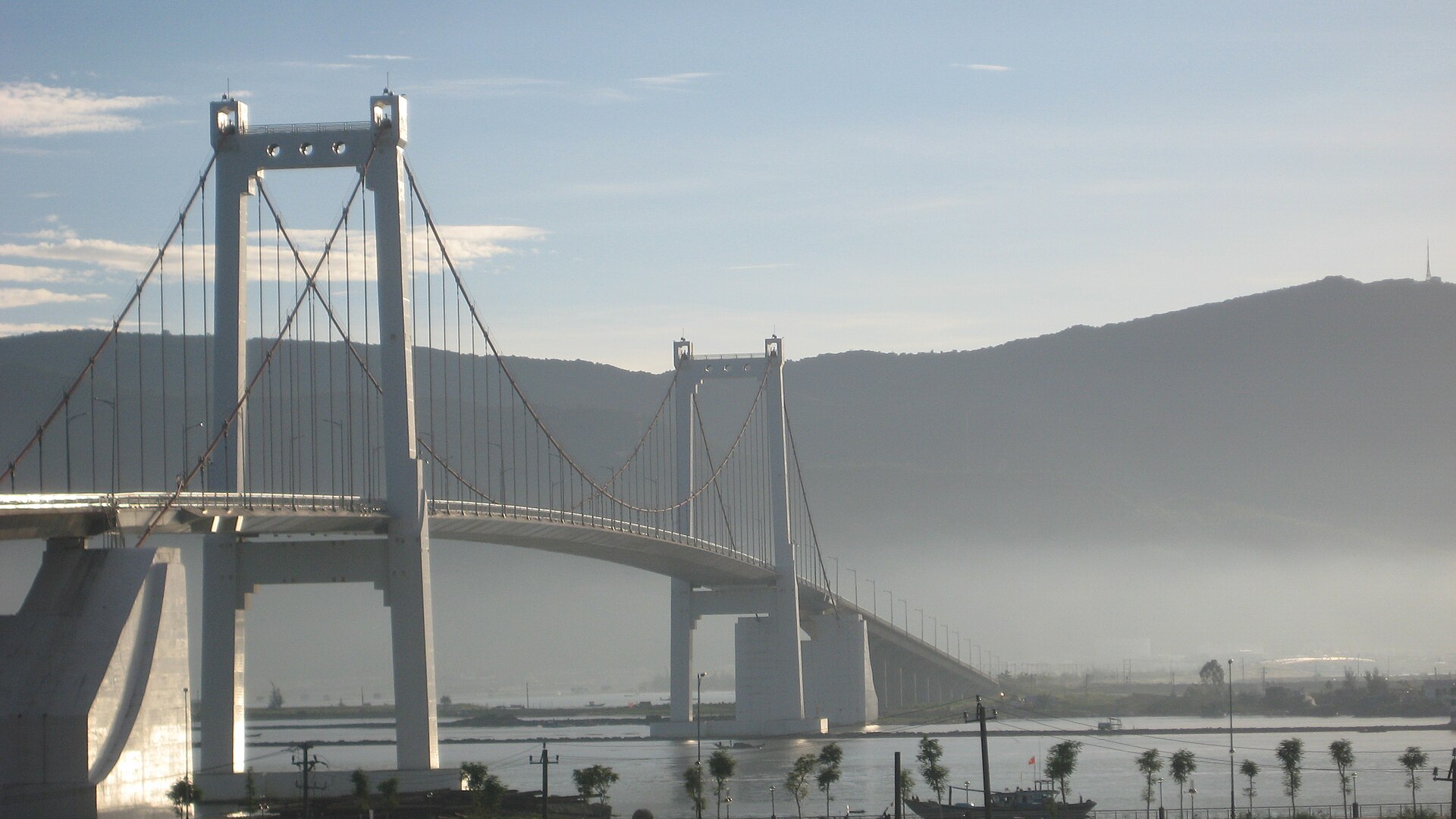
- Cầu Sông Hàn (Han River Bridge) spans the Hàn River in the centre of Đà Nẵng. It links Lê Duẩn Street on the west bank with Phạm Văn Đồng Street on the east bank. The bridge is nearly half a kilometre long and 12.9 m wide. It has 11 prestressed reinforced-concrete spans of 33 m each and 2 cable-stayed spans in the middle, 122.7 m long in total. The cable-stayed section is the part that swings, and its girders and main tower are steel. The deck carries two lanes for motor vehicles and two side lanes for pedestrians and cyclists.
Popular for
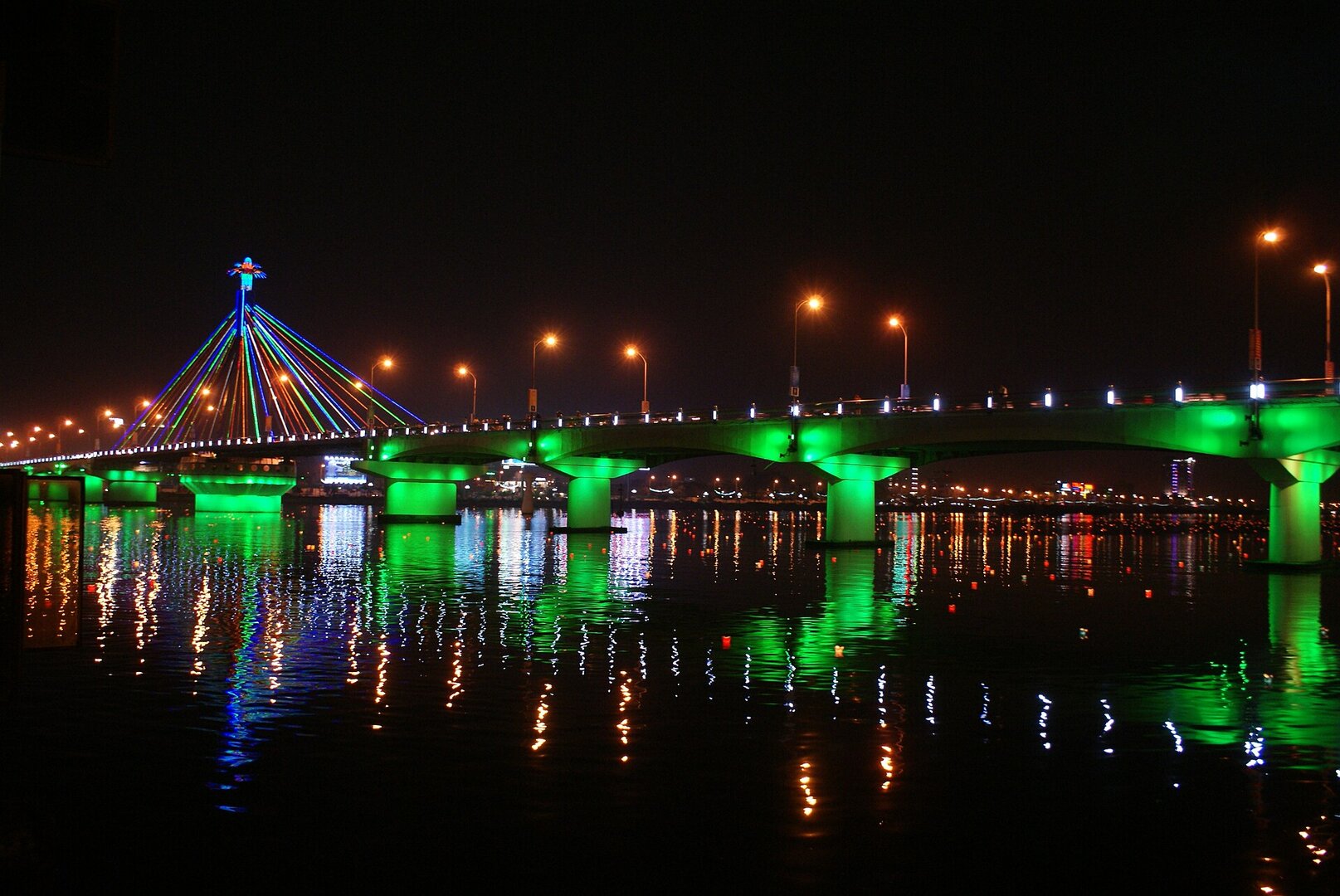
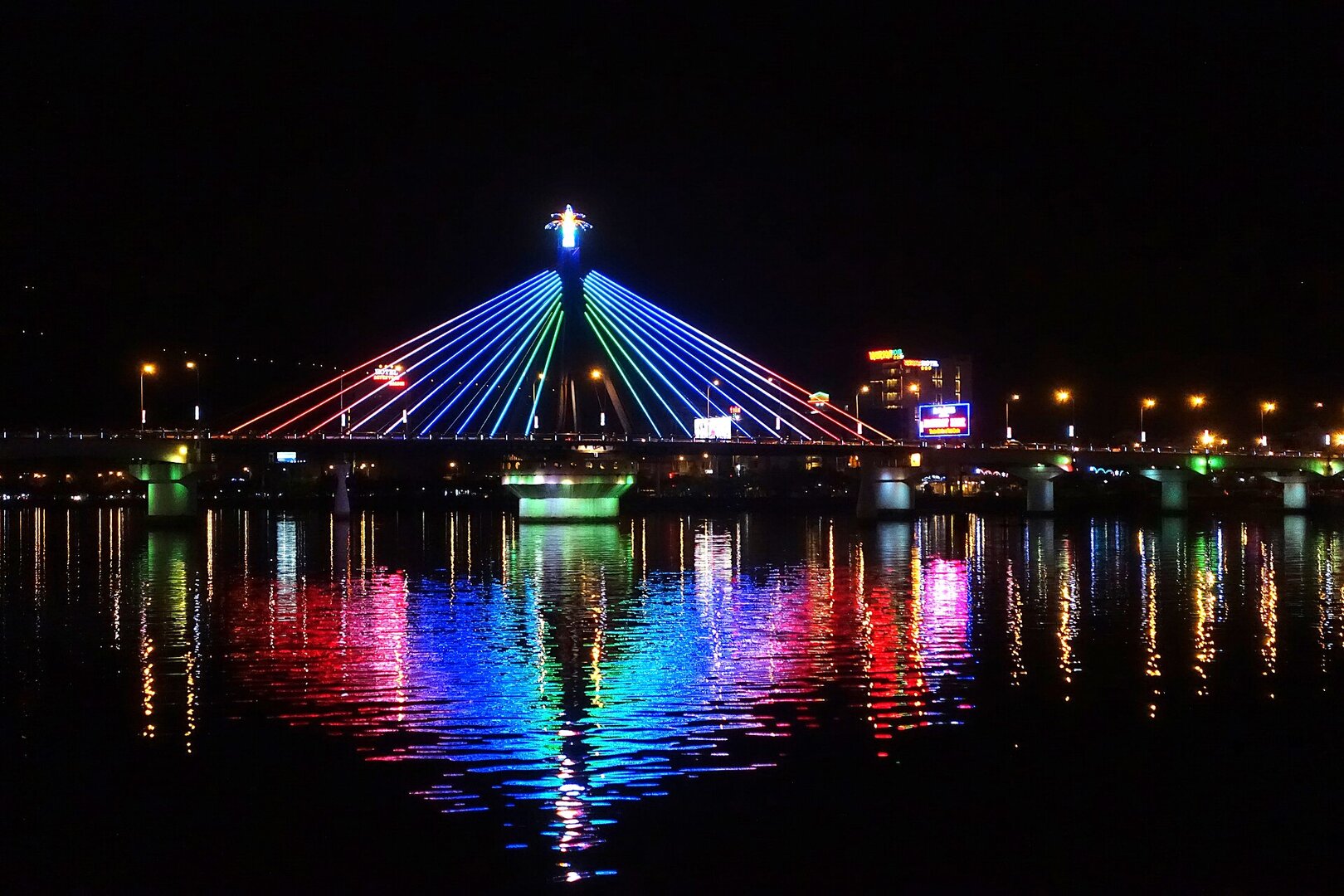
- What sets the bridge apart is that its middle section swings 90 degrees around a round pier in the river, lying along the current so that large ships can pass, and then swings back. At night the bridge is brightly lit. It is regarded as a symbol of Đà Nẵng and a source of pride for the city's residents. For many years it has been described as one of the few swing bridges in Vietnam that still turns.
Source
Last verified 24 Nov 2026
- Still open
- tuoitre.vn · checked 24 Nov 2026
- History
- tuoitre.vnInternet ArchiveWikipedia +1 · checked 24 Nov 2026
- Address & location
- Internet Archive · checked 24 Nov 2026
- Nature
- Internet Archive · checked 24 Nov 2026
- Seasons & weather
- Wikipedia · checked 24 Nov 2026
All 4 sources
- tuoitre.vnnewspaper
Still open · History · checked 24 Nov 2026
- Internet Archiveweb archive
History · Address & location · Nature · Other details · checked 24 Nov 2026
- Wikipediaopen encyclopedia
History · Seasons & weather · Other details · checked 24 Nov 2026
- baophapluat.vnnewspaper
History · Other details · checked 24 Nov 2026
Read the full note
The bridge's history and structure come mainly from an article by the Đà Nẵng Department of Transport (posted 14 Sep 2009, read via a Wayback archive copy of 29 May 2016, checked 24 Nov 2026): construction start on 2 Sep 1998, opening on 29 Mar 2000, design and construction by Vietnamese engineers and workers, recognition as an outstanding-quality project for 2000–2005, 11 spans of 33 m plus 2 cable-stayed spans totalling 122.7 m, a width of 12.9 m, and its position linking Lê Duẩn Street with Phạm Văn Đồng Street. The opening ceremony on Bạch Đằng Street, the 90-degree swing mechanism and the bridge's standing as a city symbol come from Báo Pháp luật Việt Nam (29 Apr 2011). The 2022 maintenance notice and the fact that residents contributed to the funding come from Tuổi Trẻ News. The lane layout, the night lighting and the statement that the swing bridge still operates come from English Wikipedia, checked 24 Nov 2026. Coordinates come from OpenStreetMap. Rejected: the claim that 'the entire budget came from donations', made in a travel-guide article, because three other sources say the funding came from several sources; a 25 m clearance and the bridge's appearance on the city emblem, because they appear only in an unsourced Wikipedia infobox; the contractor's name and the French-era swing bridges, because they appear only in unsourced Vietnamese Wikipedia text; the old swing schedule (00:30, 01:00, 23:00 at weekends), because no operator source gives it and the sources contradict each other; and a length of 487.7 m, because the Department of Transport gives 485.7 m, so the page says only 'nearly half a kilometre'. Photos come from Wikimedia Commons under CC0, CC BY and CC BY-SA licences, credited per photo.
Source-checked by Vietlume: compiled by AI from public sources, then checked against each source above before publishing.



Star ratings & comments
Anyone can read. Sign in to rate, comment and like.