Vịnh Hạ Long, Quảng Ninh · Religious site
Ba Men Temple
Picture Hạ Long Bay, a name almost everyone has heard, but this time through the eyes of people who make their living on the water rather than those who come for the view. At the foot of Đầu Bê island lies a small sandy beach, and on it a temple that fishermen built for a woman the waves carried ashore.
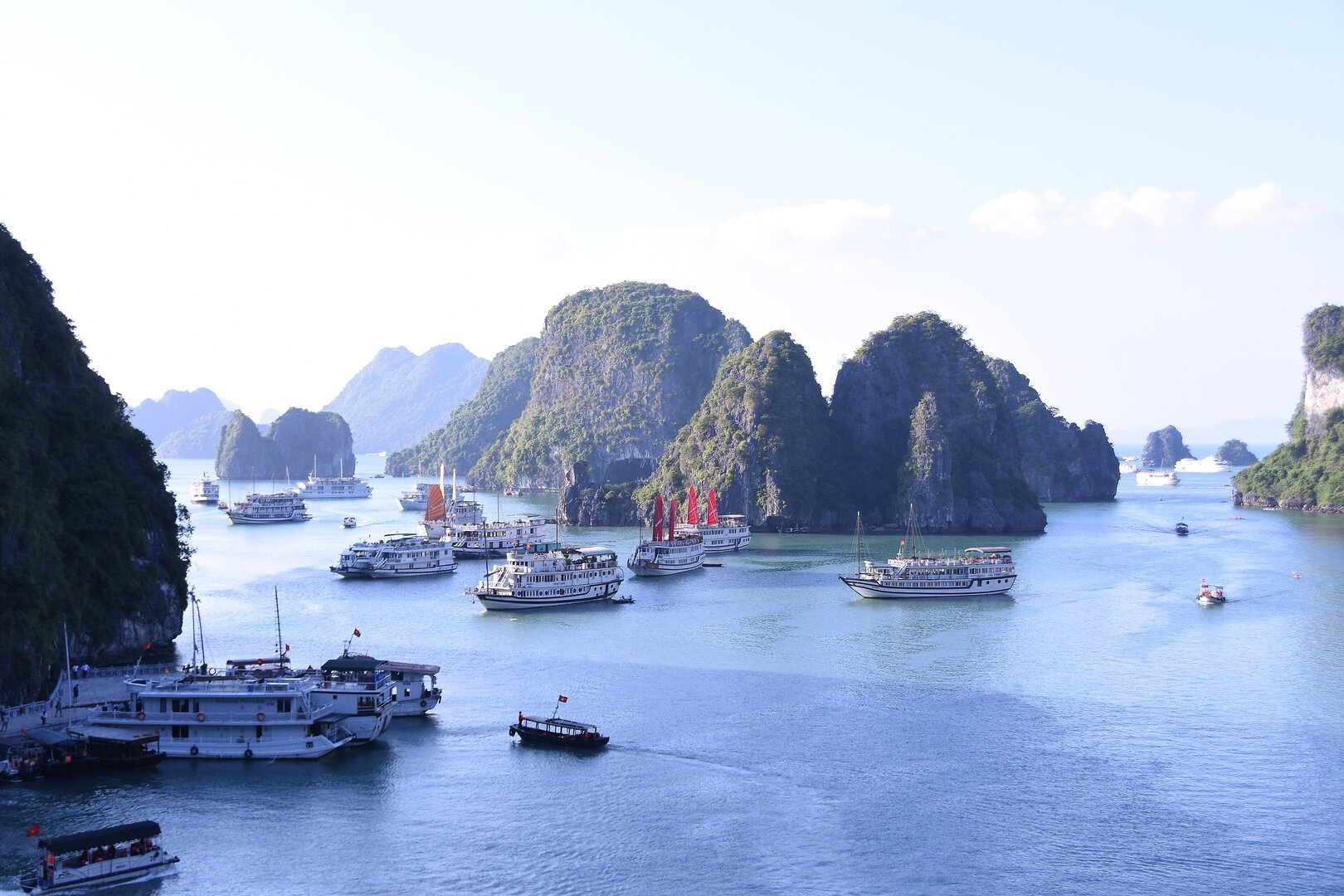
Picture Hạ Long Bay, a name almost everyone has heard, but this time through the eyes of people who make their living on the water rather than those who come for the view. Where the waters of Hạ Long Bay meet Lan Hạ Bay, at the foot of Đầu Bê island, there is a sandy beach and a small cove. On that beach stands Đền Bà Men (Ba Men Temple). Its formal name is Đức Chúa Bà, and locals also call it Đền chúa Bà ("the Lady's temple"). The temple sits inside the absolute protection zone of the Hạ Long Bay heritage site. In waters guarded that closely, there is still a place that belongs to the people who work them.
In the middle of Hạ Long Bay, fishermen still stop to greet her before heading out
Fishermen of Hạ Long and Cát Bà pass down a story. Six women were travelling together in one boat when high waves struck, and all of them died. Their bodies drifted across these waters; fishermen recovered them, buried them, and set up shrines in six different places. Bà Men ("Lady Men") drifted into the cove of Đầu Bê island. The small shrine there later became a temple, and she came to be revered as a goddess who protects those who go to sea.
The temple is small, laid out in a T shape: a tiền đường (front hall) and a hậu cung (inner sanctuary at the back), both built and maintained with fishermen's donations. It has stood for a long time and has been restored many times. Inside, beside the statue of Bà Men, are statues of the Thánh Mẫu (the Mother Goddesses of Vietnamese folk religion), the quan lớn Tam phủ (high mandarin spirits of the Three Realms), and the Buddha, who was added to the altar later. At its root is a folk belief in a goddess, a mother deity and a water deity. And it has never stopped being used. Fishermen consider the temple deeply sacred: before setting out to sea they often stop to burn incense and pray for a safe voyage, and passing boats often call in too.
That meaning is clearest on the 19th–20th of tháng Giêng, the first month of the lunar calendar, held by tradition to be the day she passed away. The festival is also known as the "opening of the sea". Fishing boats from all over the bay anchor packed together in front of the temple. Have you ever seen an offering made in the shape of a boat? Here the offerings are not the paper horses and elephants used at temples on land, but model boats and ships, along with seafood the fishermen caught themselves. The festivities include tug-of-war and football on the sand, but the event people wait for is the thuyền chải race (long, narrow rowing boats). Each boat carries fourteen rowers and one helmsman, racing two laps on a course of about 500 m that starts from the temple's doorstep. Fishermen believe the village whose team wins will have luck at sea that year. Teams come from both the Hạ Long side and the Cát Bà side, so a small sandy beach becomes the place where fishermen from both shores of the bay meet.
Enough to decide whether to go
- What it is
- A folk-religion temple built by fishermen, dedicated to Bà Men, protector goddess of seafarers
- Where
- A sandy beach at the foot of Đầu Bê island, on Hạ Long Bay, Quảng Ninh
- Status
- Provincial-level historical and cultural relic since 2015
- Getting there
- By boat only – the final stop of sightseeing route no. 3 on the bay, near Ba Hầm lake
- Festival
- 19th–20th of the first lunar month (the "opening of the sea"); a thanksgiving rite in tháng Chạp, the twelfth lunar month
- Most worth seeing
- Model-boat offerings and the thuyền chải race in front of the temple during the festival
From someone who has been
On ordinary days the temple is the quiet, small final stop of a sightseeing boat route. To see it truly alive, go during the festival in the first lunar month, when fishing boats fill the cove and locals use small thuyền nan (woven bamboo boats) to reach the island. It suits anyone who wants to know what Hạ Long Bay looks like to the people who sail out on it: a heritage zone, or a stretch of sea that still has someone to greet before every voyage?
Vibe
Tags
Source
The name, the legend of bà Men, the nature of the belief, the worshipped statues and the T-shaped architecture come from the article 'Đền Bà Men' in Báo Quảng Ninh (2013), which used material from the monument records of the Hạ Long Bay Management Board. The festival on the 19th–20th of the first lunar month, the offerings of model boats, the chải boat race with 14 rowers, the provincial-level monument listing in 2015 and the restoration in 2018 come from Báo Quảng Ninh's 2026 festival report and the page of the Hạ Long Bay Management Board; the two outlets published the same press release, so they count as only one source. The custom of fishermen lighting incense before going out to sea and visit route no. 3 come from the Hạ Long Bay Management Board's site page and route page, read on 10 Oct 2026. The details of the incense custom, the model boats and the 14-rower chải team were cross-checked against the blog of the Wyndham Legend Hạ Long hotel. Rejected: the description 'at the foot of Cát Bà island', because the Management Board's page says the islet 'Cật Bà', not Cát Bà island, and the temple belongs to Quảng Ninh; the Google Maps address line 'Đường xuyên đảo Cát Bà'; the figures '1983' and 'over 200 years', because neither is the year of founding; the damaged embankment, because that was its state in 2013. There is no founding year, no listing decision number, and no photo available in the open archives.
Place data is compiled from many sources across the internet by a team of automated AI agents that collect, enrich, check, challenge, score, edit, review and verify it.
Ratings & comments
Anyone can read. Sign in to rate, comment and like.