Trầm (Tram) Pagoda
Phường Chương Mỹ, Hà Nội · Religious site
Quick facts
- Address
- Làng Long Châu, phường Chương Mỹ, Hà Nội
- Coordinates
- 20.93854, 105.69633Directions
Compiled by AI · source-checked
Picture the call “This is the Voice of Vietnam” ringing out not from the heart of the capital, but from a limestone cave among rice fields beside the Đáy River.
On the morning of 20/12/1946, that broadcast opened with the words “This is the Voice of Vietnam, broadcasting near Hanoi” — and “near Hanoi” was a quiet signal that the station had left the capital. From hang Trầm, the cave beside Chùa Trầm (chùa means Buddhist pagoda), the Voice of Vietnam radio broadcast President Hồ Chí Minh’s Appeal for Nationwide Resistance, and the station worked here for more than the first two months of the resistance war. At Tết Đinh Hợi 1947 — Tết is the Lunar New Year — he came to the station at Chùa Trầm; his New Year poem to the people was broadcast from here, and he wrote the pagoda eight characters: “Kháng chiến tất thắng, kiến quốc tất thành” — “the resistance will surely win, the nation-building will surely succeed”.
Chùa Trầm — the cave that once carried the Voice of Vietnam
Are you curious what that cave held before the Voice of Vietnam arrived? Chùa Trầm, whose formal name is Long Tiên tự, was founded under the Lê dynasty, in the Cảnh Trị reign period. It leans against Trầm Mountain — a cluster of limestone hills rising from the fields, which folk legend says is the Tử Vi star fallen from the sky. Old books record that Lê kings and Trịnh lords set up a travelling palace in these hills, coming to worship the Buddha and enjoy the scenery. The pagoda you see today was rebuilt in the early 20th century, when Hoàng Trọng Phu, governor of Hà Đông province, had it restored; the grounds keep a stele he donated, its text written entirely in chữ Nôm (the old script for writing Vietnamese with Chinese-derived characters), along with towers recording his merit.
The pagoda is small, facing a lotus pond, its wide courtyard ringed by old, large trees. The front hall has five bays under a tiled roof, with a row of stone veranda columns; behind it are the main sanctuary and the hall of the patriarchs, which keep many Buddha statues in the style of the 18th–19th centuries. Right beside the pagoda is Long Tiên Cave. Its largest chamber is Chùa Hang, the cave pagoda, with an altar to the Buddha and stone-carved statues of Buddhas, immortals and guardian deities, plus a stone incense stand engraved with the 17th year of the Chính Hòa reign (1696). Many old poems praising Trầm Mountain are carved into the rock walls. On fine days, natural light slips through gaps in the cave roof onto the statues. At the cave mouth stands a memorial emblem of the Voice of Vietnam.
The pagoda festival in the second lunar month carries prayers for favourable rain and wind, and also a procession of Uncle Hồ’s portrait, remembering the times he came here — at Tết 1947, and again in 1966, when he visited the Air Defence – Air Force Command stationed at Trầm Mountain. But stone hills do not stand forever on their own: late in the 20th century, one hill in the cluster collapsed from quarrying stone for lime kilns, and the place that once held the travelling palace is now only ruins. A cave that once sheltered Buddha statues, then carried the voice of an entire resistance — standing at its mouth, what would you want it kept for?
Timeline
- 1696the 1696 stone incense stand
- 1947at Tết 1947
- 1962National-level heritage site since 1962
- 1966and again in 1966
Photographs
1 of 1 on fileEnough to decide whether to go
Written by Vietlume · from the sources listed under Sources
- What it is
- An old pagoda set against limestone hills, at the centre of the Trầm Mountain heritage complex
- How old
- Founded under the Lê dynasty, Cảnh Trị reign period; present buildings rebuilt in the early 20th century
- Status
- National-level heritage site since 1962
- Don’t miss
- Long Tiên Cave: stone statues, the 1696 stone incense stand, poems carved in the rock; the Voice of Vietnam emblem at the cave mouth
- Where
- Long Châu village, Chương Mỹ area — now part of Chương Mỹ ward (phường, an urban administrative unit), Hanoi
- Festival
- Pagoda festival in the second lunar month
Good to know before you go
Pick a fine day to go into Long Tiên Cave — the light from the gaps in the roof is what brings the stone statues out of the dark. Anyone drawn to the history of the resistance war should linger at the mouth of hang Trầm. If you already know Chùa Thầy, Chùa Tây Phương and Chùa Trăm Gian, Chùa Trầm is the remaining name in the set people call the “Four Great Scenic Sites of Xứ Đoài”.
Vibe
Tags
Source
Last verified 16 Sep 2026
- History
- vietnamtourism.vndantri.com.vnhanoimoi.vn +5 · checked 16 Sep 2026
- Address & location
- dulieuphapluat.vnhanoionline.vnWikidata · checked 16 Sep 2026
- Nature
- dantri.com.vn · checked 16 Sep 2026
- Seasons & weather
- dantri.com.vn · checked 16 Sep 2026
All 12 sources
- vietnamtourism.vnwebsite
History · Name · Other details · checked 16 Sep 2026
- dantri.com.vnnewspaper
History · Nature · Seasons & weather · Other details · checked 16 Sep 2026
- hanoimoi.vnnewspaper
History · Other details · checked 16 Sep 2026
- nguoihanoi.vnnewspaper
History · checked 16 Sep 2026
- thiennhienmoitruong.vnnewspaper
History · Other details · checked 16 Sep 2026
- hoangthaivinhton.netwebsite
History · checked 16 Sep 2026
- quocphongthudo.vnwebsite
History · checked 16 Sep 2026
- vovworld.vnnewspaper
History · checked 16 Sep 2026
- dulieuphapluat.vnwebsite
Address & location · checked 16 Sep 2026
- hanoionline.vnwebsite
Address & location · checked 16 Sep 2026
- Wikidataopen data
Address & location · checked 16 Sep 2026
- phatgiao.org.vnwebsite
Other details · checked 16 Sep 2026
Read the full note
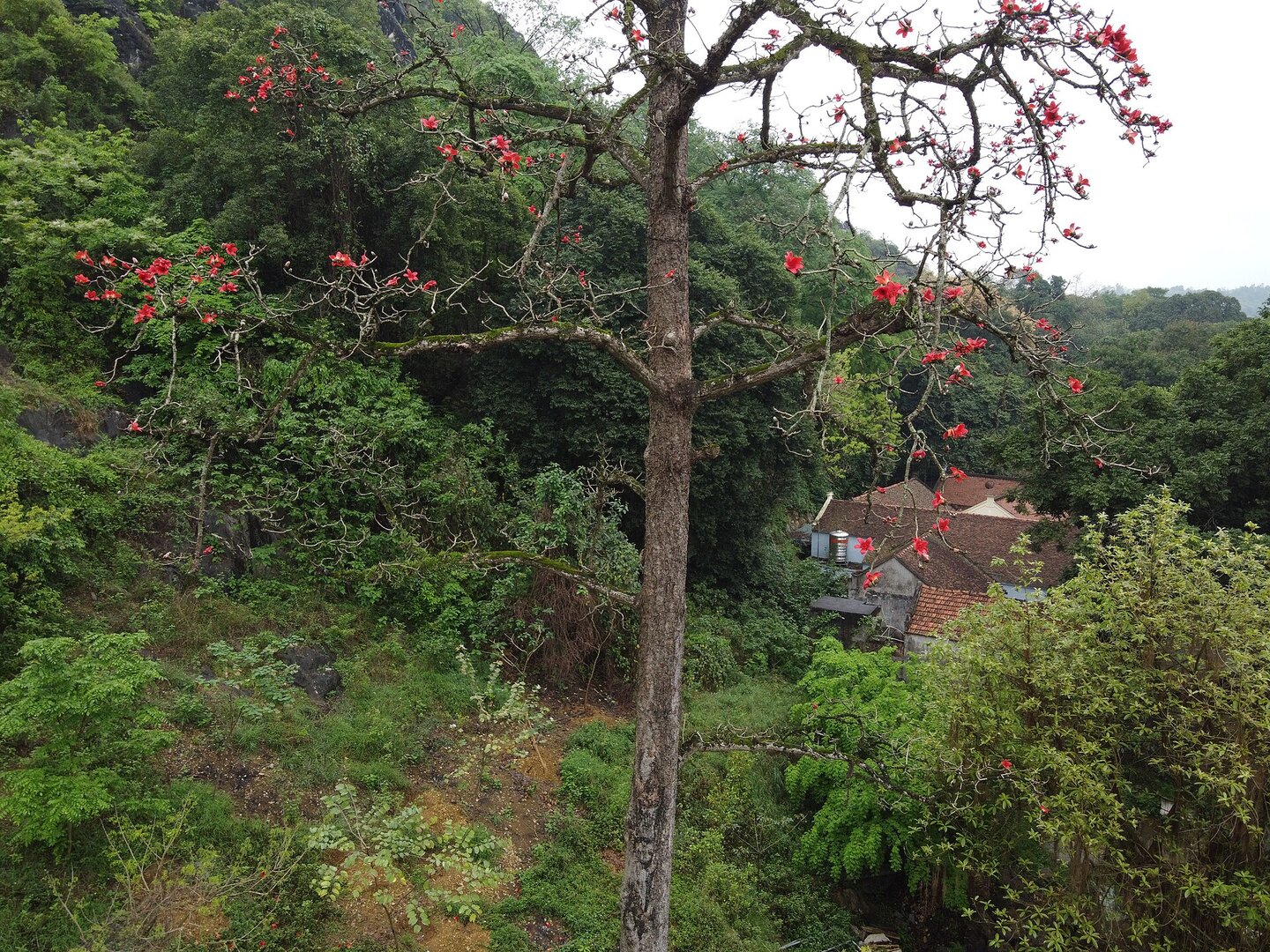
The Chinese-character name Long Tiên tự, the date of the pagoda's founding in the Lê period (reign era Cảnh Trị), the site facing the lotus pond, the Buddha statues of the 18th–19th centuries, Long Tiên cave and the Mother Goddess temple come from the page of the Vietnam National Authority of Tourism. The Đinh-shaped (丁) layout, the year of rebuilding 1913, the Nôm-script stele from the time of Governor-General Hoàng Trọng Phu and the stone incense tree carved in 1696 come from the Hànộimới series (25 Sep, 27 Sep and 2 Oct 2024), cross-checked with Người Hà Nội (23 Oct 2023). The national monument classification date comes from the document classifying monuments and scenic spots across the North signed on 28 Apr 1962, matching Thiên nhiên Môi trường (2025). The fact that the Voice of Vietnam radio broadcast the Appeal for National Resistance from here on the morning of 20 Dec 1946 comes from VOVWorld and Quốc phòng Thủ đô (2016); the fact that Trầm cave was the radio's first evacuation site and the eight words 'Kháng chiến tất thắng, kiến quốc tất thành' (Resistance will surely win, nation-building will surely succeed) come from Dân Sinh (22 Jun 2018) and Người Hà Nội (2023). The new administrative unit comes from Hà Nội Online (2 Jul 2025). Photo: 'Cây gạo phía sau Chùa Trầm' (Kapok tree behind Trầm Pagoda) by Motbit on Wikimedia Commons, licence CC BY-SA 4.0. Rejected and not used: the sentence 'Uncle Hồ read the Appeal for National Resistance at Trầm pagoda' (it appears on both the Vietnam National Authority of Tourism page and Tiền Phong, but VOV and the military sources say the radio BROADCAST the appeal); the name 'Long Thiên tự' (one source); the 1964 classification date (the 1962 document already has the pagoda's name); the dates of the early 16th century, 1536 and 1893 (self-contradictory or wrong Governor-General term); the couplet 'Cao sơn hữu ý…' attributed to Uncle Hồ (sources contradict each other). The number of statues, the number of carved poems and the number of mountain peaks are not given because the sources differ. Facts verified in the Sep 2026 round.
Source-checked by Vietlume: compiled by AI from public sources, then checked against each source above before publishing.
Star ratings & comments
Anyone can read. Sign in to rate, comment and like.